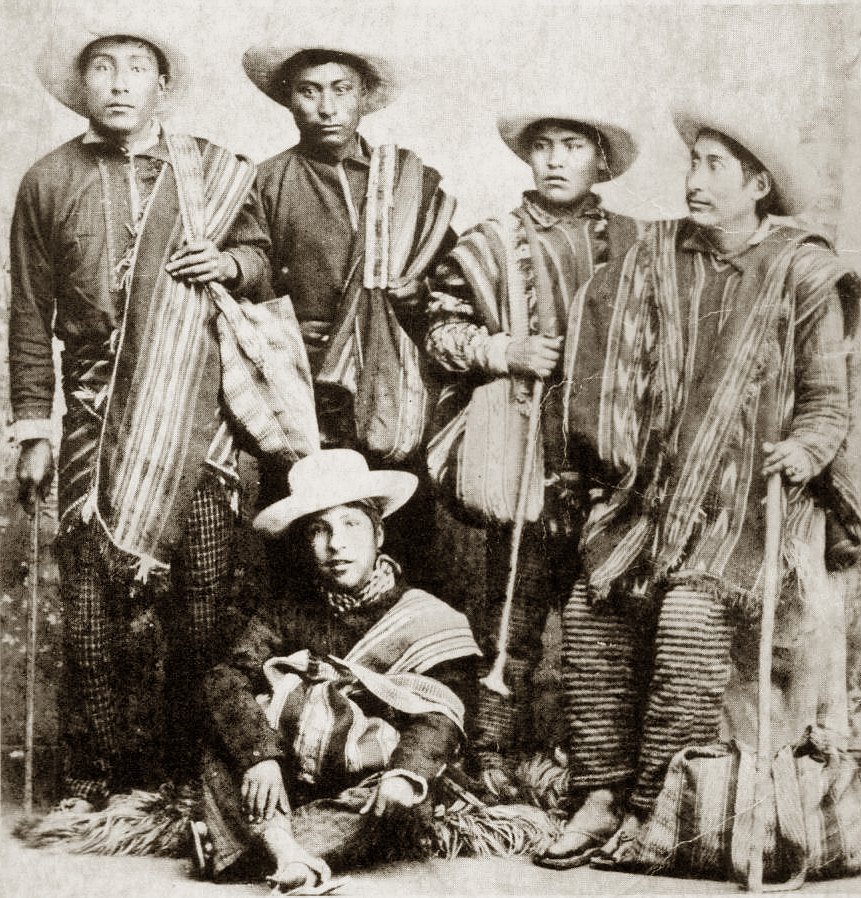
Andean cosmovision of the Kallawaya. Photo: Unknown authorUnknown author via Wikimedia Commons, Public domain.
Bautista Saavedra, Bolivia (Plurinational State of) · Representative List
Andean cosmovision of the Kallawaya
For over a thousand years, the Kallawaya have walked the Andes as itinerant healers, carrying forward an ancient system of medicine and cosmological knowledge rooted in pre-Inca cultures.
In UNESCO’s words
The Kallawaya ethnic group, based in the mountainous Bautista Saavedra region north of La Paz, traces its roots to the pre-Inca period. Like many aspects of Andean culture, the Kallawaya’s practices and values have evolved through the fusion of native and Christian religions.
The principal activity of the Kallawaya involves the practice of ancestral medical techniques. The various rites and ceremonies related to these techniques form the basis of their local economy. The Andean Cosmovision of the Kallawaya culture consists of a coherent body of myths, rituals, values and artistic expressions. Widely recognized not only in Bolivia but also in many other South American countries where Kallawaya priest doctors practise, the medical techniques are based on the belief systems of indigenous peoples of the Andean area.
This healing art derives from a deep understanding of animal, mineral and botanical pharmacopoeia and a body of ritual knowledge intimately linked to religious beliefs. The exclusively male itinerant healers treat patients using medical and pharmaceutical knowledge that revolves around a complex system of transmission and apprenticeship in which the journey plays an essential role. By travelling through widely varying ecosystems, Kallawaya healers expand their knowledge of medicinal plants. With some 980 species, their botanical pharmacopoeia rates as one of the richest in the world. Kallawaya women participate in a number of rites, care for pregnant women and children, and weave textiles with motifs and decoration relating to the Kallawaya cosmovision. Musical groups called kantus play the drum and pan flute during ritual ceremonies in order to establish contact with the world of the spirits.
In recent times, the traditional Kallawaya way of life has come under threat from acculturation, which may lead to the disappearance of this extraordinary body of medical knowledge. The tradition is also affected by the lack of sufficient legal protection for indigenous communities, particularly in regard to policies pursued by major pharmaceutical companies.
The Kallawaya are an indigenous ethnic group from the mountainous region north of La Paz who practice ancestral medical techniques based on deep knowledge of animal, mineral, and botanical resources. Their healing art combines pharmaceutical knowledge with ritual practice and religious belief, forming the foundation of their local economy and way of life. The Kallawaya worldview integrates myths, rituals, values, and artistic expressions into a coherent cosmovision that guides their approach to health and community.
Origins & history
The Kallawaya trace their roots to the pre-Inca period. Over time, their practices and values evolved through the fusion of native and Christian religions, shaping the tradition as it exists today. Their medical techniques have become widely recognized not only in Bolivia but across many South American countries where Kallawaya priest doctors practice.
The practice
Male itinerant healers travel through varying ecosystems to treat patients, expanding their knowledge of medicinal plants with each journey. They transmit their medical and pharmaceutical knowledge through a complex system of apprenticeship where travel plays an essential role. Their botanical pharmacopoeia encompasses around 980 species. Kallawaya women participate in ritual rites, care for pregnant women and children, and weave textiles with motifs reflecting their cosmovision. Musical groups called kantus play the drum and pan flute during ritual ceremonies to establish contact with the spiritual world.
Cultural significance
The Kallawaya tradition preserves an extraordinary body of medical knowledge rooted in indigenous belief systems of the Andean area. Today this way of life faces threats from acculturation and insufficient legal protection for indigenous communities, particularly regarding policies by major pharmaceutical companies. The tradition's survival ensures the continuation of this unique healing knowledge and cultural worldview for future generations.
Key facts
Country: Bolivia (Plurinational State of)
Inscribed: 2008
UNESCO list: Representative List of the Intangible Cultural Heritage of Humanity
UNESCO reference: 00048
UNESCO vocabulary: Traditional medicine
Map: Bautista Saavedra — the locality named in UNESCO’s official description of this element
Where to experience it
The Kallawaya tradition thrives in the mountainous Bautista Saavedra region of Bolivia, where the ethnic group has practiced ancestral healing for centuries. Male healers travel throughout South American countries, treating patients with knowledge accumulated through journeys across diverse ecosystems. Women participate in ritual ceremonies and textile weaving that embodies Kallawaya cosmovision. Visitors interested in this living tradition should approach local communities with respect, understanding that Kallawaya medicine represents sacred knowledge transmitted through apprenticeship and spiritual practice rather than a commercialized service.
Share your photos of places: they stay published under your name as the author. The more they're seen, the more you get noticed — and soon a contest will reward the most appreciated photos.
This site uses cookies and similar technologies for statistics and to remember your preferences. You can accept them, or opt out below.
Functional
Always active
The technical storage or access is strictly necessary for the legitimate purpose of enabling the use of a specific service explicitly requested by the subscriber or user, or for the sole purpose of carrying out the transmission of a communication over an electronic communications network.
Preferences
The technical storage or access is necessary for the legitimate purpose of storing preferences that are not requested by the subscriber or user.
Statistics
The technical storage or access that is used exclusively for statistical purposes.The technical storage or access that is used exclusively for anonymous statistical purposes. Without a subpoena, voluntary compliance on the part of your Internet Service Provider, or additional records from a third party, information stored or retrieved for this purpose alone cannot usually be used to identify you.
Marketing
The technical storage or access is required to create user profiles to send advertising, or to track the user on a website or across several websites for similar marketing purposes.
This site uses cookies and similar technologies for statistics and to remember your preferences. You can accept them, or opt out below.
Functional
Always active
The technical storage or access is strictly necessary for the legitimate purpose of enabling the use of a specific service explicitly requested by the subscriber or user, or for the sole purpose of carrying out the transmission of a communication over an electronic communications network.
Preferences
The technical storage or access is necessary for the legitimate purpose of storing preferences that are not requested by the subscriber or user.
Statistics
The technical storage or access that is used exclusively for statistical purposes.The technical storage or access that is used exclusively for anonymous statistical purposes. Without a subpoena, voluntary compliance on the part of your Internet Service Provider, or additional records from a third party, information stored or retrieved for this purpose alone cannot usually be used to identify you.
Marketing
The technical storage or access is required to create user profiles to send advertising, or to track the user on a website or across several websites for similar marketing purposes.