

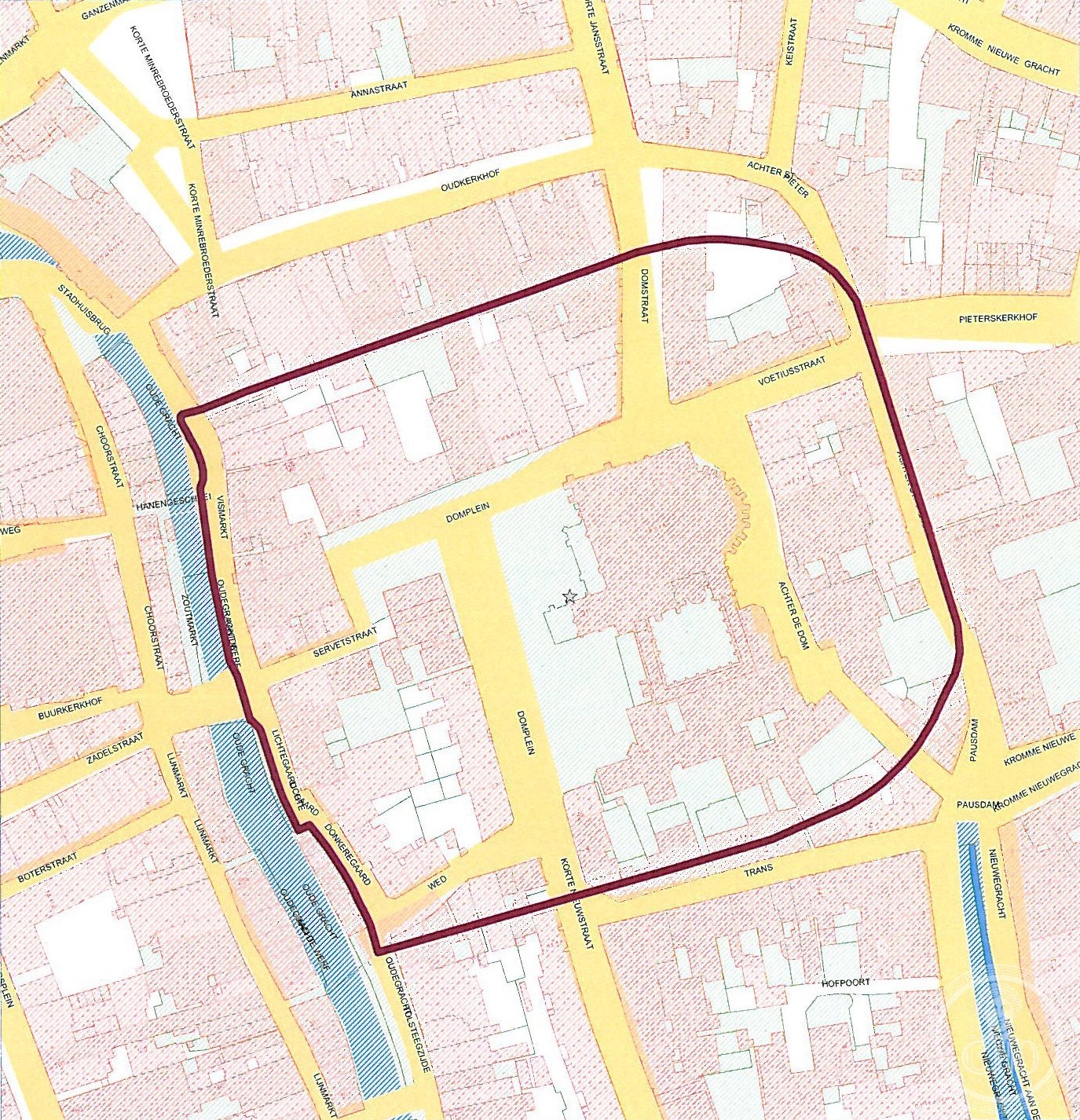
A Roman frontier fort whose strategic location on the Rhine shaped the settlement that became Utrecht, one of the Netherlands’ oldest cities.
At a glance
Traiectum was a Roman military installation guarding the empire’s frontier in Germania Inferior. Its remains lie beneath Utrecht’s historic center, a city whose name derives directly from the fort’s Latin designation.
History
Traiectum served as a defensive position on the Rhine, marking the boundary between Roman-controlled territory and Germanic lands beyond. The fort’s establishment anchored Roman control of the region and catalyzed civilian settlement. Over centuries, the original military installation was gradually abandoned, but the site’s importance never diminished—it became the foundation upon which Utrecht developed into a major medieval and modern city.
What you see
Direct remains are limited. Archaeological investigation has revealed the fort’s layout and structural features beneath Utrecht’s streets and buildings. The subsurface archaeology tells the story of Roman engineering and frontier life, though visible traces require specialist knowledge to identify amid the modern urban landscape.
Cultural significance
Traiectum represents Rome’s strategic reach into northern Europe and the enduring legacy of Roman occupation in the Low Countries. The fort’s name evolved into Utrecht—a tangible linguistic bridge between empire and modernity. It exemplifies how military strongholds can seed permanent settlements whose importance outlasts the imperial authority that created them.
Key facts
- Location: Utrecht, Netherlands
- Coordinates: 52.0907, 5.1216
- Period: Roman (Germania Inferior frontier)
- Status: Archaeological site (subsurface remains)
Practical information & getting there
Traiectum’s remains are integrated into Utrecht’s city center. While the fort itself is not a separate visitor site, the city’s archaeological museums and guided heritage walks offer context and interpretation. Utrecht is well connected by train and is accessible to visitors exploring Dutch medieval and Roman history.
Sources & resources
Find it on the map
See this place and what’s around it →📷 Become a Cultural Heritage Online photographer
Share your photos of places: they stay published under your name as the author. The more they're seen, the more you get noticed — and soon a contest will reward the most appreciated photos.
Log in or sign up free to add a photoIs this page about you?
This page is read by travellers and heritage enthusiasts who find it on Google. Tell us how you are connected to this place and we will take it from there.