

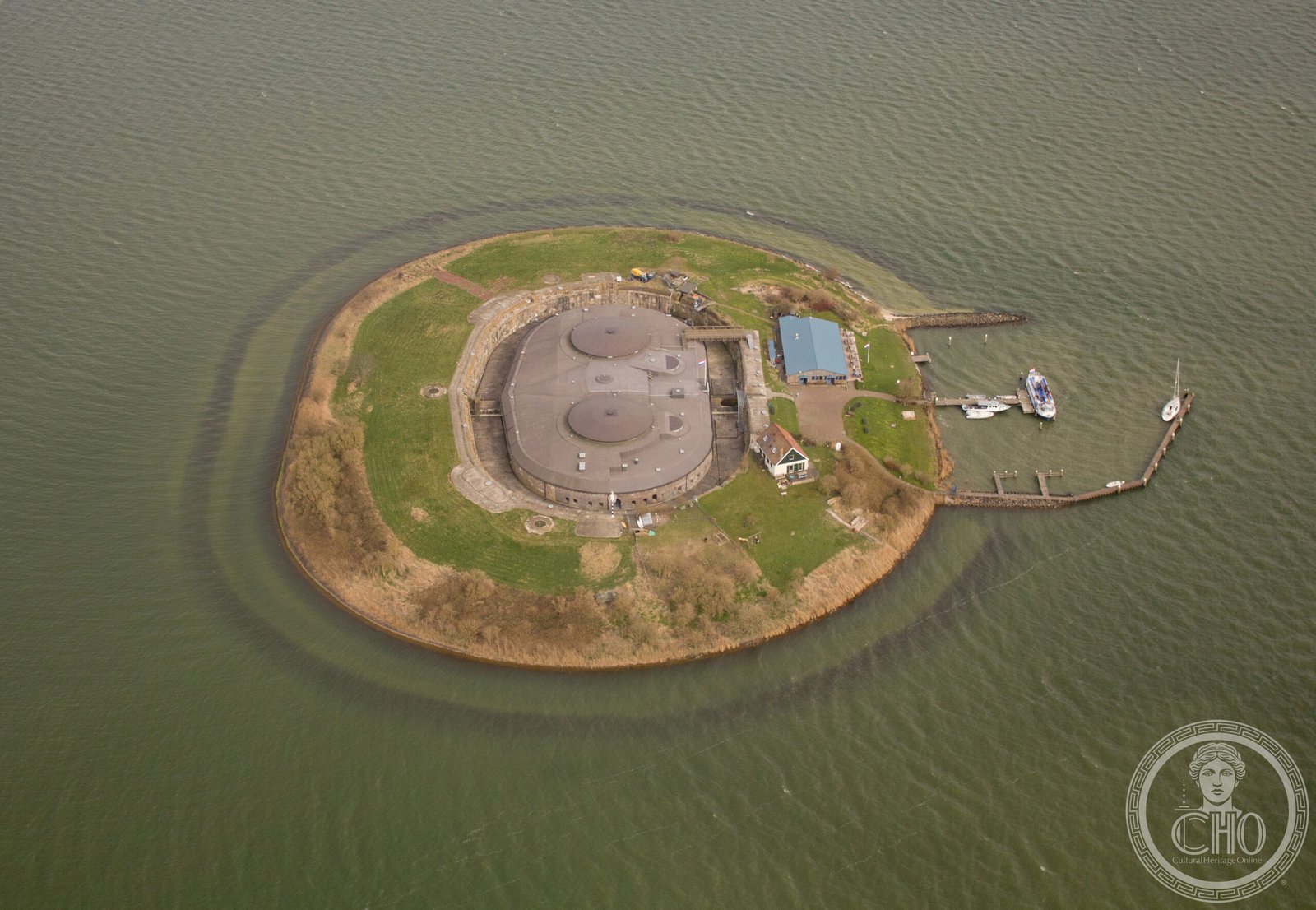
An artificial island fortress guarding Amsterdam’s harbour, Pampus stands as a monument to Dutch maritime defence and ingenious 19th-century engineering.
At a glance
Pampus is a late 19th-century sea fort on an artificial island in the IJmeer, a lake east of Amsterdam. Part of the Defence Line of Amsterdam—a UNESCO World Heritage Site comprising 42 fortifications—it remains a striking example of Dutch military architecture and water management.
History
Built in the late 19th century, Pampus was constructed to defend the entrance to IJ Bay and Amsterdam’s harbour. It functioned as part of a coordinated defensive system alongside the artillery battery on the lighthouse island near Durgerdam and another battery at the Diemer seawall. Together, these three positions created a strategic triangle protecting one of Northern Europe’s most important ports.
In 1996, UNESCO recognized the entire Defence Line of Amsterdam as a World Heritage Site, acknowledging all 42 forts as exceptional examples of 19th-century military engineering and urban defence strategy.
What you see
The fort’s design reflects the technological innovations of late 19th-century coastal defence. As an artificial island installation, Pampus demonstrates the Dutch mastery of constructing and fortifying man-made structures in water—a defining characteristic of the broader Defence Line.
Cultural significance
Pampus represents a crucial moment in European military history when rapidly advancing artillery technology forced nations to reimagine coastal fortification. Its integration into the Defence Line showcases Dutch strategic thinking and their commitment to protecting commercial interests through coordinated, modern defence infrastructure.
Key facts
- Country: Netherlands
- Location: IJmeer, near Amsterdam; municipality of Gooise Meren
- Coordinates: 52.36°N, 5.07°E
- UNESCO World Heritage Site (1996) as part of Defence Line of Amsterdam
- Part of a 42-fort defensive system
Practical information & getting there
Pampus is open to visitors. The island is accessible from Amsterdam and surrounding areas; consult local tourism resources for current visiting arrangements and transportation details.
Sources & resources
Find it on the map
See this place and what’s around it →📷 Become a Cultural Heritage Online photographer
Share your photos of places: they stay published under your name as the author. The more they're seen, the more you get noticed — and soon a contest will reward the most appreciated photos.
Log in or sign up free to add a photoIs this page about you?
This page is read by travellers and heritage enthusiasts who find it on Google. Tell us how you are connected to this place and we will take it from there.