

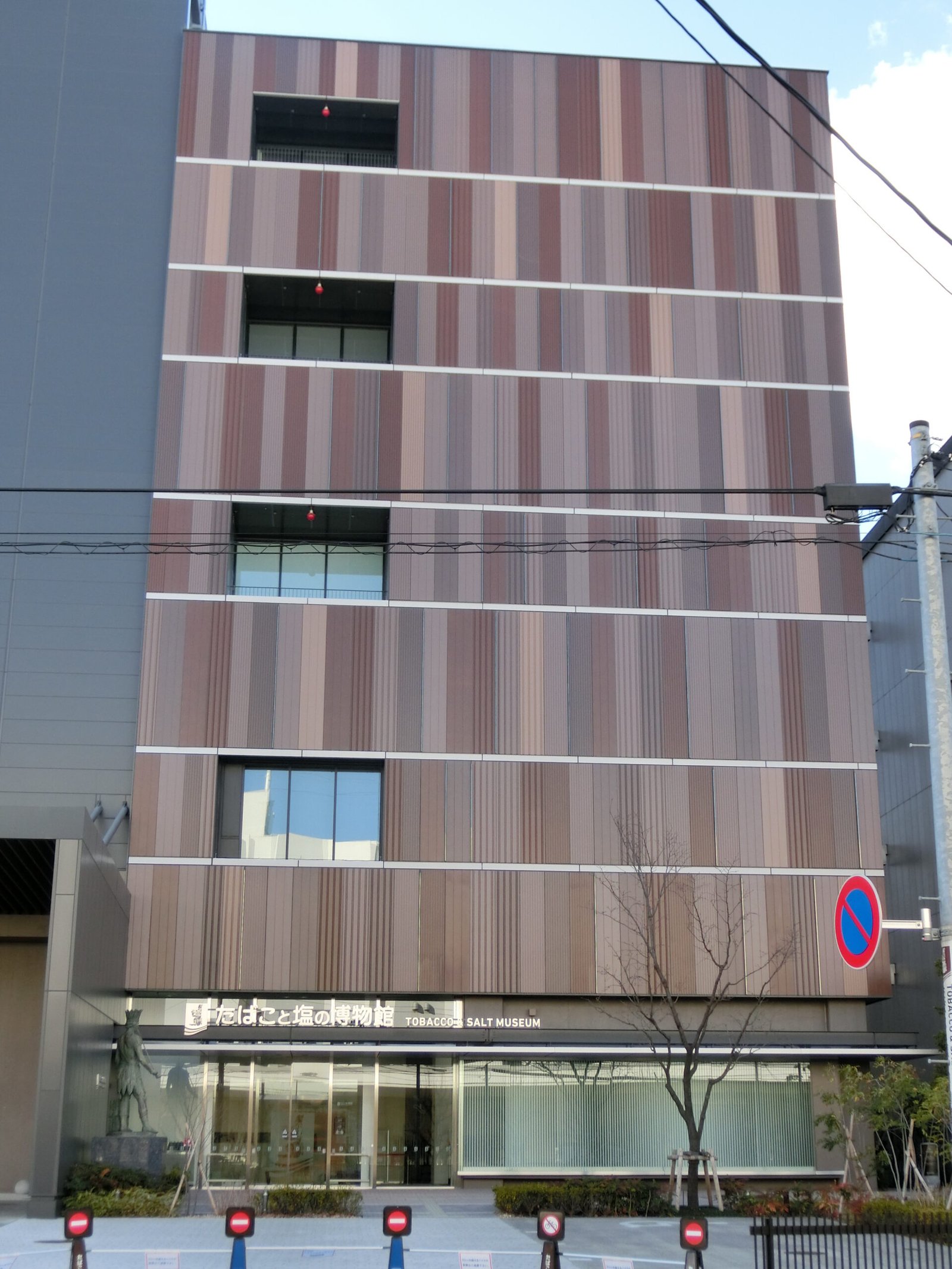
A museum devoted to two commodities that shaped empires and everyday habit, run by Japan Tobacco on the eastern bank of the Sumida River.
At a glance
The Tobacco and Salt Museum traces the parallel stories of two substances once controlled by state monopoly in Japan. Salt preserved food and bodies. Tobacco preserved habit and ritual. Around 38,000 objects sit across its galleries, from pipes and packaging to raw mineral hauled from distant mines.
History
Japan Tobacco founded the museum in 1978. It first opened in Shibuya, a district then and now dense with commerce. The collection outgrew that setting over decades of acquisition. In 2015 the museum relocated to Sumida, on a site designed by Yasui Architects & Engineers. The move placed the institution nearer the river district long associated with craft and trade.
What you see
Inside, scale does much of the storytelling. A single block of rock salt from Poland weighs 1.4 tonnes, mined and shipped whole rather than processed. Other salt blocks arrive from separate corners of the world, each a geological signature of its origin. A replica Mayan shrine stands elsewhere in the galleries, marking South America as the place where tobacco use is understood to have begun. The building itself accommodates practical study spaces alongside display: a ventilated smoking room, a workshop room, and a reading room sit near the museum shop, giving the visit a working, almost laboratory quality rather than pure spectacle.
Cultural significance
Few museums anywhere treat tobacco and salt as a paired subject. Both were once state monopolies in Japan, taxed and regulated as instruments of revenue and control. The museum’s ownership by Japan Tobacco keeps that corporate lineage visible rather than obscured. Its holdings connect Japanese domestic history to global commodity chains, from Andean ritual use of tobacco to European salt extraction. That breadth gives the collection an unusual comparative value for historians of trade, taxation, and daily consumption.
Key facts
- Location: Sumida-ku, Tokyo, Japan
- Founded: 1978, originally in Shibuya
- Relocated to Sumida: 2015
- Current building architect: Yasui Architects & Engineers
- Operator: Japan Tobacco
- Collection size: approximately 38,000 artifacts
- Notable object: a 1.4 tonne block of Polish rock salt
Practical information & getting there
The museum sits in Sumida-ku, on Tokyo’s eastern side, reachable within the city’s dense rail network. You should check current hours and admission on the official website before visiting, since museum schedules change. Allow time for both the historical galleries and the working spaces, including the reading room and shop, which round out the visit beyond the display cases.
Sources & resources
Find it on the map
See this place and what’s around it →📷 Become a Cultural Heritage Online photographer
Share your photos of places: they stay published under your name as the author. The more they're seen, the more you get noticed — and soon a contest will reward the most appreciated photos.
Log in or sign up free to add a photoIs this page about you?
This page is read by travellers and heritage enthusiasts who find it on Google. Tell us how you are connected to this place and we will take it from there.