
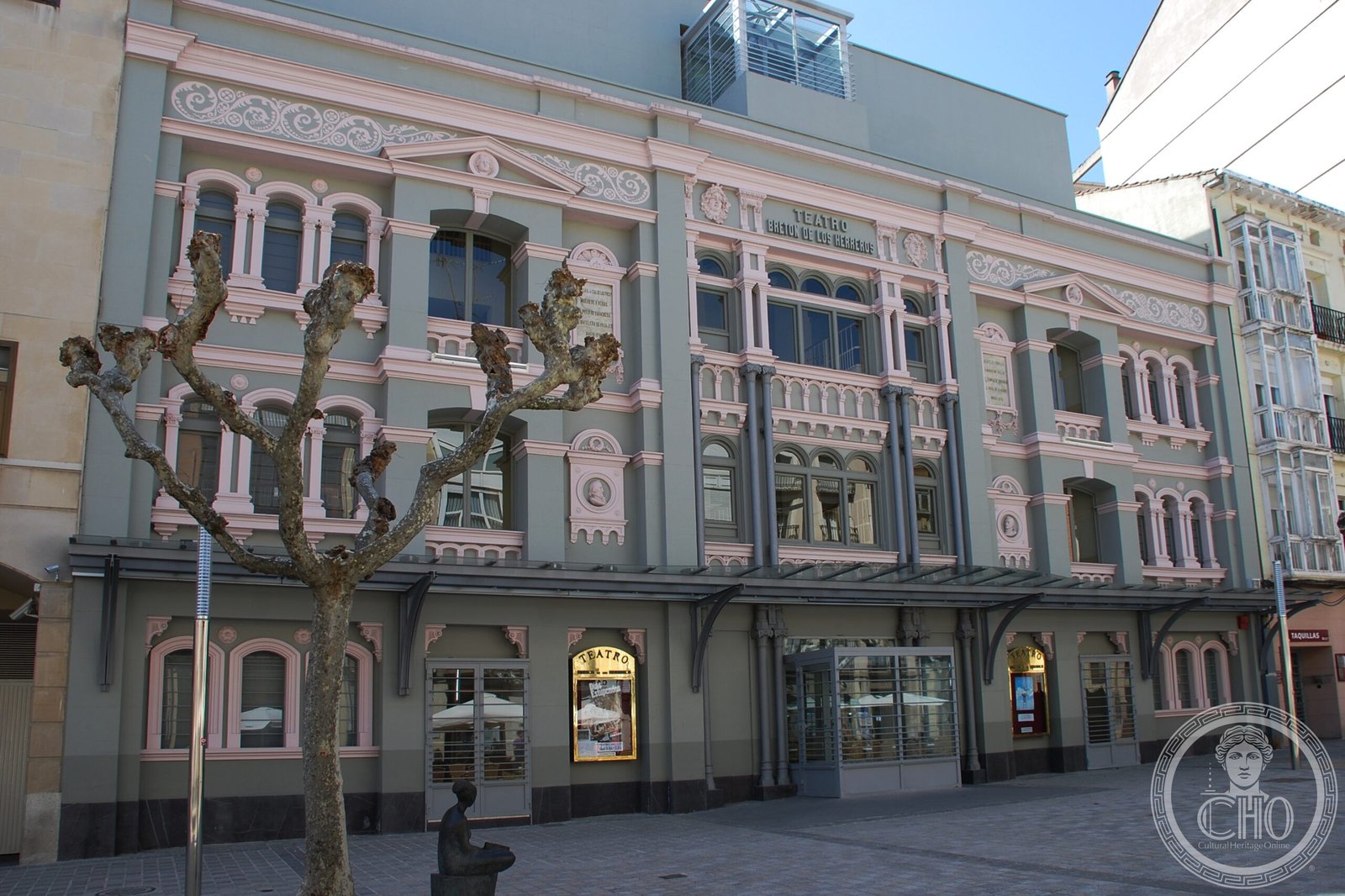
A 19th-century playhouse in Logroño that honours the Spanish dramatist Manuel Bretón de los Herreros, whose name it has borne since 1902.
At a glance
This theatre stands as a cultural landmark in the capital of La Rioja, recognized by the Spanish government as a property of cultural interest. Its architecture reflects the theatrical tastes of the industrial age.
History
Constructed during the nineteenth century, the theatre operated under its original name until 1902, when it was renamed to honour Manuel Bretón de los Herreros, a celebrated Spanish playwright and writer. The building’s significance was formally acknowledged when it was declared a Bien de Interés Cultural (Cultural Property of Spain) in 1983, ensuring its protection for future generations.
What you see
The theatre’s design exemplifies 19th-century theatrical architecture. Details of its interior layout and decorative scheme reflect the performance standards of its era.
Cultural significance
The naming of this theatre after Manuel Bretón de los Herreros underscores his importance in Spanish letters. The venue represents both the theatrical heritage of Logroño and the broader cultural achievements of La Rioja’s artistic tradition.
Key facts
- Country: Spain
- City: Logroño, La Rioja
- Constructed: 19th century
- Named after: Manuel Bretón de los Herreros (since 1902)
- Coordinates: 42.465, -2.44833
- Designated: Bien de Interés Cultural in 1983
Practical information & getting there
The theatre is located in central Logroño. For current opening hours, performance schedules, and ticket information, contact local tourism services or the venue directly.
Sources & resources
Find it on the map
See this place and what’s around it →📷 Become a Cultural Heritage Online photographer
Share your photos of places: they stay published under your name as the author. The more they're seen, the more you get noticed — and soon a contest will reward the most appreciated photos.
Log in or sign up free to add a photoIs this page about you?
This page is read by travellers and heritage enthusiasts who find it on Google. Tell us how you are connected to this place and we will take it from there.