
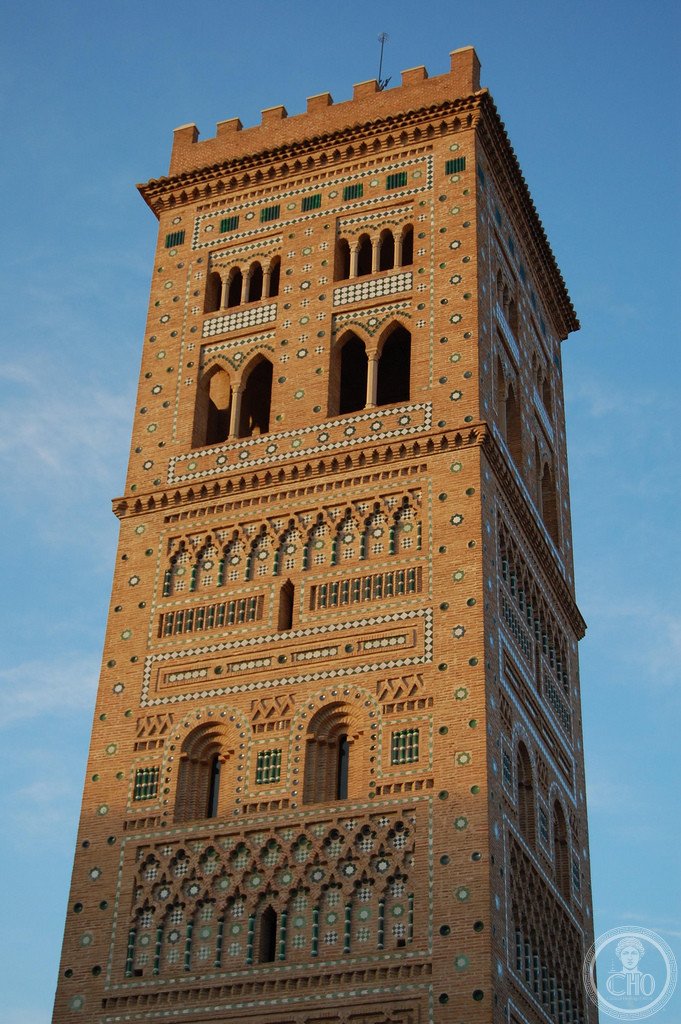
A striking Mudéjar gate-tower crowned with glazed ceramic decoration, this 14th-century structure embodies Aragonese craftsmanship and the region’s Islamic architectural heritage.
At a glance
The Torre de San Martín rises above Teruel’s medieval street plan as a masterwork of Aragonese Mudéjar design. Built in 1315–1316, the tower showcases the region’s distinctive fusion of Christian and Islamic traditions through its ornamental tilework and ingenious structural system. An ogival arch pierces the tower, allowing traffic to pass through its base—a practical solution typical of urban gate-towers.
History
Construction took place in 1315–1316 during Teruel’s expansion as a prosperous medieval town. By the 16th century, humidity had caused significant erosion to the tower’s lower section, prompting a restoration campaign in 1550. An adjacent church dedicated to St. Martin, built during the Baroque period, became the tower’s namesake. In 1986, the Torre de San Martín received UNESCO World Heritage designation alongside Teruel’s other Mudéjar monuments, recognizing the town’s architectural importance.
What you see
The tower follows the scheme of Almohad minarets, employing two concentric square towers with a staircase between them. The inner tower contains three floors, each covered with cross vaults that distribute weight efficiently. The exterior displays the tower’s most celebrated feature: intricate ceramic glaze work adorning its surfaces—a hallmark of Mudéjar decoration. An ogival arch at the base frames the passageway, combining structural function with Gothic elegance.
Cultural significance
As one of Teruel’s principal Mudéjar monuments, the Torre de San Martín represents a crucial chapter in Spanish medieval architecture. The Mudéjar style—born from the coexistence of Christian and Muslim craftsmen in Reconquista-era territories—finds distinctive expression in Aragon’s towers and churches. This tower’s UNESCO recognition acknowledges its role in preserving a unique cultural synthesis no longer visible elsewhere in Europe.
Key facts
- Built: 1315–1316
- Location: Teruel, Aragon, Spain
- Coordinates: 40.34°N, 1.11°W
- UNESCO World Heritage: Designated 1986
- Architectural style: Aragonese Mudéjar
- Restored: 1550
Practical information & getting there
The Torre de San Martín stands in Teruel’s Old Town, accessible on foot. Teruel is reached by road from Valencia (125 km south) or Zaragoza (175 km north). As an active monument, it may have restricted access; check locally before visiting. The tower is best viewed from street level and surrounding plazas.
Sources & resources
Find it on the map
See this place and what’s around it →📷 Become a Cultural Heritage Online photographer
Share your photos of places: they stay published under your name as the author. The more they're seen, the more you get noticed — and soon a contest will reward the most appreciated photos.
Log in or sign up free to add a photoIs this page about you?
This page is read by travellers and heritage enthusiasts who find it on Google. Tell us how you are connected to this place and we will take it from there.