

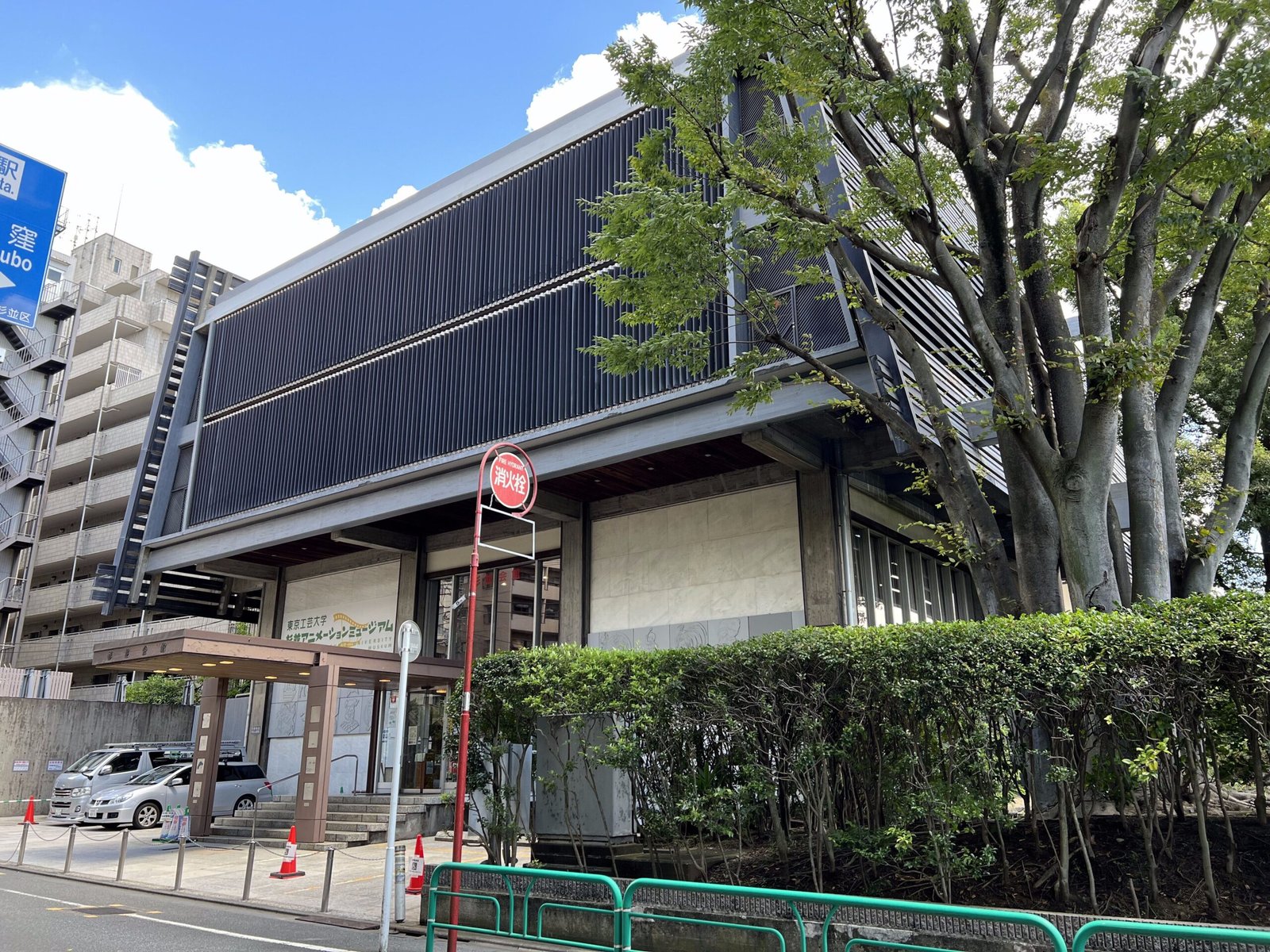
In a quiet corner of Kamiogi, a ward-run museum treats animation itself as its subject, not any single studio or auteur.
At a glance
Suginami Animation Museum sits in Suginami Ward, an area long associated with Tokyo’s animation industry. Admission is free. Since September 2018 it has carried the sponsored name “Tokyo Polytechnic University Suginami Animation Museum,” a naming-rights arrangement rather than a change of ownership. The museum is run by the general incorporated association The Association of Japanese Animations.
History
The museum began life as a Suginami Ward facility in May 2003. It was conceived as a local industry initiative, a way of honoring and preserving the ward’s long-standing role as a hub for animation production. In March 2005 it expanded, reopened, and took on a new form under its present name. Unlike a single-creator institution, it was built to represent animation as a whole. Wikipedia notes this made it the first museum of its kind in Japan. Leadership has passed through recognizable industry figures. Shinichi Suzuki, an animation writer once depicted in Fujiko Fujio’s manga Koike-san, served as superintendent before Rikio Kichida took the post on April 1, 2021. Kichida’s background includes work at Tokyo Movie, later TMS Entertainment, and a role directing the industry group itself.
What you see
Inside, the museum functions as archive, classroom, and small screening space combined. Displays trace animation’s history and its production process, from early sketches to finished sequences. Visitors encounter demonstrations of dubbing and sound-effect work, the layered craft usually hidden behind a finished cartoon. The library’s holdings extend beyond the galleries; associated screenings of animated works have been staged elsewhere using the collection. At times the museum’s tone shifts. When notable mangaka or animation writers have died, the space has hosted mourning exhibitions in their memory, including tributes to Toshiko Ueda and Hiroshi Ōsaka.
Cultural significance
The museum’s premise is unusual. Rather than celebrating one studio’s legacy, as Mitaka’s Ghibli Museum does, it frames animation as a shared national craft and industry. That distinction matters locally. Suginami Ward has long been home to animation studios, and the museum was founded explicitly as a piece of local industry heritage, a public acknowledgment of work often done anonymously. Its naming-rights arrangement is itself telling. When the ward opened sponsorship in 2018, animation production companies were deliberately excluded from bidding, keeping the museum’s identity separate from any single commercial player. Tokyo Polytechnic University won the five-year contract, later carrying its name past the original 2023 expiration.
Key facts
- Location: Kamiogi, Suginami Ward, Tokyo, Japan
- Opened as a ward facility: May 2003
- Reopened under current form: March 5, 2005
- Sponsored name since September 2018: Tokyo Polytechnic University Suginami Animation Museum
- Operator: The Association of Japanese Animations
- Admission: free
Practical information & getting there
The museum is located in Kamiogi, within Suginami Ward, at coordinates roughly 35.710°N, 139.608°E. You’ll find it in a residential part of the ward rather than a central tourist district, so plan a route via the ward’s local rail and bus links before setting out. Because admission is free, a visit pairs easily with wider exploration of Suginami’s animation-industry neighborhoods. Check the official website for current hours and any temporary exhibitions before visiting.
Sources & resources
Find it on the map
See this place and what’s around it →📷 Become a Cultural Heritage Online photographer
Share your photos of places: they stay published under your name as the author. The more they're seen, the more you get noticed — and soon a contest will reward the most appreciated photos.
Log in or sign up free to add a photoIs this page about you?
This page is read by travellers and heritage enthusiasts who find it on Google. Tell us how you are connected to this place and we will take it from there.