
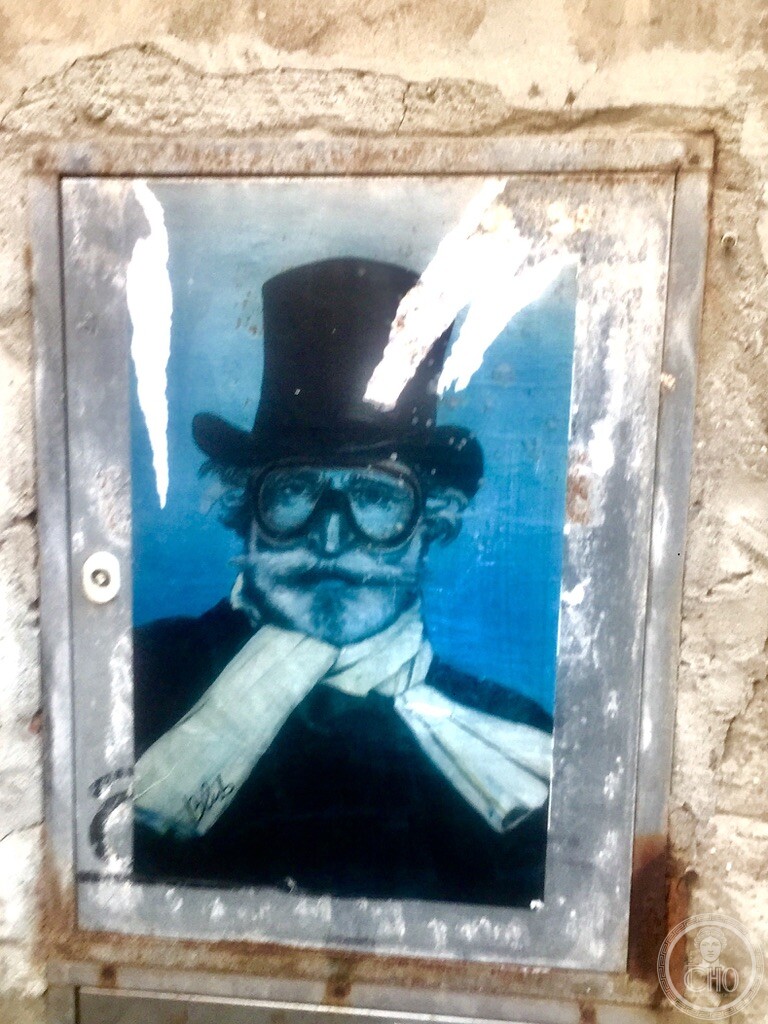
Tucked into the peaceful university precinct of southern Dorsoduro, Campo San Basegio offers an unexpected encounter between Venetian historic stones and contemporary urban art, highlighted by Blub’s ironic underwater paste-ups and poetic metalwork stencils.
At a glance
Named after the vanished 9th-century church of San Basilio (demolished in 1824), Campo San Basegio is a sunlit residential square connecting the Zattere waterfront with the quiet interior canals of Dorsoduro. Bordering university departments and residential fondamente, the square has become a canvas for thoughtful, transient urban interventions that dialogue with the city’s fragile marine existence.
Key facts
- Location: Campo San Basegio (San Basilio), Dorsoduro, Venice
- Featured artist: Blub (“L’arte sa nuotare” / Art Knows How to Swim)
- Artistic medium: Wheat-pasted acrylic portrait on metal utility box; two-tone aerosol stencil on antique iron gate
- Urban context: University district adjoining Ca’ Foscari San Basilio and the Church of San Sebastiano
- Conservation approach: Non-destructive urban art adhering strictly to metal infrastructure and removable doors rather than historic masonry
- GPS: 45.43103, 12.32092 · Open in Google Maps
Urban context & history
In Venetian dialect, “Basegio” translates to Saint Basil. The square was historically dominated by the parish church of San Basilio, originally founded in 870 by the noble Basegio family and rebuilt after the devastating earthquake of 1347. Following the Napoleonic suppression of Venetian religious corporations in 1810, the church fell into disuse and was completely demolished in 1824, opening the spacious paved expanse enjoyed by locals today.
Bordering the western terminal of the Zattere promenade and the Stazione Marittima docklands, Campo San Basegio evolved in the 20th century into an intellectual enclave anchored by the humanities campuses of Ca’ Foscari University of Venice. The quiet flow of students, bookshops, and neighborhood cafés creates a vibrant cultural climate that embraces contemporary artistic expression.
The street art interventions
Venice maintains strict preservation statutes to protect its delicate Istrian stone and historic brickwork. In response, a unique street art etiquette has emerged: artists execute paste-ups and stencils exclusively on modern electrical utility boxes, construction hoardings, and rusted sheet-metal doors, sparing the historic fabric.
Chief among these is the work of the anonymous Italian artist Blub, whose project L’arte sa nuotare (“Art Knows How to Swim”) has gained international acclaim. Blub paints classical figures, renaissance masters, and 19th-century gentlemen submerged in an aquatic blue dreamscape, wearing modern diving masks and snorkeling gear. In a city living on the frontline of rising tides and acqua alta, Blub’s submerged portraits offer an ironic, defiant metaphor: no matter the rising water, art and culture know how to swim.
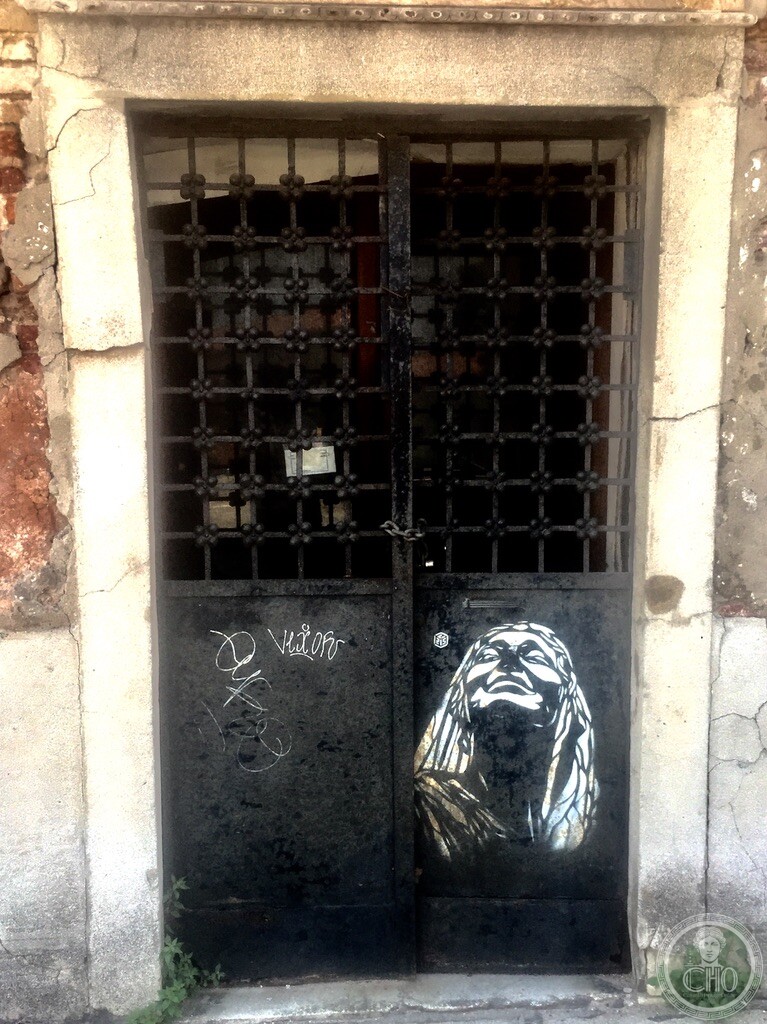
Across the campo, another striking urban intervention adorns an antique gated portal: a delicate stencil of a woman’s face tilted upward in contemplation, spray-painted onto the lower sheet metal. These spontaneous works turn ordinary neighborhood strolls into an engaging scavenger hunt of contemporary Venetian visual culture.
Practical information
- Access: Public square accessible freely 24/7
- Atmosphere: Quiet and relaxed, populated by university students and neighborhood residents
- Photography: Best natural light during late morning and early afternoon
Getting there
Take vaporetto Line 2 or Line 6 to the San Basilio landing along the Zattere. From the landing, walk north across Calle del Vento directly into Campo San Basegio (approx. 2 minutes’ walk). Alternatively, walk west along Fondamenta Zattere al Ponte Longo and turn inward via Rio Terà San Basegio.
Nearby
- Chiesa di San Sebastiano — Paolo Veronese’s burial place and artistic pantheon, 120 m north
- Ponte dei Pugni — Historic bridge with combat footprints, 250 m northeast
- Fondamenta delle Zattere — Scenic southern waterfront promenade with sweeping views across the Giudecca Canal, 100 m south
Sources
- Tassini, Giuseppe. Curiosità Veneziane. Historical notes on the demolished parish of San Basilio.
- Blub. L’arte sa nuotare. Urban art series documentation.
- Geographical coordinates: 45.43103, 12.32092.
Find it on the map
See this place and what’s around it →Record researched and written by Carla Szathvary for Cultural Heritage Online, 2026.
📷 Become a Cultural Heritage Online photographer
Share your photos of places: they stay published under your name as the author. The more they're seen, the more you get noticed — and soon a contest will reward the most appreciated photos.
Log in or sign up free to add a photoIs this page about you?
This page is read by travellers and heritage enthusiasts who find it on Google. Tell us how you are connected to this place and we will take it from there.