
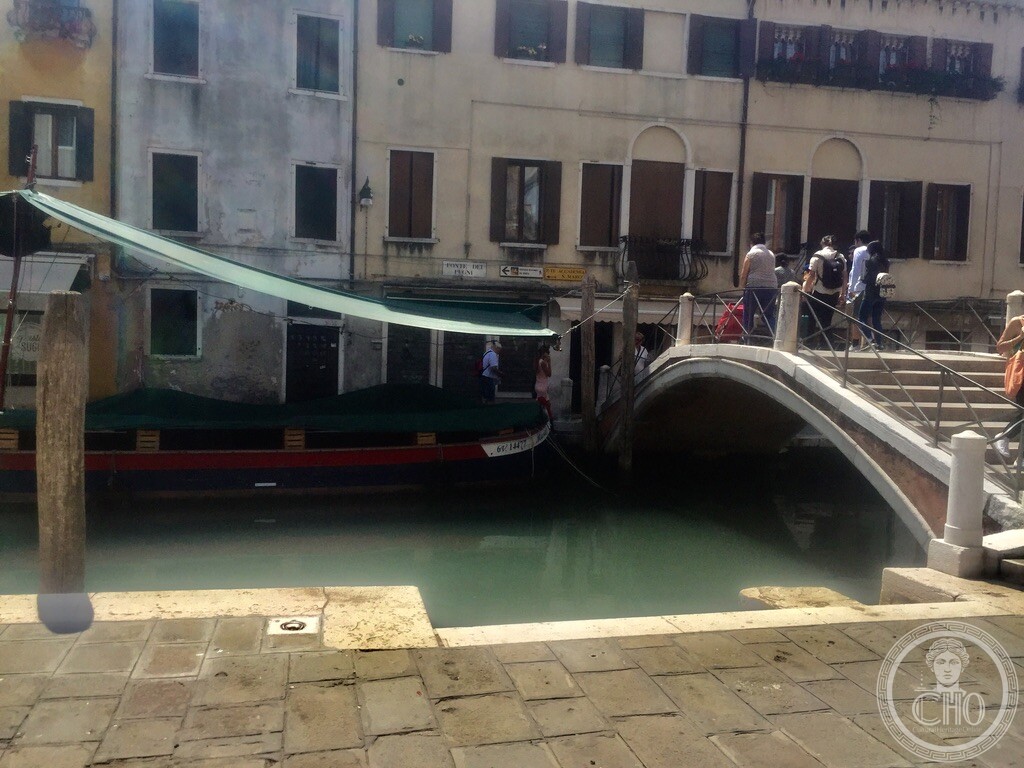
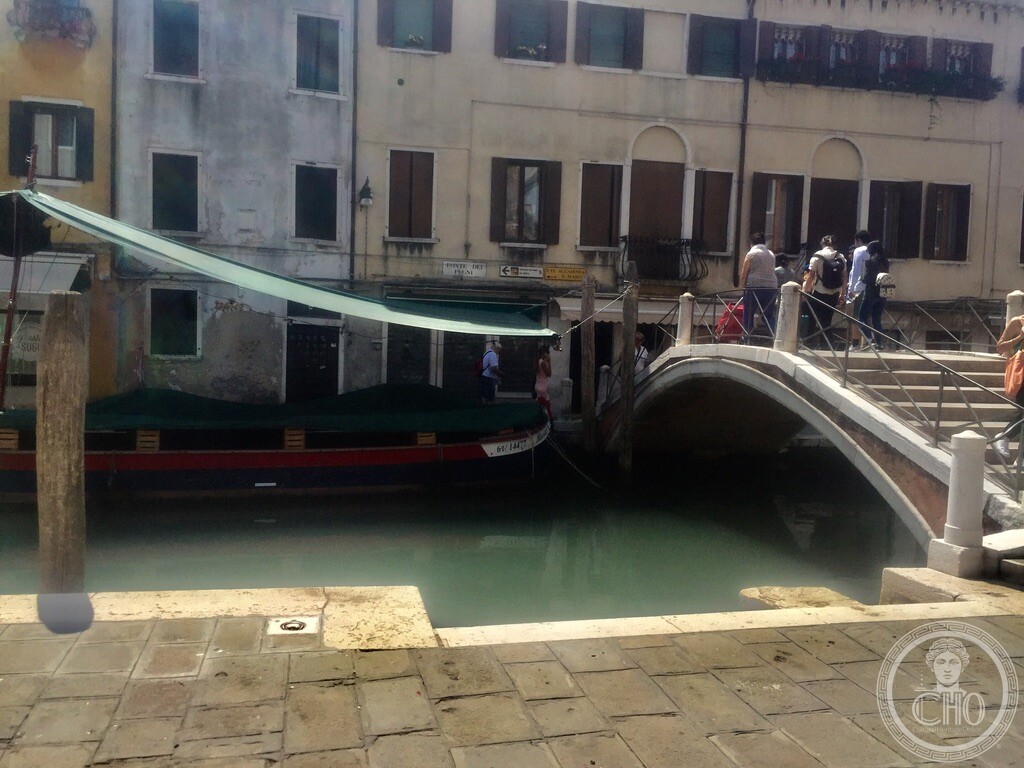
A small, unremarkable bridge over the Rio di San Barnaba where, once a year for centuries, two halves of the city fought each other with their fists until one side threw enough of the other into the canal.
At a glance
The Ponte dei Pugni — the “Bridge of Fists” — takes its name from the Guerra dei Pugni, ritualised fist-fights between two rival factions of the city, the Castellani of San Pietro di Castello and the Nicolotti of San Nicolò dei Mendicoli. Fought here and on other bridges without parapets, the contests ran from September to Christmas and could last all night, the goal being simply to throw the other side’s men into the canal. Four marble footprints set into the paving at the centre of the bridge mark the spots where individual champions squared off.
Key facts
- Name: Ponte dei Pugni — “Bridge of Fists”
- Location: over the Rio di San Barnaba, Dorsoduro, Venice
- Rival factions: the Castellani (red caps and sashes, drawn from the Arsenale’s workers) and the Nicolotti (black, drawn from the fishing community of San Nicolò dei Mendicoli)
- Season: the fights ran from September to Christmas
- Regulated: by the Venetian government around 1292; banned in 1705 after the violence grew too severe
- Marker: four marble footprints set into the bridge’s paving, marking the champions’ starting positions
- Successor tradition: from 1705 to the fall of the Republic in 1797, the rivalry continued instead as the Forze d’Ercole, human-pyramid displays in Piazza San Marco during Carnival
- GPS: 45.43344, 12.32450 · Open in Google Maps
History
The origins of the rivalry between Castellani and Nicolotti are unclear — some trace it to old civil conflicts between Eraclea and Jesolo, others to the killing of a bishop of Castello by a man from the San Nicolò district — but by the Middle Ages the two halves of the city had settled into an annual ritual of organised violence. Until the eighteenth century, Venice’s bridges had no railings, which was the point: the object of a Guerra dei Pugni was to throw as many of the opposing side’s fighters into the water as possible, with the team still standing on the bridge declared the winner. The contests, permitted by the government from September to Christmas from around 1292, escalated over the centuries from ritual to real brawls with serious injuries and deaths, until the Republic banned them outright in 1705.
The tradition did not simply disappear. From 1705 until the Republic’s fall in 1797, the same civic rivalry found a less bloody outlet in the Forze d’Ercole, elaborate human pyramids built by teams in Piazza San Marco during Carnival. On the Ponte dei Pugni itself, the fights left a permanent, literal mark: four white marble footprints inlaid in the stone at the bridge’s centre, still there today, showing where the two champions once took their stance before the crowd.
Getting there
The bridge crosses the Rio di San Barnaba in Dorsoduro, a short walk from Campo Santa Margherita and the Ca’ Rezzonico vaporetto stop.
Sources
- Conoscere Venezia, Ponte dei Pugni sul Rio de San Barnaba and I Castellani e i Nicolotti alla Guerra dei pugni — conoscerevenezia.it: the factions, the fighting season, the 1292 regulation, the 1705 ban, and the marble footprints
- Coordinates cross-checked against OpenStreetMap Nominatim for the Rio di San Barnaba
Photo gallery
Find it on the map
See this place and what’s around it →Record researched and written by Carla Szathvary for Cultural Heritage Online, 2026.
📷 Become a Cultural Heritage Online photographer
Share your photos of places: they stay published under your name as the author. The more they're seen, the more you get noticed — and soon a contest will reward the most appreciated photos.
Log in or sign up free to add a photo