
Consecrated in 1592 as a solemn civic thanksgiving for Venice’s deliverance from the catastrophic plague of 1575–1577, the Redentore is Andrea Palladio’s supreme ecclesiastical achievement, commanding the Giudecca waterfront with classical majesty.
At a glance
Dominating the skyline of the Giudecca island, the Chiesa del Santissimo Redentore (commonly known as Il Redentore) is one of the world’s most celebrated works of sacred Renaissance architecture. Commissioned by the Venetian Senate from the master architect Andrea Palladio, it serves both as an active Capuchin conventual church and the symbolic heart of the city’s greatest annual religious festival, the Festa del Redentore.
Key facts
- Architect: Andrea Palladio (designed 1576; built 1577–1592; completed by Antonio da Ponte following Palladio’s death)
- Patron: The Venetian Senate and Doge Alvise I Mocenigo
- Consecration date: 27 September 1592
- Civic vow: Votive temple erected following the 1575–1577 plague epidemic that claimed over 46,000 lives
- Custodians: Friars Minor Capuchin (Capuchin Franciscan Order)
- Iconic feast: Festa del Redentore, celebrated annually on the third Sunday of July with a floating bridge of boats across the canal
- GPS: 45.42524, 12.33247 · Open in Google Maps
History & the civic vow
Between 1575 and 1577, Venice was struck by one of the deadliest epidemics in Mediterranean history. The bubonic plague decimated the lagoon capital, claiming approximately 46,000 lives—nearly a third of the city’s population—including the legendary Renaissance painter Titian. Unable to contain the contagion through quarantine and medical cordons, Doge Alvise I Mocenigo and the Senate took a solemn oath on September 4, 1576: to build a magnificent church dedicated to Christ the Redeemer (*Il Redentore*), and to stage an annual procession of gratitude across the water on the feast of the Most Holy Redeemer.
The Senate selected a site on the southern island of Giudecca, entrusting the design to Andrea Palladio, who had previously designed the nearby San Giorgio Maggiore. The foundation stone was laid on May 3, 1577. Although Palladio died in 1580 before construction was completed, the building was faithfully executed according to his wooden model by master builder Antonio da Ponte and consecrated with immense state ceremony in 1592.
Architecture & interior harmony
Palladio conceived the Redentore as a monument combining Roman imperial temple forms with the practical requirements of Venetian state ceremonial and Capuchin monastic simplicity. The gleaming facade in white Istrian stone resolves the classical problem of adapting an ancient Roman temple front to a basilica with aisles: it interlocks two distinct temple pediments resting on colossal composite pilasters.
The entire church is elevated on a monumental podium. Worshippers must ascend fifteen broad marble steps—a deliberate scriptural allusion to the fifteen Gradual Psalms and the ascent to the Temple of Solomon in Jerusalem, symbolically cleansing and elevating the visitor above the earthly realm.
Inside, the single wide nave is bathed in brilliant, clear daylight admitted through large semicircular thermal windows (*finestre termali*). The interior is unencumbered by colorful fresco, emphasizing pristine stucco and architectural rhythm. Beyond the crossing dome, an open semicircular colonnade of Corinthian columns frames the high altar while screening the private choir of the Capuchin friars behind it. The sacristy contains precious canvases by Paolo Veronese, Jacopo Tintoretto, Palma il Giovane, and Alvise Vivarini.
The Festa del Redentore
Every year on the third weekend of July, Venice fulfills its 1576 vow with the Festa del Redentore. A 330-meter floating pontoon bridge (*ponte votivo*), assembled from dozens of linked barges, is constructed across the Giudecca Canal from the Zattere directly to the steps of the Redentore.
On Saturday evening, hundreds of decorated boats gather in the San Marco basin for traditional dinners on the water, culminated by a spectacular forty-minute fireworks display reflected across the lagoon. On Sunday, a solemn procession led by the Patriarch of Venice, the Mayor, and civic authorities crosses the bridge on foot to celebrate the votive High Mass inside the basilica.
Practical information
- Visiting hours: Monday to Saturday 10:30–17:00 (last admission 16:30); closed to touristic visits on Sundays during religious services
- Admission: Included in the Chorus Association pass, or individual church ticket (€3.50)
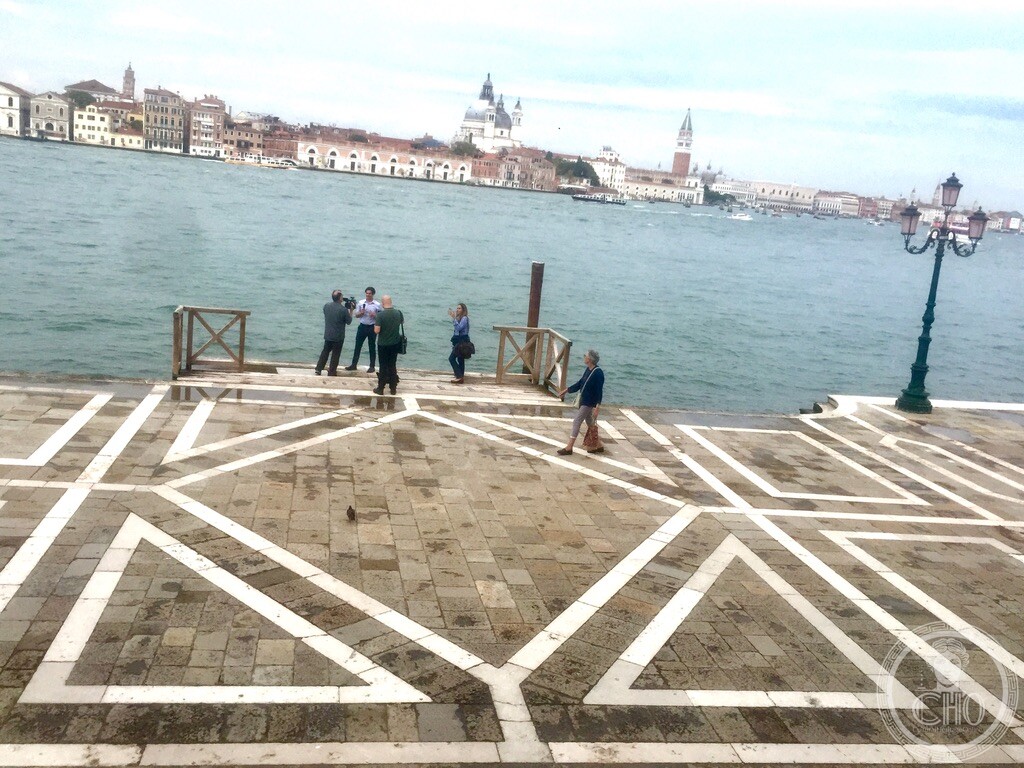
- Sagrato access: The wide waterfront terrace and fifteen steps are publicly accessible at all times for panoramic views
- Dress code: Modest sacred attire required inside (shoulders and knees covered)
Getting there
Take vaporetto Line 2, 4.1, or 4.2 to the Redentore landing on Giudecca. The vaporetto platform is positioned directly in front of the church steps. During the annual July festival, visitors can walk to the church directly across the temporary pontoon bridge from the Zattere.
Nearby
- Giudecca Underground & Fondamenta San Giacomo — Post-industrial street art and shipyards, 200 m west
- Chiesa delle Zitelle (Santa Maria della Presentazione) — Another Palladian facade on Giudecca, 400 m east
- Fondamenta della Giudecca waterfront promenade — Scenic waterside stroll with historic cafés and lagoon vistas
Sources
- Palladio, Andrea. I Quattro Libri dell’Architettura. Classical principles applied to ecclesiastical design.
- Howard, Deborah. The Architectural History of Venice. Analysis of the Redentore and Venetian votive churches.
- Chorus Association of Venetian Churches — official visiting guide and conservation records.
- Geographical coordinates: 45.42524, 12.33247.
Find it on the map
See this place and what’s around it →Record researched and written by Carla Szathvary for Cultural Heritage Online, 2026.
📷 Become a Cultural Heritage Online photographer
Share your photos of places: they stay published under your name as the author. The more they're seen, the more you get noticed — and soon a contest will reward the most appreciated photos.
Log in or sign up free to add a photo