
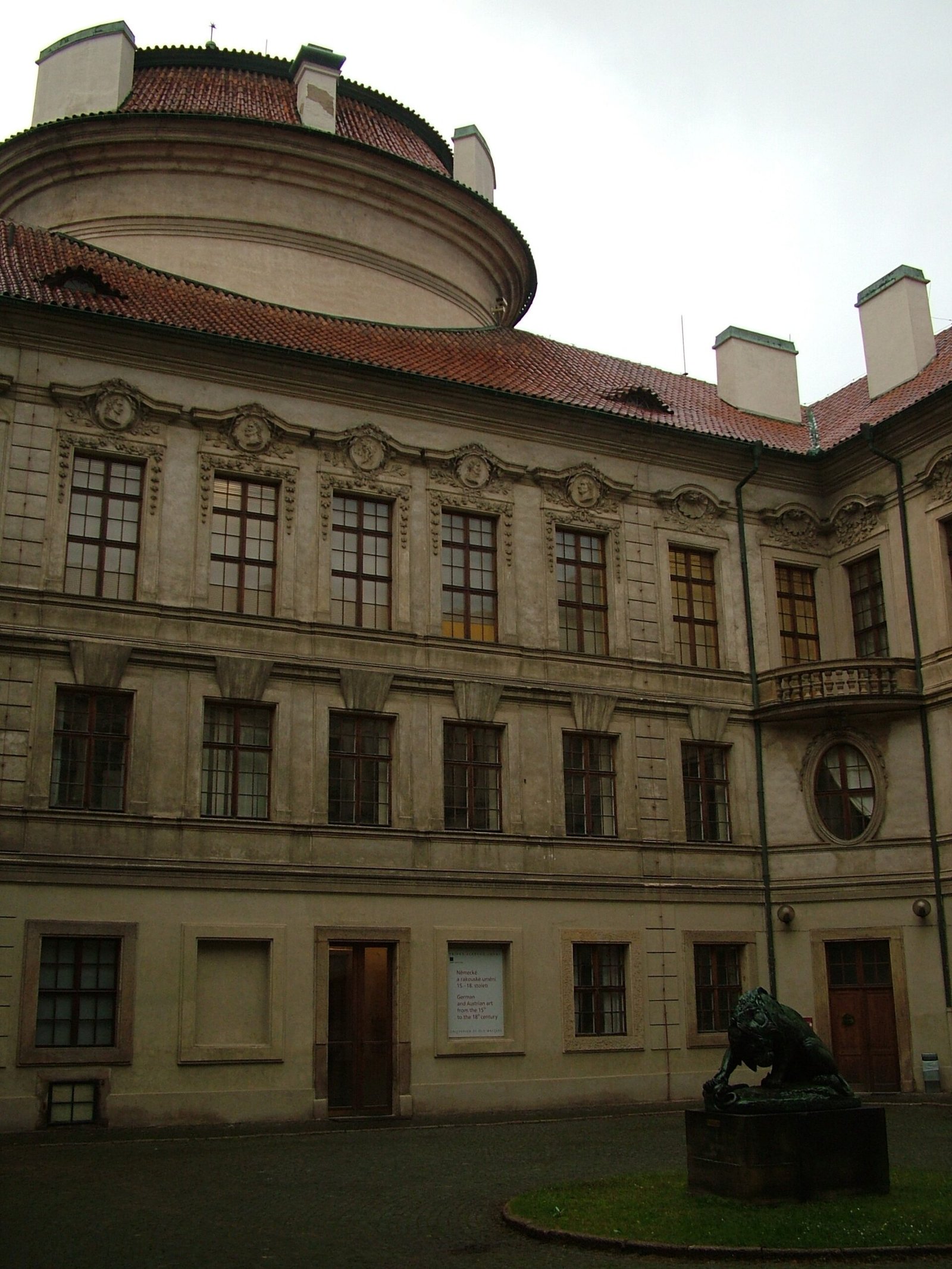
A magnificent Baroque palace in Prague’s historic core, now home to the National Gallery’s collection of European art and design.
At a glance
Sternberg Palace (Šternberský palác) stands as one of Prague’s finest Baroque residences. Designated as a cultural monument, the palace has been repurposed as a major exhibition space, allowing the public to experience both its architectural splendor and world-class artworks within its rooms.
History
The palace emerged during Prague’s flourishing Baroque period, when the city’s nobility commissioned grand urban residences. Its transformation into a public gallery reflects the modern commitment to preserving aristocratic heritage for scholarly and cultural access.
What you see
The building exemplifies Baroque architectural principles with elegant proportions and refined detailing characteristic of the period. Interior spaces retain period features while accommodating the practical demands of gallery display.
Cultural significance
Sternberg Palace functions as a cultural landmark, bridging Prague’s aristocratic past with contemporary artistic presentation. The National Gallery’s occupation ensures the collection reaches international audiences and researchers.
Key facts
- Country: Czechia
- City: Prague
- Coordinates: 50.090265, 14.39657
- Designated: Cultural monument of Czechia
- Current use: National Gallery Prague
Practical information & getting there
The palace is located in central Prague and remains accessible to visitors as part of the National Gallery Prague. You should contact the National Gallery directly for current hours, exhibitions, and admission details.
Sources & resources
Find it on the map
See this place and what’s around it →📷 Become a Cultural Heritage Online photographer
Share your photos of places: they stay published under your name as the author. The more they're seen, the more you get noticed — and soon a contest will reward the most appreciated photos.
Log in or sign up free to add a photoIs this page about you?
This page is read by travellers and heritage enthusiasts who find it on Google. Tell us how you are connected to this place and we will take it from there.