
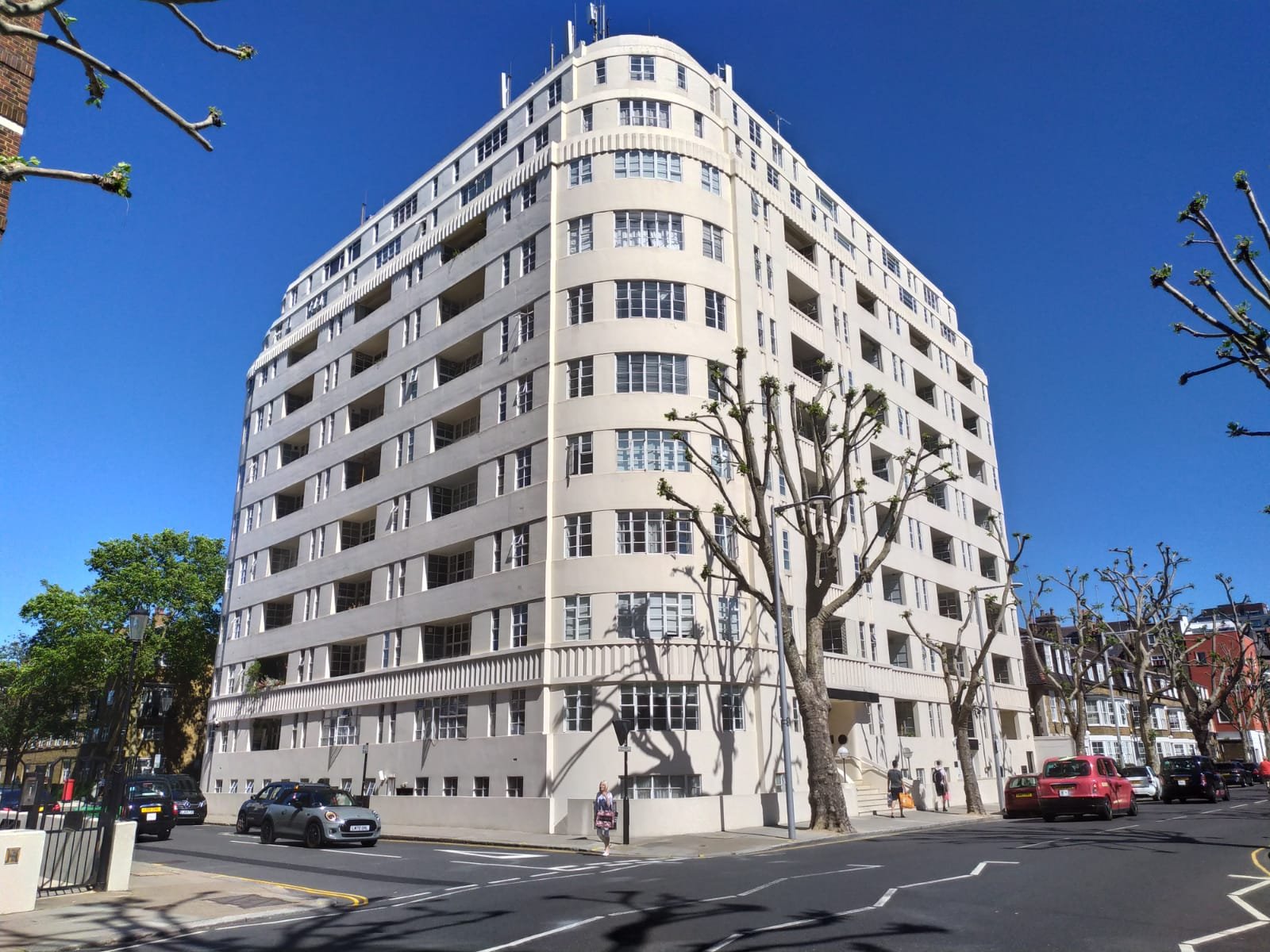
A high-rise residential building in Chelsea, designed by architect G. Kay Green as part of a cohesive streetscape that includes the neighbouring Nell Gwynn House.
At a glance
Sloane Avenue Mansions stands on one of Chelsea’s most distinguished addresses, a residential tower designed by G. Kay Green. Its companion building, Nell Gwynn House, was created by the same architect, establishing a unified architectural vision along the avenue.
History
Sloane Avenue Mansions represents early–to–mid twentieth-century residential development in Chelsea. Limited historical detail is currently available about the building’s origins and construction date.
What you see
The building displays the high-rise residential character typical of its period. Its design echoes that of the adjacent Nell Gwynn House, reflecting G. Kay Green’s architectural approach to the streetscape.
Cultural significance
Sloane Avenue Mansions contributes to Chelsea’s architectural heritage as a residential landmark. Its relationship to Nell Gwynn House demonstrates how paired developments can create visual and spatial coherence within an urban neighbourhood.
Key facts
- Location: Sloane Avenue, Royal Borough of Kensington and Chelsea, London
- Country: United Kingdom
- Coordinates: 51.4918, −0.1641
- Architect: G. Kay Green
- Adjacent to: Nell Gwynn House (also by G. Kay Green)
Practical information & getting there
The building is located in Chelsea, a central London neighbourhood well served by public transport. Sloane Avenue is accessible via Underground, bus, and on foot from South Kensington and Sloane Square stations.
Sources & resources
Find it on the map
See this place and what’s around it →📷 Become a Cultural Heritage Online photographer
Share your photos of places: they stay published under your name as the author. The more they're seen, the more you get noticed — and soon a contest will reward the most appreciated photos.
Log in or sign up free to add a photoIs this page about you?
This page is read by travellers and heritage enthusiasts who find it on Google. Tell us how you are connected to this place and we will take it from there.