
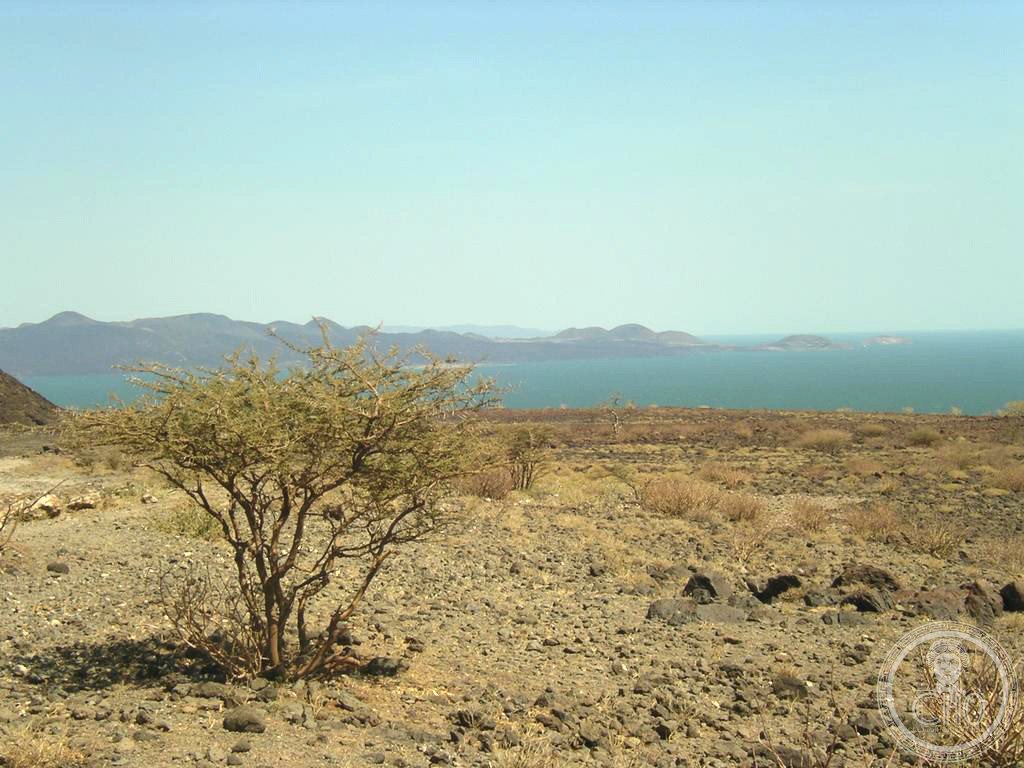
On the northeastern shore of Lake Turkana, Sibiloi National Park protects one of Africa’s most significant paleontological landscapes. The Koobi Fora fossil beds have yielded discoveries that illuminate human evolution more completely than any other continental site.
At a glance
Sibiloi occupies 1,570 square kilometers of semi-desert habitat and volcanic terrain along the cradle of mankind. The park combines ecological importance with unparalleled fossil evidence spanning millions of years of human ancestry.
History
Kenya’s government established Sibiloi National Park in 1973 to safeguard both wildlife and paleontological sites. UNESCO recognized the park as part of Lake Turkana National Parks in 1997, acknowledging its global significance for understanding human origins and geological history.
What you see
The landscape is defined by volcanic formations, open plains, and Mount Sibiloi, whose slopes reveal a petrified forest from ancient epochs. Koobi Fora, the most productive fossil locality, continues to yield remains that have reshaped understanding of hominin evolution. The semi-desert environment and Lake Turkana’s dramatic waters create a landscape as austere as it is scientifically profound.
Cultural significance
Sibiloi represents one of humanity’s most important windows into its own deep past. The fossils recovered here—spanning millions of years—have fundamentally altered scientific knowledge of human development, making the park essential to paleontology and evolutionary biology worldwide.
Key facts
- Location: Northeastern shore of Lake Turkana, Kenya
- Area: 1,570 km² (610 mi²)
- Established: 1973
- UNESCO World Heritage Site: 1997 (as part of Lake Turkana National Parks)
- Coordinates: 3.96°N, 36.34°E
Practical information & getting there
The park is located in remote northern Kenya. You should plan visits with local guides familiar with the terrain and fossil sites. Contact Kenya Wildlife Service for current access conditions and any permits required.
Sources & resources
Find it on the map
See this place and what’s around it →📷 Become a Cultural Heritage Online photographer
Share your photos of places: they stay published under your name as the author. The more they're seen, the more you get noticed — and soon a contest will reward the most appreciated photos.
Log in or sign up free to add a photo