
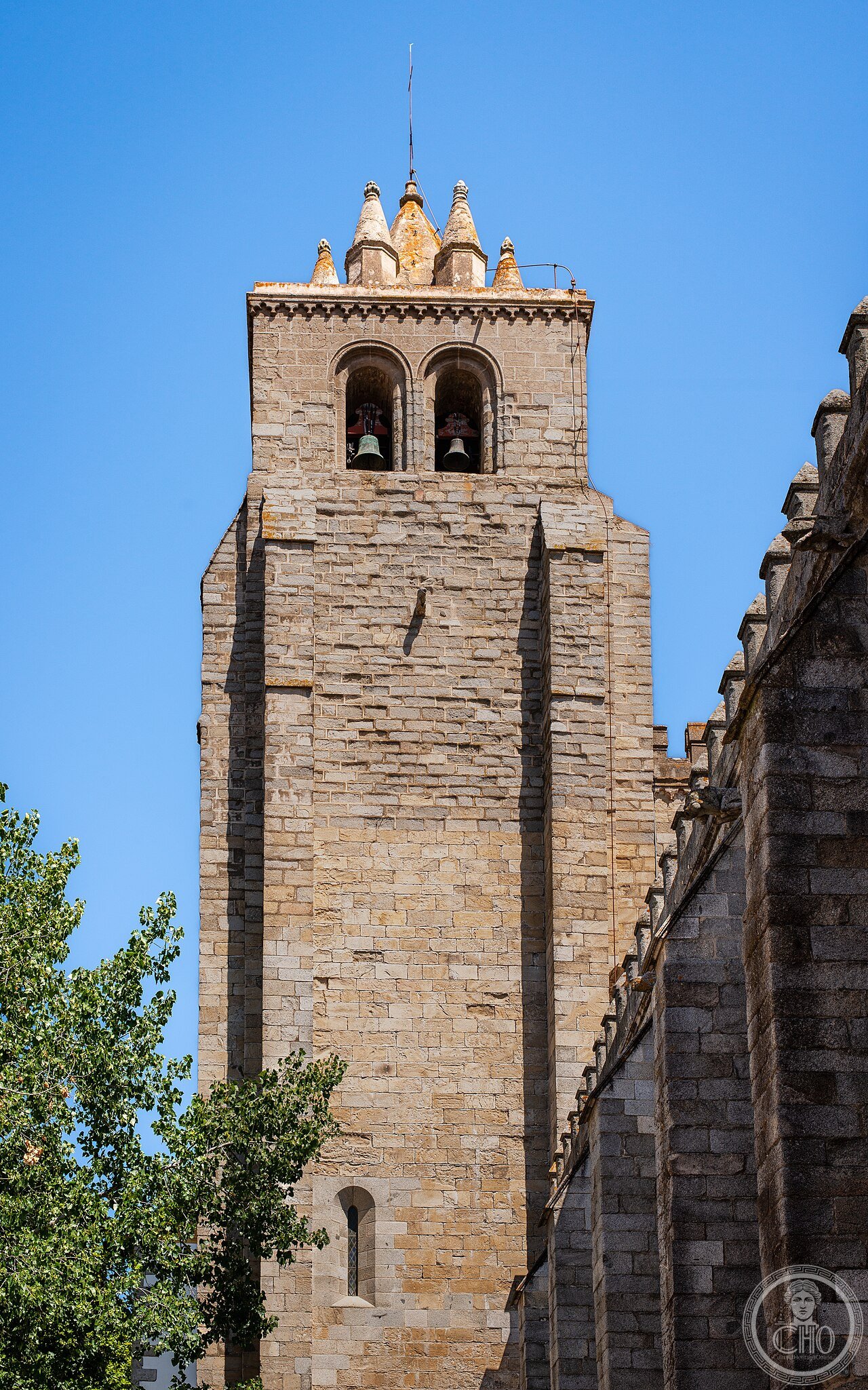
Évora was finally taken back from the Moors in 1166 by Geraldo Sem Pavor, “Gerald the Fearless”, and immediately afterwards the new Christian rulers began building, on the site of an old mosque, the cathedral dedicated to the Virgin Mary. Begun in 1186 and consecrated in 1204, with its massive walls and defensive battlements the Sé looks as much a fortress as a temple. In 1497, before sailing for India, Vasco da Gama had the flags of his fleet blessed here.
About the Sé de Évora
Évora was definitively reconquered from Moorish rule in 1166 by Geraldo Sem Pavor (“Gerald the Fearless”), and soon after this conquest, the city’s new Christian rulers began construction of a cathedral dedicated to the Virgin Mary, built on the site formerly occupied by a mosque during the period of Moorish control. Construction began in 1186, the cathedral was consecrated in 1204, and it was almost immediately pressed into service as one of the principal temples of Marian devotion in the region, though the building was not fully completed until 1250. Today recognised as the largest cathedral in Portugal, the Sé de Évora is a fortress-like structure combining Gothic architectural features with later Manueline influences; its robust walls, fitted with defensive battlements, underscore the building’s dual historical role as both a sacred space and a genuine bulwark against military threat, reflecting the still-unsettled frontier conditions of 12th- and 13th-century Christian Iberia. Architecturally, the cathedral showcases a clear transition from Romanesque to Gothic style, with further Renaissance and Baroque additions introduced during subsequent centuries of continuous use. Among the cathedral’s most celebrated historical moments came in 1497, when the flags of Vasco da Gama’s fleet were blessed within its walls before his ground-breaking sea voyage to India — a pivotal moment in the wider history of the Portuguese Age of Discoveries, directly linking the cathedral to one of the defining achievements of the era. The central nave’s high altar is dedicated to Nossa Senhora do Anjo (Our Lady of the Angel), continuing the cathedral’s founding Marian dedication across more than eight centuries.
Key facts
- 1166: Évora reconquered from Moorish rule by Geraldo Sem Pavor
- 1186: cathedral construction begins, on the site of a former mosque
- 1204: cathedral consecrated
- 1250: construction fully completed
- 1497: flags of Vasco da Gama’s fleet blessed here before his voyage to India
- Rank: the largest cathedral in Portugal
- Style: Romanesque-to-Gothic transition, with later Renaissance and Baroque additions
History
The cathedral’s fortress-like architecture, with its defensive battlements and massive walls, situates the Sé de Évora within the broader tradition of Iberian “cathedral-fortresses” built in the decades following the Christian Reconquest, when newly established church institutions in recently conquered frontier territory needed to double as genuine military strongpoints against the possibility of renewed conflict. The 1497 blessing of Vasco da Gama’s fleet flags directly ties the cathedral to the launch of Portugal’s maritime empire, one of the most consequential voyages in the history of global exploration, giving Évora a symbolic role in the Age of Discoveries disproportionate to its inland location.
The cathedral’s construction directly atop a former mosque exemplifies the broader pattern of religious architectural succession across post-Reconquest Iberia, in which the physical infrastructure of the previous Islamic period was frequently repurposed or replaced by the new Christian rulers’ own monumental religious building projects.
What you see
The cathedral’s imposing granite exterior, with its fortress-like battlements and twin asymmetrical towers, dominates Évora’s historic centre, its Romanesque-to-Gothic transitional architecture still clearly legible despite later Renaissance and Baroque additions. Inside, the cloisters and treasury preserve significant medieval and early modern religious art, alongside the high altar dedicated to Nossa Senhora do Anjo.
Practical information
- Opening hours: generally open daily with seasonal variation; check current hours before visiting; admission fee applies
- Address: Largo do Marquês de Marialva, 7000-809 Évora, Portugal
Getting there
The Sé de Évora is located in the historic centre of Évora, in the Alentejo region of Portugal, easily reachable on foot. GPS: 38.5717° N, -7.9067° E.
Nearby
- Évora Museum — adjacent to the cathedral, in the former episcopal palace
- Temple of Diana — the Roman temple ruins nearby
- Historic Centre of Évora — the UNESCO-listed old town surrounding the cathedral
Sources
- Visit Portugal — “Sé Catedral de Évora” (visitportugal.com)
- Wikipedia — “Cathedral of Évora” (en.wikipedia.org)
- Visit Évora — “Evora Cathedral, the biggest Medieval cathedral in Portugal” (visitevora.net)
Find it on the map
See this place and what’s around it →📷 Become a Cultural Heritage Online photographer
Share your photos of places: they stay published under your name as the author. The more they're seen, the more you get noticed — and soon a contest will reward the most appreciated photos.
Log in or sign up free to add a photo