
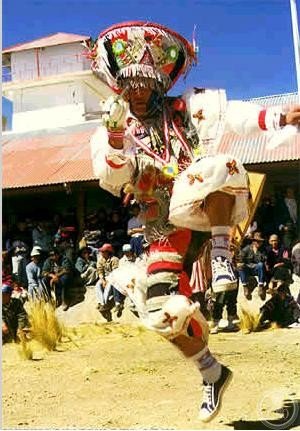
A visceral Andean performance where two dancers compete in turns, executing acrobatic steps while accompanied by violin and harp, challenging each other to master increasingly daring movements.
At a glance
The Scissors Dance—Danza de las tijeras in Spanish, Supaypa wasin tusuq in Quechua—is a dynamic competitive dance originating from the Chanka people of the southern Andes. Performed by two or more dancers, each accompanied by their own orchestra of violin and harp, the form emphasizes rivalry, stamina, and technical virtuosity. The dancers take turns executing increasingly complex and physically demanding steps, sometimes dancing on a single foot, pushing themselves to overcome the risks inherent in their movements.
Origins & history
The dance traces its roots to the Chanka culture of Peru’s southern Andes highlands. It has endured as a living practice across five departments—Ayacucho, Huancavelica, Junín, Apurimac, and Lima—adapting to different occasions and seasonal celebrations while maintaining its core competitive spirit and technical demands.
The practice
Dancers wear traditional attire and perform explicit, challenging moves in structured turns. A violin and harp accompany each performer, creating the musical framework for the competition. The dance exists in several forms: the greater or competition dance (Atipanakuy, Hapinakuy, Tupanakuy), where two dancers challenge one another; the smaller night dance or Qolla alva; and zapateos, performed during Christmas festivities. Each variant showcases different technical and social dimensions of the practice.
Cultural significance
The Scissors Dance embodies the competitive ethos and physical prowess valued in Andean communities. It serves as both entertainment and ritual expression, marking seasonal celebrations and community gatherings. The dance preserves Chanka cultural identity and continues to pass knowledge of movement, music, and tradition to new generations of performers.
Key facts
- Countries: Peru
- Anchor community: Department of Ayacucho
- Coordinates: −13.16421, −74.22715
- Also practiced in: Huancavelica, Junín, Apurimac, and Lima
- UNESCO Intangible Cultural Heritage: 2010 (reference 00391)
- Performers: Two or more dancers (danzaq or tusuq)
- Musical accompaniment: Violin and harp
Where to experience it
The Scissors Dance flourishes in the Department of Ayacucho and across the southern highlands of Peru. The dance is performed year-round at community celebrations and seasonal festivals, with zapateos particularly prominent during Christmas festivities. Visitors to Ayacucho and surrounding highland regions may encounter performances at local fiestas and cultural events.
Sources & resources
Find it on the map
See this place and what’s around it →📷 Become a Cultural Heritage Online photographer
Share your photos of places: they stay published under your name as the author. The more they're seen, the more you get noticed — and soon a contest will reward the most appreciated photos.
Log in or sign up free to add a photo