

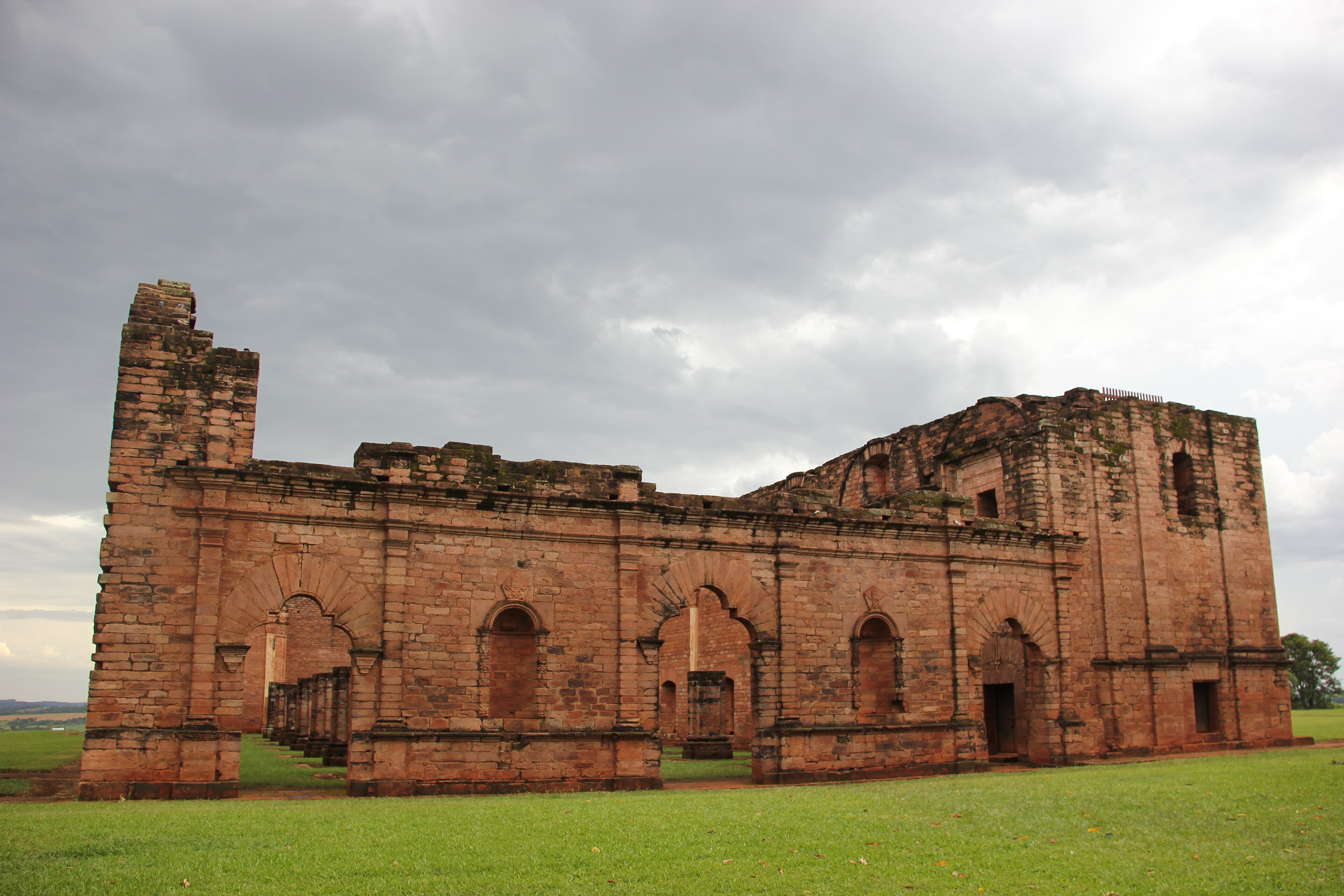
The remains of a Jesuit reduction in eastern Paraguay, part of a UNESCO World Heritage Site that preserves the architectural legacy of colonial missionary settlements.
At a glance
Jesús de Tavarangue was a Jesuit mission established to evangelize and educate indigenous Guaraní populations. The site’s ruins stand as testimony to the architectural and social ambitions of the Society of Jesus in South America during the colonial period.
History
The mission functioned as a Jesuit reduction, a settlement model that combined religious instruction with communal living and agricultural production. The complex housed indigenous families and served as a center for spiritual and secular learning. Like other reductions in the region, it eventually declined with the expulsion of the Jesuits from Spanish territories in the late 18th century.
What you see
The ruins reveal the church and residential structures characteristic of Jesuit reductions. Stone foundations and walls remain visible, offering insight into the spatial organization and construction methods of these colonial settlements.
Cultural significance
Jesús de Tavarangue represents a crucial chapter in Paraguayan colonial history and the broader Jesuit missionary enterprise in the Americas. The site illustrates the encounter between European religious institutions and indigenous societies, and the architectural forms that emerged from this exchange.
Key facts
- Country: Paraguay
- Region: Itapúa
- Coordinates: -27.05, -55.79
- UNESCO World Heritage Site (co-designated with Trinidad, 1993)
Practical information & getting there
The ruins are located in Itapúa province in eastern Paraguay, near the Argentine border. Access details and current visiting conditions are best confirmed locally before planning a visit.
Sources & resources
Find it on the map
See this place and what’s around it →📷 Become a Cultural Heritage Online photographer
Share your photos of places: they stay published under your name as the author. The more they're seen, the more you get noticed — and soon a contest will reward the most appreciated photos.
Log in or sign up free to add a photo