
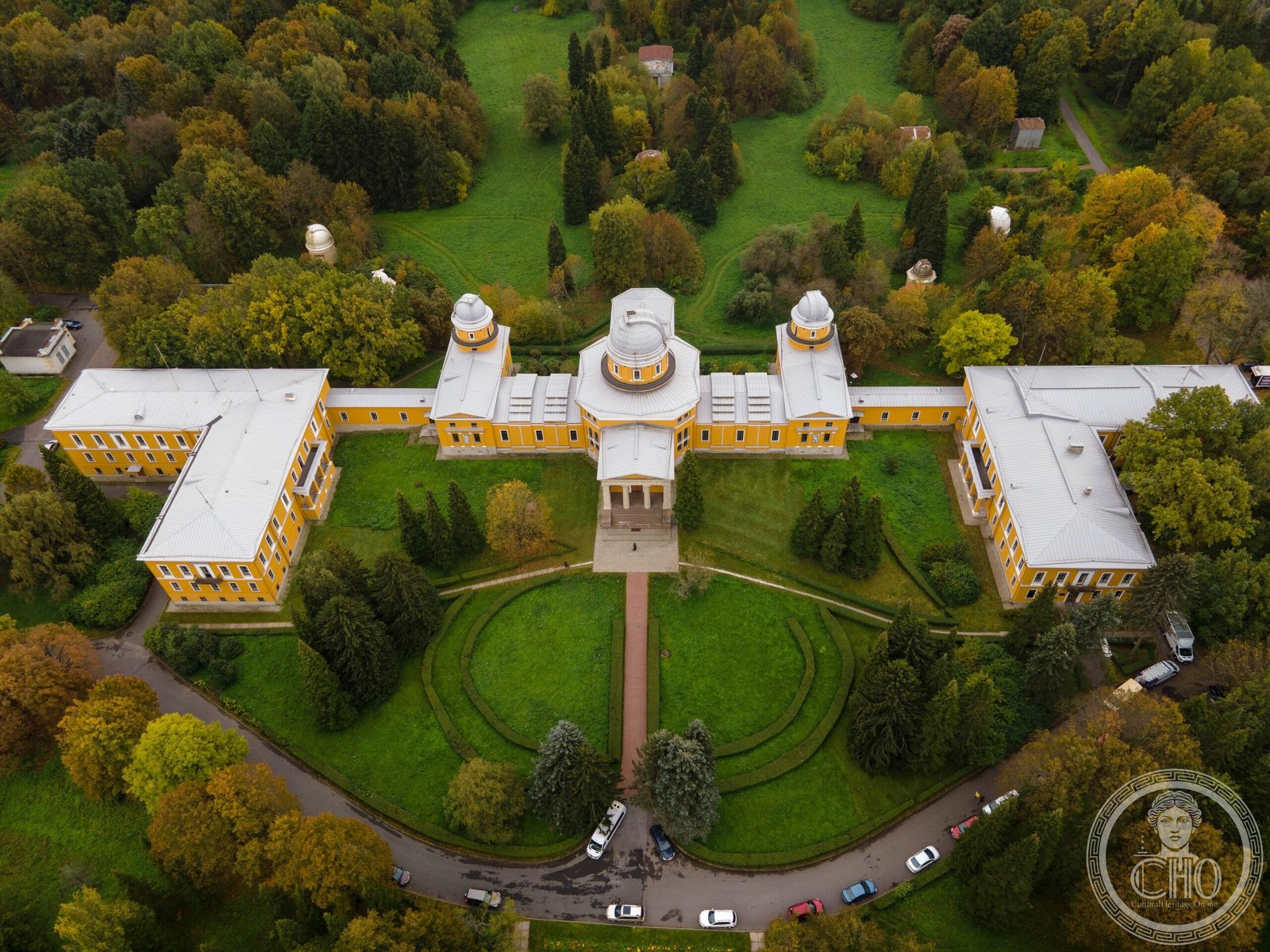
Russia’s premier astronomical observatory, perched on heights south of Saint Petersburg, has anchored the nation’s scientific observation of the heavens for nearly two centuries.
At a glance
The Pulkovo Observatory stands 19 kilometres south of Saint Petersburg, commanding views from Pulkovo Heights at 75 metres elevation. As the Central Astronomical Observatory of the Russian Academy of Sciences, it remains the principal facility of its kind in Russia and forms part of the UNESCO-inscribed Historic Centre of Saint Petersburg.
History
Originally established as the Imperial Observatory at Pulkowo, the institution reflects Russia’s scientific ambitions during the imperial era. It has evolved into the Central Astronomical Observatory, maintaining its role as Russia’s leading astronomical research centre under the Academy of Sciences.
What you see
Positioned strategically on elevated terrain, the observatory benefits from its southern location relative to Saint Petersburg, minimising urban light interference. The site’s 75-metre altitude provides a natural advantage for astronomical observation across the Pulkovo Heights.
Cultural significance
The observatory embodies Russia’s centuries-long commitment to astronomical science and international scholarly exchange. Its inclusion within the UNESCO World Heritage designation underscores its importance to Saint Petersburg’s cultural and scientific heritage, marking it as integral to the city’s distinguished intellectual identity.
Key facts
- Country: Russia
- Location: 19 km south of Saint Petersburg
- Elevation: 75 metres above sea level
- Coordinates: 59.77°N, 30.33°E
- Status: Part of UNESCO World Heritage Site Historic Centre of Saint Petersburg and Related Groups of Monuments
- Official name: Central Astronomical Observatory of the Russian Academy of Sciences at Pulkovo
Practical information & getting there
The observatory is accessible from central Saint Petersburg, located approximately 19 kilometres to the south. Visitors should check current opening arrangements and research availability in advance, as access to active scientific facilities may be restricted.
Sources & resources
Find it on the map
See this place and what’s around it →📷 Become a Cultural Heritage Online photographer
Share your photos of places: they stay published under your name as the author. The more they're seen, the more you get noticed — and soon a contest will reward the most appreciated photos.
Log in or sign up free to add a photoIs this page about you?
This page is read by travellers and heritage enthusiasts who find it on Google. Tell us how you are connected to this place and we will take it from there.