


A white Istrian stone bridge over the Rio di Palazzo, connecting the Doge’s Palace to the Prigioni Nuove. It became famous for its legend of prisoners sighing at their last view of Venice.
At a glance
The bridge stands a few steps from Piazza San Marco, spanning the Rio di Palazzo. It is an enclosed Baroque structure with two small windows on each side, built from Istrian stone. The interior is accessible through the Doge’s Palace tour.
Key facts
- Where: Rio di Palazzo, Venezia
- What: Bridge
- When: Early 17th century
- GPS: 45.4340, 12.3409 · Open in Google Maps
History
The bridge was built in the early seventeenth century on the order of Doge Marino Grimani, whose family coat of arms appears at the centre of the span. The architect was Antonio Contin, nephew of Antonio da Ponte, who designed the Rialto Bridge. The bridge connected the Doge’s Palace to the new prisons, replacing an older prison area inside the palace that was badly damaged in a fire in 1577.
The name is connected to a story that prisoners, crossing in chains, could look for the last time at the lagoon and the island of San Giorgio and so sighed for their lost freedom. A popular tradition attributes the first use of the name to the English poet Lord Byron in the nineteenth century. In 1755, Giacomo Casanova was imprisoned in the Piombi; his escape from the palace prison in 1756 has contributed to the bridge’s enduring fame.
What you see
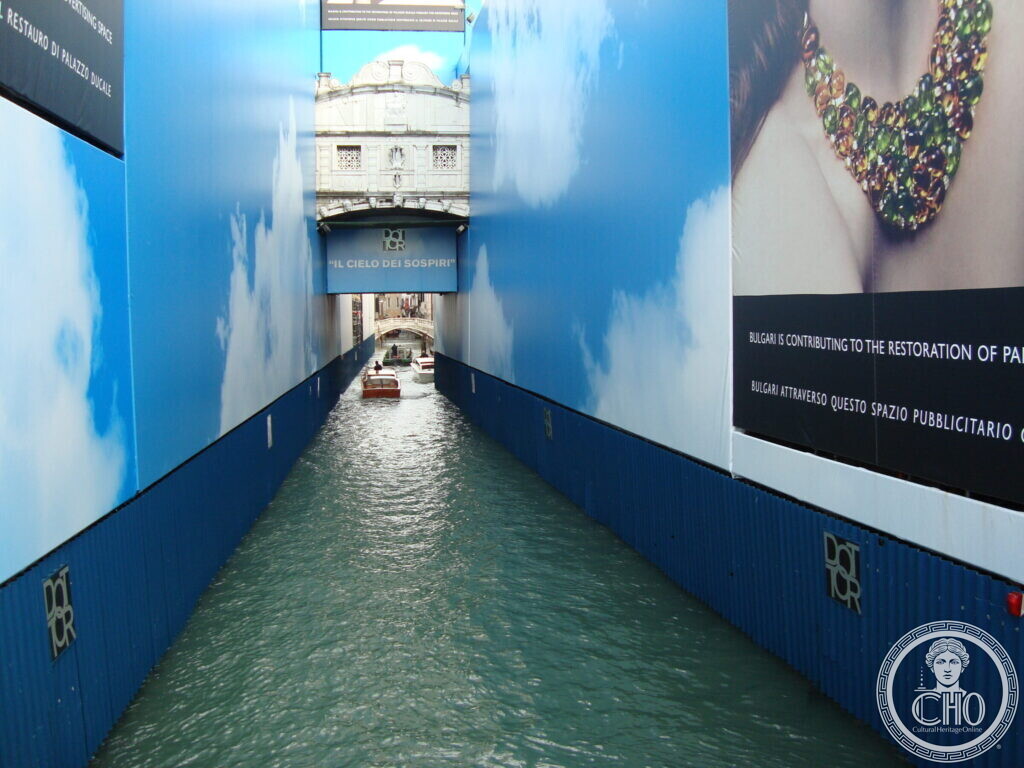
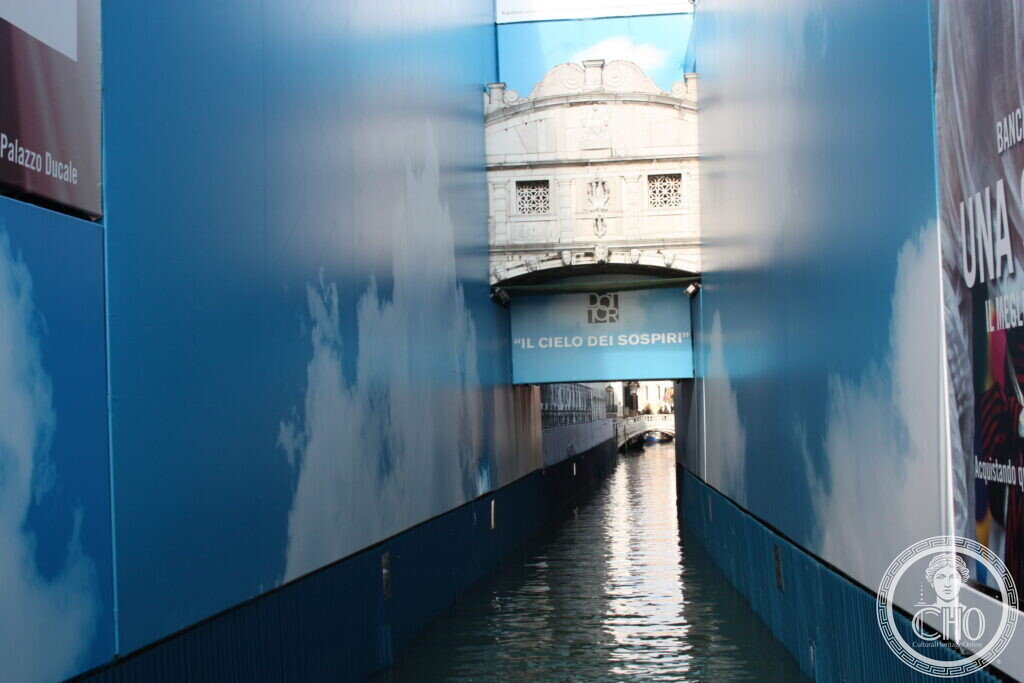
The bridge is built in white Istrian stone and is decorated with Baroque friezes and carvings. At the centre of the span is the coat of arms of the Grimani family. The structure is entirely enclosed, composed of two narrow, separate corridors designed to prevent prisoners from escaping. Each side has two small windows; from the interior, visitors can see the Bacino di San Marco and San Giorgio Maggiore on one side, and the Ponte della Canonica and the back of Palazzo Ducale on the other.
Do you know more about this place?
If you know a date, a name, a document, a plaque or a photograph that tells its story, write to Sofia through the contact page. What arrives with a source goes into this page, with your name as the contributor.
Nearby
- Bridge of Sighs – Virtual Tour 360° — a panoramic view of the same bridge
- Prison Building — the Prigioni Nuove connected to the bridge
- The Doge’s Palace (Palazzo Ducale), Venice — adjacent, the seat of Venetian government
- The Porta della Carta — the Gothic Gate Where Venice’s Doges Entered Their — nearby entrance to the palace
- Doge’s apartment – Virtual Tour 360° — within the palace
- Borgo Cà dei Sospiri — a related name in the area
Gallery
Sources
- Italia.it, Il Ponte dei Sospiri a Venezia – Italia.it: dates, architect, patron, materials, and history of the bridge’s construction
- Visitvenezia.eu, The secrets of Ponte dei sospiri in Venice: architect, patron, family connection to Antonio da Ponte, and details of the bridge’s structure
- Caffè Florian, Il Ponte dei Sospiri a Venezia: segreti, leggende e curiosità: construction dates, decorative details, the appearance of the bridge, and the story of Lord Byron’s naming
- Hostaria Castello, Ponte dei Sospiri: storia e leggenda del luogo più noto di Venezia: the fire that damaged the older prisons, and details of Casanova’s imprisonment
- OpenStreetMap, Ponte dei Sospiri: address and coordinates
- Stefano Vigolo, photographs and notes to the editorial staff (2026): identification of the subject. Not a published source
Find it on the map
See this place and what’s around it →📷 Become a Cultural Heritage Online photographer
Share your photos of places: they stay published under your name as the author. The more they're seen, the more you get noticed — and soon a contest will reward the most appreciated photos.
Log in or sign up free to add a photo