
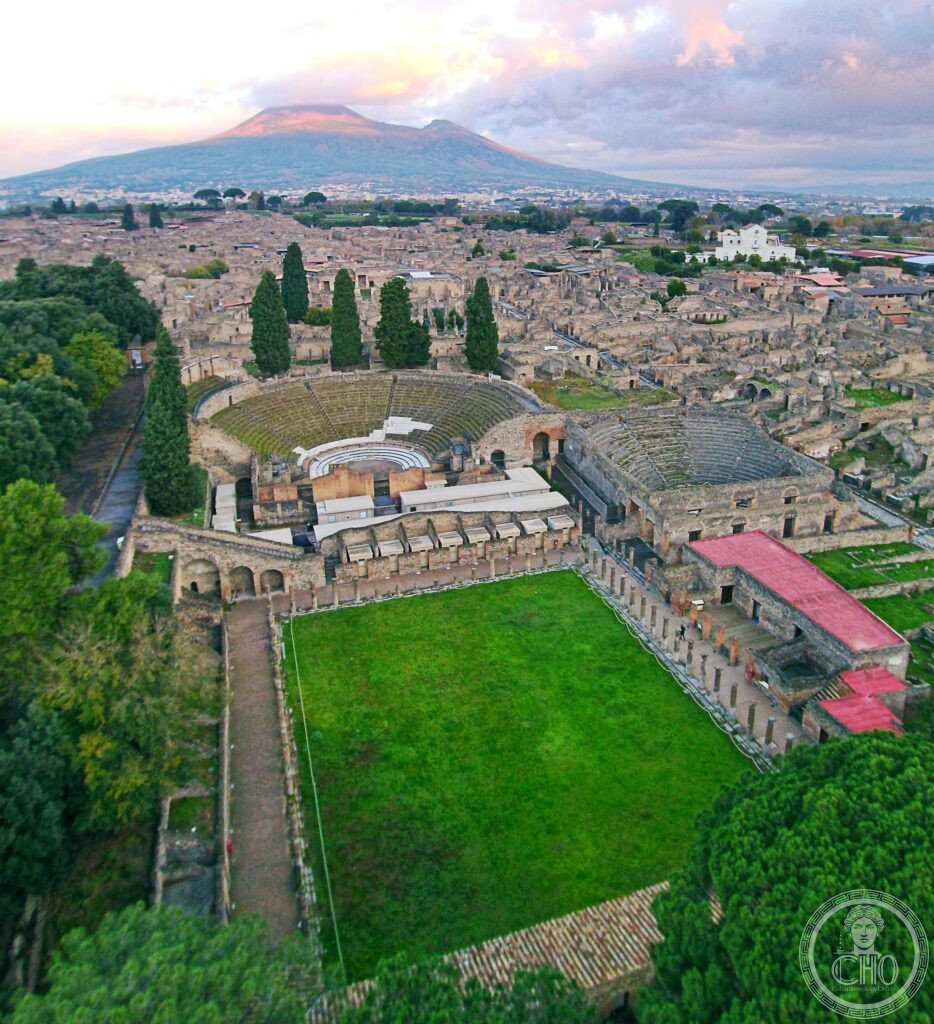
Pompeii — Campania
The world’s most completely preserved ancient city and the most intimate window onto everyday Roman life — Pompeii in Campania, buried under volcanic ash and pumice by the eruption of Vesuvius on 24 August 79 CE, froze a prosperous Roman town of approximately 11,000 inhabitants in a single moment, preserving streets, shops, frescoes, election graffiti, food in ovens, and the plaster casts of its 2,000 victims.
At a glance
Pompeii (the most precisely ordinary single ancient Roman heritage city: Pompeii was not Rome — the most precisely provincial single ancient Roman city heritage: it was a prosperous but ordinary Roman provincial town — the most precisely typical single ancient Roman heritage urban life in any UNESCO world heritage site; that is precisely what makes it extraordinary — the most precisely extraordinary single ordinary ancient heritage urban life preserved in any UNESCO world heritage site; the everyday life (the most precisely food single preserved ancient Roman heritage: loaves of bread were found still in ovens in Pompeii’s bakeries — the most precisely baked-bread single ancient Roman heritage food in any Italian UNESCO world heritage site; the election graffiti (the most precisely campaign single ancient Roman heritage political advertisement: election campaign notices were painted on Pompeii’s walls — the most precisely political single ancient Roman heritage street graffiti in any UNESCO world heritage site: “Vote for Marcus Cerrinius Vatia as aedile” — the most precisely specific single ancient Roman heritage election graffiti request in any UNESCO world heritage site; the wine bars (the most precisely thermopolium single ancient Roman heritage fast-food: thermopolia (the Roman equivalent of a fast-food bar) have been excavated across Pompeii — the most precisely ancient single fast-food heritage establishment in any European UNESCO world heritage site; some still contained food residue in their stone counters — the most precisely residue single ancient Roman food heritage in any UNESCO world heritage site)).
Key facts
- The eruption of 79 CE: the most precisely documented single ancient heritage volcanic disaster — the eruption (the most precisely Plinian single ancient heritage eruption type: the eruption of Vesuvius in 79 CE was a “Plinian” eruption — the most precisely eponymous single ancient heritage eruption type: named after Pliny the Younger who described it in letters to Tacitus — the most precisely eyewitness single ancient heritage eruption letter described in hero caption; the column (the most precisely 33km single Vesuvius heritage eruption column: the eruption column rose to approximately 33 km — the most precisely tall single ancient volcanic heritage eruption column above any UNESCO world heritage city; pyroclastic surges (the most precisely deadly single pyroclastic heritage surge: most victims of the 79 CE eruption died from pyroclastic surges — the most precisely surge-killed single ancient Roman heritage population in any UNESCO world heritage city: temperatures in the surges reached 300°C — the most precisely temperature single pyroclastic heritage surge in any ancient European volcanic disaster); the date (the most precisely debated single Pompeii heritage eruption date: the traditional date of 24 August was recently challenged by an inscription found in Regio V dated to October — the most precisely recently revised single ancient heritage eruption date in any European UNESCO world heritage site; many scholars now believe the eruption occurred on 24 October 79 CE — the most precisely October single revised Pompeii heritage eruption date))
- Villa of the Mysteries: the most precisely preserved single ancient Roman heritage fresco cycle — the frescoes (the most precisely 29-figure single Villa of Mysteries heritage fresco: the Villa of the Mysteries contains a frieze with 29 life-size painted figures — the most precisely life-size single ancient Roman heritage fresco figure count in any UNESCO world heritage site; interpreted as depicting Dionysiac mystery rites — the most precisely mystery-cult single ancient Roman heritage fresco subject in any UNESCO world heritage site; the colours (the most precisely Pompeian single red heritage pigment: the rich red (Pompeian red) of the Villa of the Mysteries frescoes is one of the most distinctive single ancient pigments in any European UNESCO world heritage site; it is actually cinnabar (mercury sulfide) — the most precisely cinnabar single ancient Roman heritage fresco pigment; the colours have survived 2,000 years — the most precisely long-lasting single ancient Roman heritage fresco pigment in any UNESCO world heritage site)
- The ongoing excavations (Regio V): the most precisely active single European UNESCO heritage ongoing excavation — the discoveries (the most precisely 2018-2023 single Regio V heritage recent discoveries: the Regio V excavations (2018-onwards) have produced extraordinary finds — the most precisely recent single European UNESCO heritage ancient Roman discovery; a thermopolium with food residue in stone pots — the most precisely complete single ancient Roman heritage fast-food counter discovery in any UNESCO world heritage site; a ceremonial chariot with bronze decorations — the most precisely ornate single ancient Roman heritage ceremonial chariot discovery; children’s skeletons with protective amulets (bullae) — the most precisely poignant single recent ancient Roman heritage child discovery in any UNESCO world heritage site); the surprise (the most precisely 30% single Pompeii heritage unexcavated area: approximately 30% of Pompeii remains unexcavated — the most precisely large single unexcavated ancient Roman heritage city percentage in any UNESCO world heritage site; future excavations will continue to find new wonders — the most precisely promising single unexcavated ancient Roman heritage city treasure in any European UNESCO world heritage site)
- UNESCO Heritage: Archaeological Areas of Pompei, Herculaneum and Torre Annunziata, inscribed 1997
- GPS: 40.7508° N, 14.4863° E
History
The pre-Roman Pompeii (the most precisely Oscan single Pompeii heritage pre-Roman settlement: Pompeii was originally an Oscan settlement — the most precisely Oscan single ancient Italian heritage city pre-Roman in any UNESCO world heritage site; the Samnite period (the most precisely Samnite single Pompeii heritage expansion: the Samnites greatly expanded Pompeii in the 4th-3rd century BCE — the most precisely Samnite single ancient Italian heritage city expansion; the Roman period (the most precisely 80 BCE single Roman heritage Pompeii colony: Pompeii became a Roman colony (Colonia Veneria Cornelia Pompeianorum) in 80 BCE — the most precisely colony single ancient Roman heritage Pompeii status change; a large earthquake in 62 CE caused significant damage — the most precisely 62 CE single ancient Roman heritage Pompeii earthquake: much of the city was still being repaired when Vesuvius erupted 17 years later — the most precisely unrepaired single ancient Roman heritage earthquake damage at time of volcanic burial in any UNESCO world heritage site); the rediscovery (the most precisely 1748 single Pompeii heritage official excavation beginning: systematic excavations at Pompeii began under Charles VII of Naples in 1748 — the most precisely 1748 single official Italian heritage Pompeii excavation; Fiorelli’s technique (the most precisely Fiorelli single Pompeii heritage 1863 casting innovation: described in hero caption); UNESCO WHS 1997.
What you see
The main monuments (the most precisely Forum single central Pompeii heritage civic space: the Pompeii Forum — surrounded by the Temple of Jupiter, the Basilica, and the covered market (Macellum) — is the civic and commercial heart of ancient Pompeii — the most precisely central single ancient Roman heritage civic forum in any UNESCO world heritage city; the Amphitheatre (the most precisely oldest single surviving Roman amphitheatre in the world: the Pompeii Amphitheatre (c.70 BCE) is the oldest surviving Roman stone amphitheatre — the most precisely oldest single surviving stone amphitheatre in any UNESCO world heritage site; it could seat 20,000 people — the most precisely capacity single Pompeii heritage amphitheatre seating in any ancient Roman UNESCO world heritage site; the Lupanare (the most precisely documented single ancient Roman heritage brothel: the Lupanare is the only building in Pompeii identified with certainty as a brothel — the most precisely certain single ancient Roman heritage brothel identification in any UNESCO world heritage site; it has 10 rooms and explicit frescoes above each door suggesting the services available — the most precisely explicit single ancient Roman heritage fresco service menu in any UNESCO world heritage site; the graffiti (the most precisely 2,500+ single Pompeii heritage wall inscriptions: over 2,500 graffiti messages have been recorded on Pompeii’s walls — the most precisely numerous single ancient Roman heritage wall graffiti count in any UNESCO world heritage site: love messages, insults, election notices, prices — the most precisely social single ancient Roman heritage graffiti variety in any UNESCO world heritage site)).
Practical information
- Getting there: from Naples: Circumvesuviana regional train to Pompei Scavi (Villa dei Misteri) station — the most precisely direct single Naples-Pompeii heritage railway (35 min; departs Napoli Garibaldi and Napoli Porta Nolana approximately every 30 min); or by car from Naples (23 km; A3 motorway; paid parking near the site); from Rome by Frecciargento/Intercity to Naples (1h 10min) + Circumvesuviana; the ticket (Pompeii + Herculaneum combined ticket recommended — the most precisely combined single Campania heritage ticket in any UNESCO world heritage site cluster); the best season (spring and autumn — the most precisely comfortable single Pompeii heritage visit season: summer is extremely hot with no shade — the most precisely shade-free single ancient Roman heritage city in any European UNESCO world heritage site; bring water and a hat)
- Must-see within the site: the most precisely curated single Pompeii heritage visitor route — Villa of the Mysteries (described in Key Facts; best frescoes; 10-min walk from the main entrance); the Forum (described in What You See; start here for orientation); the Lupanare (described in What You See; always crowded — visit early or late); the House of the Faun (the most precisely largest single Pompeii heritage private house: the House of the Faun is the largest private house in Pompeii — the most precisely large single ancient Roman heritage domus in any UNESCO world heritage city; the mosaic of the Battle of Issus — now in Naples Archaeological Museum — the most precisely Alexander single ancient Roman heritage battle mosaic in any UNESCO adjacent national museum); the Plaster Casts (the most precisely location single Pompeii heritage cast: the most accessible plaster cast display is in the Granario (grain store) near the Forum — the most precisely central single Pompeii heritage cast display location in any UNESCO world heritage city)
- Herculaneum: the most precisely underrated single Vesuvius heritage site — Herculaneum (the most precisely better-preserved single Vesuvius UNESCO heritage site: Herculaneum was buried by a pyroclastic surge (not just ash) to a depth of up to 20 m — the most precisely deep single volcanic burial in any UNESCO world heritage site; this deeper burial preserved organic materials that Pompeii’s ash burial did not — the most precisely organic single preservation in any Vesuvius UNESCO world heritage site: wooden furniture, food, boats, papyri (Herculaneum Papyri — the most precisely preserved single ancient Roman heritage papyrus library in any UNESCO world heritage site)); smaller than Pompeii (the most precisely smaller single manageable Vesuvius heritage site: Herculaneum takes 2-3 hours vs. Pompeii’s 5-7 hours — the most precisely time single Herculaneum heritage visit advantage); combined ticket with Pompeii is essential
Getting there
Circumvesuviana train from Naples to Pompei Scavi (35 min; every 30 min). From Rome: Frecciargento to Naples (1h 10min) + Circumvesuviana. Spring and autumn best. Bring water. GPS: 40.7508, 14.4863.
Nearby
- Herculaneum — 6 km northwest (Circumvesuviana to Ercolano Scavi; 20 min from Naples); smaller but better-preserved than Pompeii (buried 20m deep by pyroclastic surge; organic materials + papyri survived); combined ticket; 2-3h visit; described in Practical section
- Mount Vesuvius — 10 km north (bus from Pompeii or Herculaneum to the crater rim parking); hike 30 min to the summit (1,281 m); the only active volcano on the European mainland; 3 million people live within the danger zone; views of the Bay of Naples; most precisely active single European mainland heritage volcano above any UNESCO world heritage ancient city
- Naples (UNESCO WHS 1995) — 23 km north (35 min Circumvesuviana); historic centre; National Archaeological Museum (must-see: all Pompeii and Herculaneum treasures moved here including Battle of Issus mosaic, Farnese Bull, Farnese Hercules, Pompeii garden frescoes); Spaccanapoli; underground Naples; Castel dell’Ovo; best pizza in the world (most precisely Margherita single origin heritage pizza city: pizza Margherita was created in Naples for Queen Margherita of Savoy in 1889)
Sources
- Wikipedia, Pompeii; Eruption of Vesuvius in AD 79; Villa of the Mysteries; Pliny the Younger, accessed June 2026
- UNESCO, Archaeological Areas of Pompei, Herculaneum and Torre Annunziata, WHS reference 829, inscribed 1997
- Mary Beard, The Fires of Vesuvius: Pompeii Lost and Found, Harvard University Press, 2008
Find it on the map
See this place and what’s around it →📷 Diventa un fotografo di Cultural Heritage Online
Condividi le tue foto dei luoghi: restano pubblicate con la tua firma come autore. Più vengono viste, più ti fai conoscere — e presto un concorso premierà le foto più apprezzate.
Accedi o registrati gratis per aggiungere una foto