
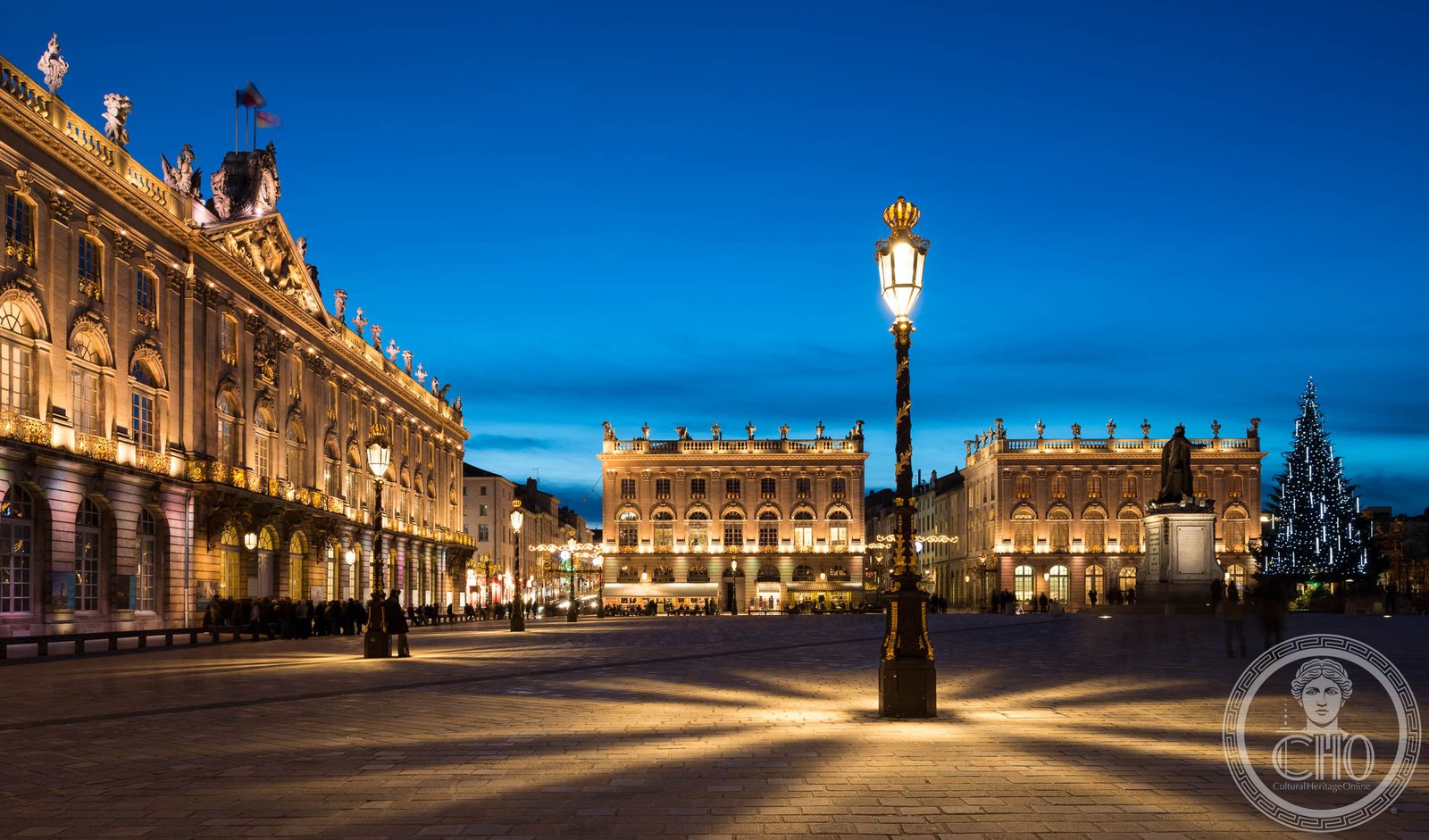
A pedestrianised square of architectural unity and royal ambition, built for a Polish king who became Duke of Lorraine.
At a glance
Place Stanislas is one of Europe’s finest examples of 18th-century urban design. Commissioned by Stanislaus I, former King of Poland and Grand Duke of Lithuania, then Duke of Lorraine, the square was built between 1752 and 1756 with architectural consistency that made it pioneering for its time. Today it remains a large pedestrianised square at the heart of Nancy.
History
Stanislaus I ordered the square’s construction during his tenure as Duke of Lorraine. Completed in 1756, it embodied Enlightenment ideals of rational urban planning and princely authority. The square was conceived as part of a larger architectural axis that extended into the Place de la Carrière and Place d’Alliance, creating a unified ensemble that defined Nancy’s urban character for centuries.
What you see
The square demonstrates remarkable architectural harmony across its facades and surrounding structures. All elements were designed to work together as a coherent whole—a rare achievement in 18th-century urban development. The pedestrianised layout invites visitors to experience the proportions and details of the surrounding buildings without vehicular intrusion, allowing the architectural intent to be fully appreciated.
Cultural significance
Place Stanislas represents a pivotal moment in European urban design when squares were conceived as complete artistic statements rather than accidental public spaces. Its influence on later city planning was substantial. The ensemble reflects Lorraine’s complex history and the ambitions of an exiled Polish king who left an indelible mark on French architecture.
Key facts
- Location: Nancy, France
- Coordinates: 48.694°N, 6.183°E
- Construction: 1752–1756
- Commissioned by: Stanislaus I, Duke of Lorraine
- UNESCO World Heritage Site: Since 1983 (as part of the Place Stanislas, Place de la Carrière, and Place d’Alliance ensemble)
Practical information & getting there
The square is located in central Nancy and is easily accessible on foot. As a pedestrianised area, it is best explored without a vehicle. Nancy is well connected by train and road to other major cities in eastern France. The surrounding area contains shops, cafés, and museums that complement a visit to this architectural masterpiece.
Sources & resources
Find it on the map
See this place and what’s around it →
📷 Become a Cultural Heritage Online photographer
Share your photos of places: they stay published under your name as the author. The more they're seen, the more you get noticed — and soon a contest will reward the most appreciated photos.
Log in or sign up free to add a photo