
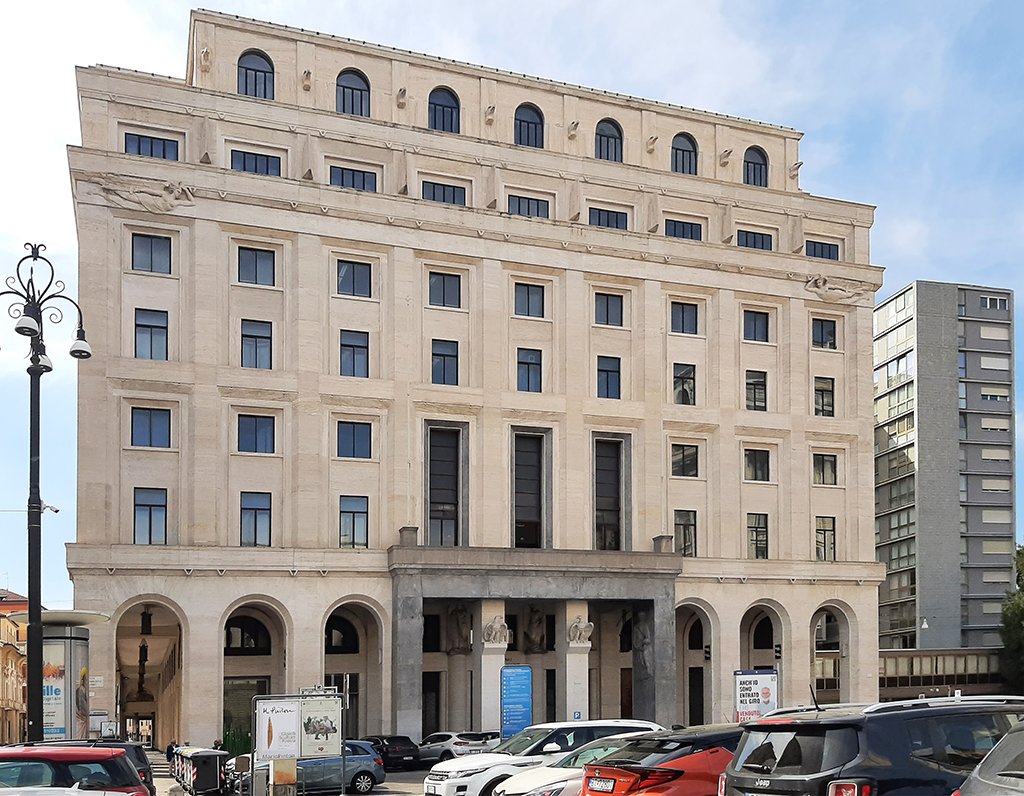
Padua’s social-security palace went up with the square around it: the medieval Santa Lucia quarter came down, Piazza Spalato took its place, and in 1937 the newsreels came to film the result.
At a glance
The palace of the Istituto Nazionale della Previdenza Sociale closes one side of Piazza Insurrezione with a wall of travertine. Engineer Gino Peressutti designed it for the INFPS — the institute then carried the word “Fascista” in its name — on land the city sold in 1933, with sculptural decoration by Paolo Boldrin. It opened on 24 October 1937. The square it stands on is exactly as old as the building: both were cut out of the demolished Santa Lucia quarter, and the ensemble was presented to Italy as a model of urban renewal. The name changed after the war. The architecture did not.
Key facts
- Site: offered to the INFPS in 1933 by Francesco Lorenzo Lonigo, podestà of Padua; the Comune sold the land for 775,000 lire
- Design: engineer Gino Peressutti; facades clad in travertine
- Sculpture: Paolo Boldrin
- Inaugurated: 24 October 1937
- The square: laid out as Piazza Spalato over the razed medieval Santa Lucia quarter; renamed Piazza Insurrezione after 1945
- Use: provincial seat of the INPS until 2018, when the offices moved elsewhere in the city
- GPS: 45.40973, 11.87449 · Open in Google Maps
History
In 1933 Francesco Lorenzo Lonigo, podestà of Padua, offered the national social-insurance institute a building site in the heart of the city, and the Comune sold it the land for 775,000 lire. The site did not exist yet as a square. It was being cleared out of Santa Lucia, a dense medieval quarter of narrow lanes and old palazzi that the regime had condemned as unhealthy — the standard justification of 1930s risanamento, in Padua as in Rome. On the cleared ground the city drew a new square and named it Piazza Spalato, after the Dalmatian city of Split.
Peressutti’s palace was the piece that completed the composition. Travertine facades, Boldrin’s sculpture, and the scale of a state institution: the building was designed to show what the new quarter was for. It opened on 24 October 1937 with the full ceremony of the regime. The minister of corporations Ferruccio Lantini attended with Biagi; young avanguardisti lined up to salute, and the building received its blessing. Ten days later the scene ran in cinemas across Italy as Giornale Luce B1193.
The institute dropped “Fascista” from its name after the war, the square traded Spalato for Insurrezione, and the palace settled into seventy years of ordinary work. At its peak the provincial seat handled between 400 and 600 people a day, with some 250 employees behind the counters. INPS moved its Padua offices out in 2018. The palace still holds the square it was built to complete.
What you see
Smooth travertine in a city of brick and stucco. That contrast is still the building’s main effect: the stone front stands out against Padua’s older fabric exactly as it was meant to in 1937, a government institution dressed in the material of Rome. Boldrin’s sculptural work decorates the facades, and the mass of the palace sets the scale for the whole of Piazza Insurrezione.
Read it alongside its contemporaries and the idiom is unmistakable: the stripped, monumental classicism the Italian state gave its public bodies in the late 1930s, the same language that reached its fullest form at Rome’s E42 quarter, today’s EUR. Padua’s version is a working provincial office, not a world’s fair. It is all the more telling for that.
On film, 1937
The Istituto Luce filmed the opening. The newsreel below is Giornale Luce B1193, released 3 November 1937: the finished palace over the new square, the arrival of minister Lantini and of Biagi, the ranks of saluting avanguardisti, and the blessing — two minutes on how the regime staged a public building, with the razed quarter recast as “old and unhealthy” in the narrator’s script.
Source: Archivio Storico Luce, Giornale Luce B1193 (3 November 1937) — archivioluce.com.
Practical information
- Access: the palace is an office building, not a museum — it is seen from the square, which is open at all times
- Time needed: 15–20 minutes for the square and the facades
- Combine with: Padua’s other 1930s architecture — Gio Ponti’s Palazzo Liviano is a ten-minute walk away
Getting there
Piazza Insurrezione sits in the centre of Padua, one block from Piazza Cavour and about fifteen minutes on foot from the railway station. Padua is thirty minutes by train from Venice and about the same from Vicenza; the walk from the station leads straight down into the historic centre.
Nearby
Photo gallery
Photos contributed by a Cultural Heritage Online member.
Sources
- Il Mattino di Padova, Quel palazzo inaugurato nel 1937 — mattinopadova.it
- Archivio Storico Luce, Giornale Luce B1193, 3 November 1937 — archivioluce.com
- Wikimedia Commons, Padova — piazza Insurrezione — palazzo INPS — file page
- Coordinates verified against OpenStreetMap Nominatim (Piazza Insurrezione, Padova)
Find it on the map
See this place and what’s around it →Record researched and written by Stefano Vigolo for Cultural Heritage Online, 2026.
Events here — now on & upcoming
- Anniversary: The Opening of the INPS Building in Padua — October 24, 193724 Oct 2026See the event →
📷 Become a Cultural Heritage Online photographer
Share your photos of places: they stay published under your name as the author. The more they're seen, the more you get noticed — and soon a contest will reward the most appreciated photos.
Log in or sign up free to add a photoRequest to use these images
Each photograph is by the person named on it. Cultural Heritage Online is the seller: it runs the payment, handles tax and delivers the file, and the photographer receives 70% of the price net of tax. Buying gives you the right to use the image in your own project — a website, an article, a presentation — with the file and a written licence. Read the Terms of Sale.
What you receive. The file as it is held in our archive: the photographer's own original, without the Cultural Heritage Online watermark, unretouched and not enlarged. This is a working archive built over many years by many people, so the files differ — some were taken recently, others years ago with the equipment of their time. Older pictures are usually smaller: a camera from fifteen or twenty years ago simply recorded fewer pixels than a phone does today, so the resolution is lower and the print comes out smaller. We say so rather than hide it. The size, weight, format and year of each one are printed below it, and the print size is given at 300 dpi. Nothing is upscaled to make a number look better. Where the picture on this page has been cropped for the layout, the file you receive is the full frame, which may be wider or taller than what you see here.
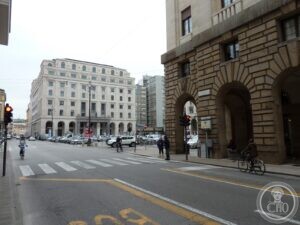
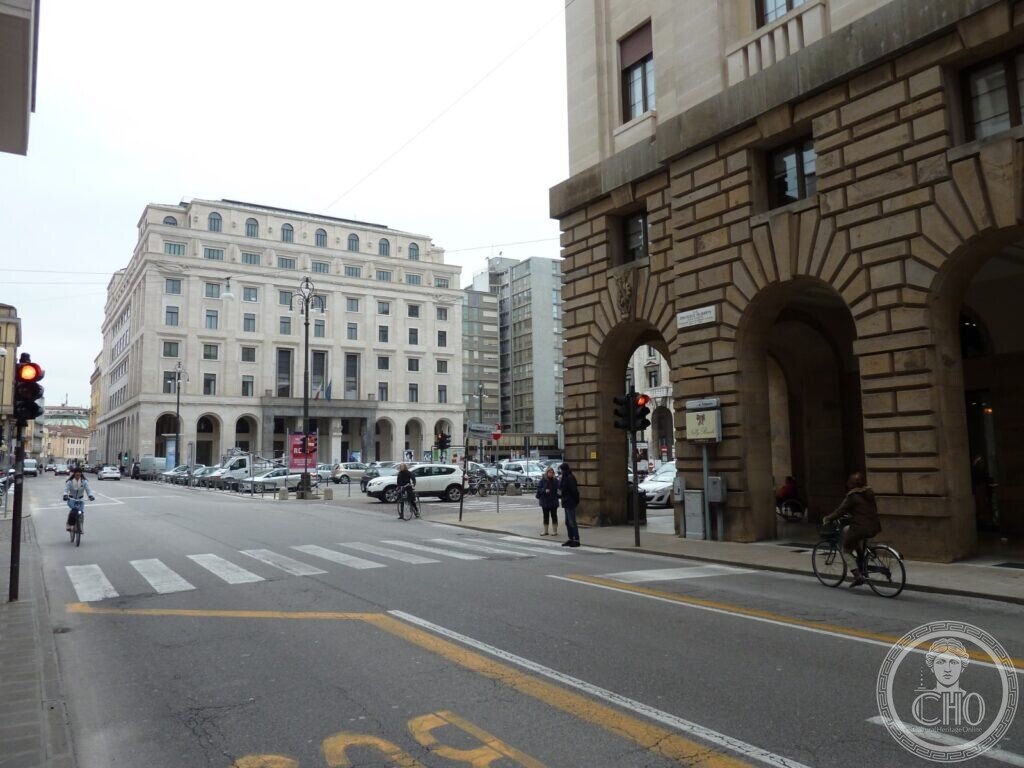
Palazzo INPS, Padua — closing the view along Via Emanuele Filiberto
Photo: Stefano Vigolo
€3.00
1600 × 1200 px · JPG · 425.8 KB
prints 14 × 10 cm at 300 dpi
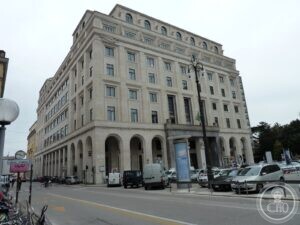
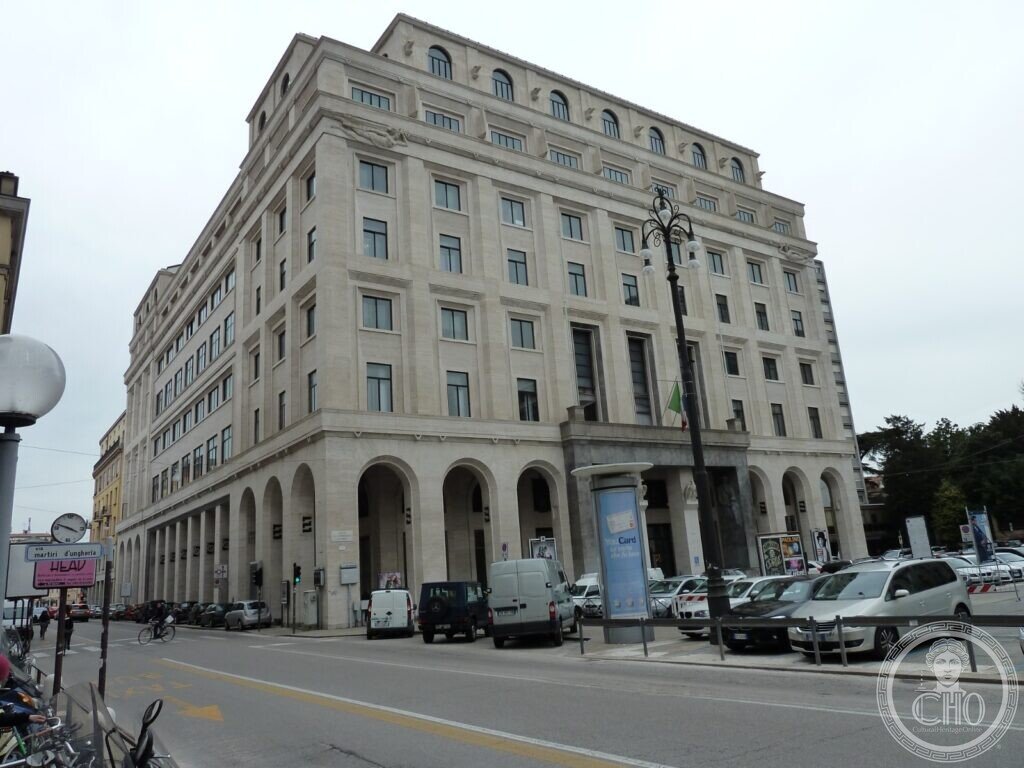
Palazzo INPS, Padua — corner view from Via Martiri d’Ungheria
Photo: Stefano Vigolo
€3.00
1600 × 1200 px · JPG · 428.6 KB
prints 14 × 10 cm at 300 dpi
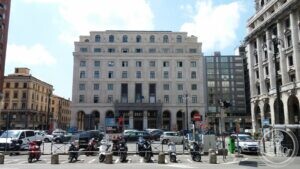
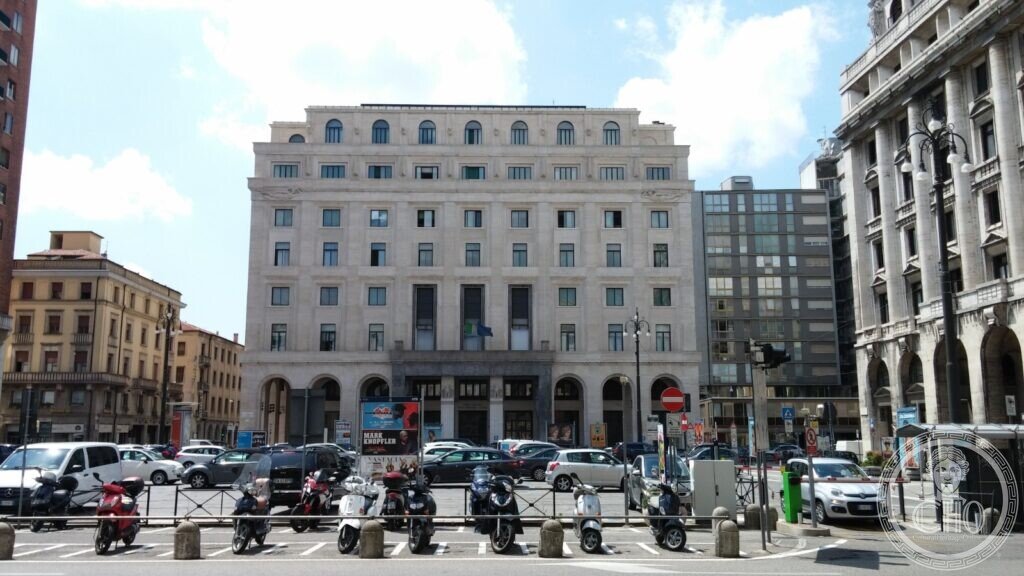
Palazzo INPS, Padua — main facade on Piazza Insurrezione
Photo: Stefano Vigolo
€3.00
1600 × 900 px · JPG · 397.7 KB
prints 14 × 8 cm at 300 dpi
Is this page about you?
This page is read by travellers and heritage enthusiasts who find it on Google. Tell us how you are connected to this place and we will take it from there.