
A Fascist-era postal office built alongside the planned city of Pomezia, this modernist structure embodies the architectural ambitions of 1930s Italy.
At a glance
The Palazzo delle Poste e Telegrafi stands on Piazza Indipendenza as part of Pomezia’s coordinated urban development. Completed in 1938, it served the communications needs of a newly founded city conceived as a model of rational planning and industrial progress.
History
The palace was constructed in 1938, the same year Pomezia itself was established. It reflects the Fascist regime’s ambitions to develop new towns combining administrative infrastructure with modern urban design. The city and its public buildings represented a vision of rationalized settlement and state-directed development.
What you see
The building exemplifies the modernist vocabulary of 1930s Italian institutional architecture. Its placement on the central piazza anchors the civic core of Pomezia’s street plan. The structure’s design prioritized functional clarity and public accessibility, hallmarks of Fascist-era urban ideology.
Cultural significance
As both a postal facility and architectural artifact, the palazzo documents a pivotal moment in twentieth-century Italian urbanism. Pomezia and its buildings represent experimental approaches to city-making and the integration of communications infrastructure into planned communities.
Key facts
- Address: Piazza Indipendenza, Snc, 00040 Pomezia, Lazio
- Coordinates: 41.6699933, 12.5018765
- Completed: 1938
- Phone: 0691149820
- Official website: https://www.poste.it/
Practical information
The palazzo remains an active postal facility. Opening hours and visiting conditions should be confirmed in advance by telephone or through the official Poste Italiane website.
Getting there
The building is located on Piazza Indipendenza in central Pomezia, approximately 30 kilometres south of Rome. Visitors can access the site via local public transport or by car; parking is available on the piazza.
See the place
Sources & resources
Find it on the map
See this place and what’s around it →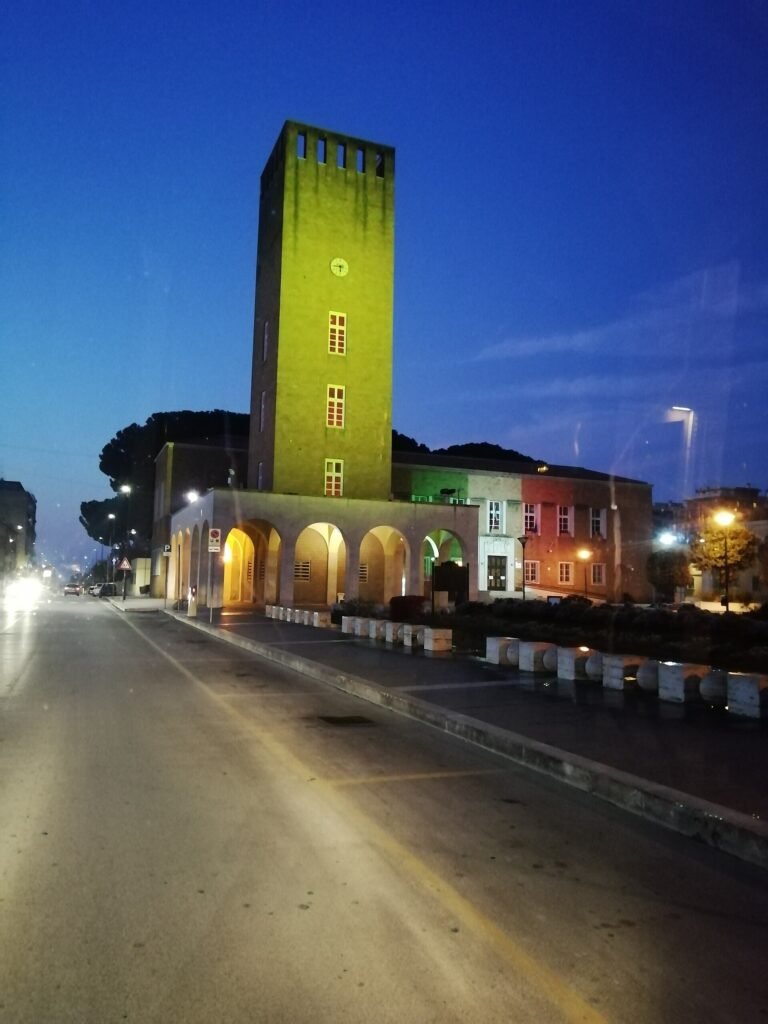
📷 Become a Cultural Heritage Online photographer
Share your photos of places: they stay published under your name as the author. The more they're seen, the more you get noticed — and soon a contest will reward the most appreciated photos.
Log in or sign up free to add a photoIs this page about you?
This page is read by travellers and heritage enthusiasts who find it on Google. Tell us how you are connected to this place and we will take it from there.