


The seat of the UK Parliament and a masterpiece of Gothic Revival architecture, this iconic palace on the Thames defines Westminster—a name now synonymous with British government itself.
At a glance
The Palace of Westminster houses the House of Commons and House of Lords, the two chambers of Parliament. Its most famous feature, Elizabeth Tower, contains the bell Big Ben, recognizable worldwide. Since 1970 a Grade I listed building and since 1987 part of a UNESCO World Heritage Site, it remains one of the world’s most potent symbols of democratic governance.
History
Originally built as a royal palace in the eleventh century, it served as the primary residence of English kings until 1512, when fire destroyed the royal apartments. The monarch relocated to the adjacent Palace of Whitehall. Parliament, which had convened there since the thirteenth century, remained.
A second catastrophic fire in 1834 razed most of the complex but spared the twelfth-century Westminster Hall. Architect Charles Barry won the competition to design a replacement, selecting Gothic Revival style. Construction began in 1840 and extended thirty years, marked by delays, cost overruns, and deaths—including those of Barry and his assistant Augustus Pugin. The palace opened to widespread acclaim for its ornate detail, sparking Gothic Revival designs elsewhere.
What you see
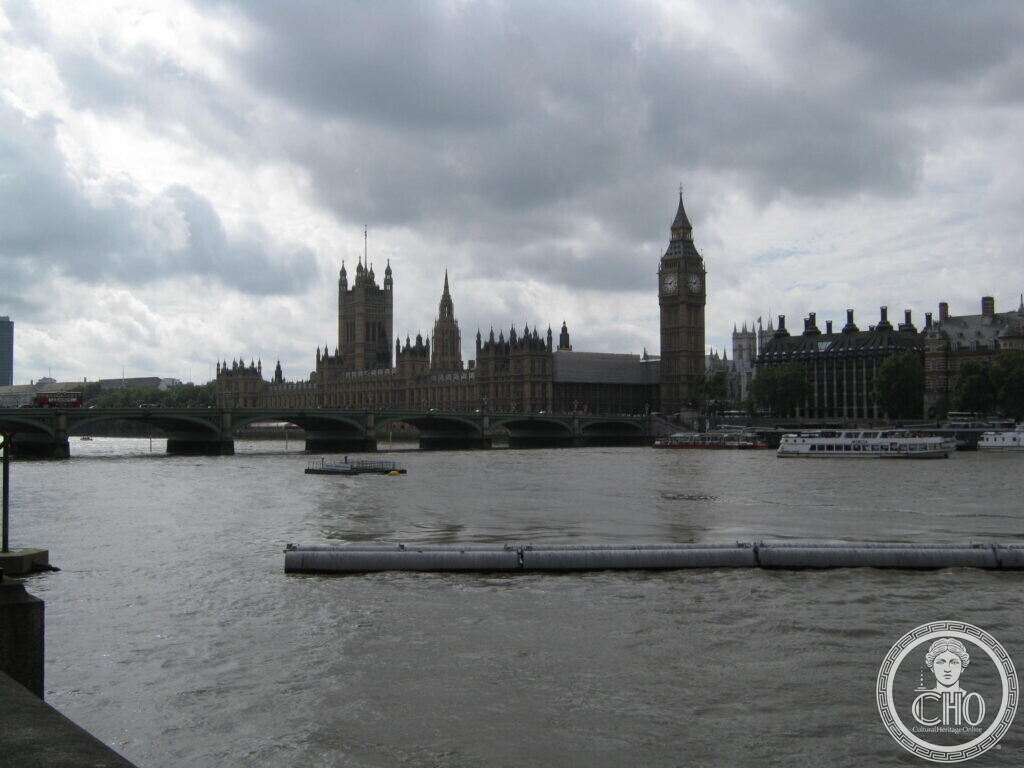
The neo-Gothic building sprawls across 112,476 square metres of floor space, combining intricate stonework, soaring towers, and richly decorated chambers. Elizabeth Tower, formerly called the Clock Tower, dominates the skyline with its distinctive turret and the famous Great Bell. Westminster Hall, the sole structure surviving from the medieval palace, remains a marvel of Perpendicular Gothic engineering within the modern complex.
Cultural significance
Westminster transcends its physical architecture. The term “Westminster” has become shorthand for Parliament and British Government. The “Westminster system” of parliamentary democracy, adopted worldwide, takes its name from this palace. It embodies centuries of English political tradition and remains central to the nation’s constitutional identity.
Key facts
- Country: United Kingdom
- City: London, City of Westminster
- Coordinates: 51.4992, -0.1247
- UNESCO World Heritage Site: Since 1987
- Grade I Listed Building: Since 1970
- Floor area: 112,476 m² (1,210,680 ft²)
- Architect: Charles Barry (Gothic Revival)
- Construction: 1840–1870
Practical information & getting there
The palace is centrally located in Westminster, accessible by London Underground (District, Circle, or Jubilee lines to Westminster station). You can view the exterior and Elizabeth Tower freely from the embankment and surrounding streets. For further details on guided tours and visiting regulations, consult official parliamentary websites.
Gallery
Sources & resources
Find it on the map
See this place and what’s around it →Events here — now on & upcoming
- Anniversary: The Gunpowder Plot — November 5, 160505 Nov 2027See the event →
📷 Become a Cultural Heritage Online photographer
Share your photos of places: they stay published under your name as the author. The more they're seen, the more you get noticed — and soon a contest will reward the most appreciated photos.
Log in or sign up free to add a photoIs this page about you?
This page is read by travellers and heritage enthusiasts who find it on Google. Tell us how you are connected to this place and we will take it from there.