
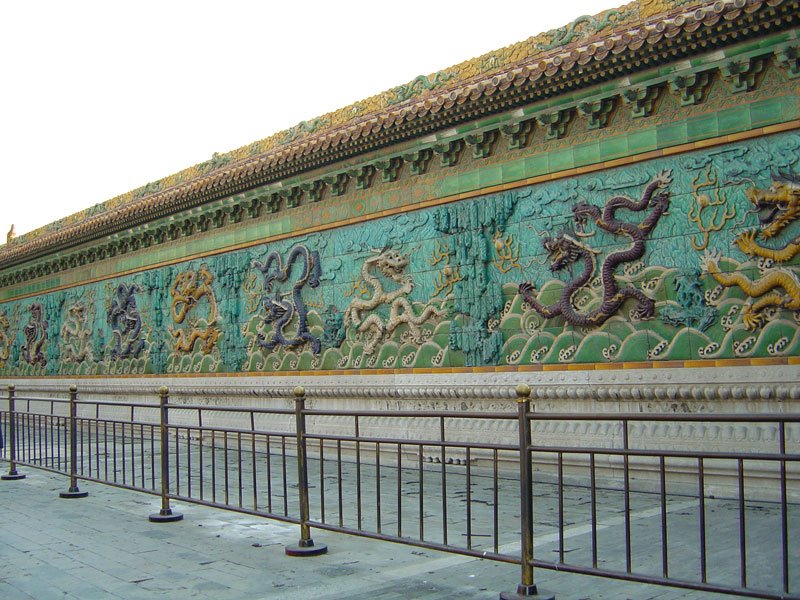
An exquisite eighteenth-century retreat in the Forbidden City’s northeast corner, built for an emperor who never inhabited it, now preserved as a masterpiece of Qing interior design.
At a glance
The Palace of Tranquil Longevity (寧壽宮)—also known as the Qianlong Garden—occupies the Inner Court of the Forbidden City. Construction began in 1771 under the Qianlong Emperor’s direction as a personal retirement residence. The complex remains largely intact, its apartments and pavilions exemplifying an era when Chinese architectural and decorative arts reached their zenith.
History
The Qianlong Emperor commissioned the palace in 1771, intending it as his sanctuary after stepping down from active rule. Paradoxically, he never moved in. His imperial decree preserved the retreat unchanged throughout the Qing dynasty, effectively sealing it from use by subsequent residents.
This decision—to build a magnificent space and leave it untouched—transformed the palace into a time capsule of eighteenth-century imperial taste and craftsmanship.
What you see
The palace comprises elegant apartments, decorated pavilions, ceremonial gates, and ornamental gardens arranged across its northeast quadrant. Its interiors showcase refined woodwork, painted ceilings, ceramic details, and landscape design conventions representing the peak of Qing aesthetics.
The layout follows classical Chinese palatial principles while incorporating innovations in spatial planning and intimate domestic architecture.
Cultural significance
The Palace of Tranquil Longevity documents the culmination of Chinese imperial design philosophy. Its preservation without alteration—a consequence of imperial wish rather than accident—makes it an invaluable record of eighteenth-century court taste, construction techniques, and the symbolic meanings embedded in imperial domestic space.
Key facts
- Location: Forbidden City, Inner Court, northeast corner, Beijing, China
- Coordinates: 39.91887, 116.3941
- Commissioned: 1771, Qianlong Emperor
- Primary purpose: Imperial retirement residence (unrealized)
- Architectural period: High Qing dynasty
Practical information & getting there
The palace is accessible as part of the Forbidden City complex in central Beijing. Standard Forbidden City admission applies. You may wish to allow extra time to explore its gardens and pavilions; guided tours often highlight its design innovations.
Sources & resources
Find it on the map
See this place and what’s around it →📷 Become a Cultural Heritage Online photographer
Share your photos of places: they stay published under your name as the author. The more they're seen, the more you get noticed — and soon a contest will reward the most appreciated photos.
Log in or sign up free to add a photoIs this page about you?
This page is read by travellers and heritage enthusiasts who find it on Google. Tell us how you are connected to this place and we will take it from there.