
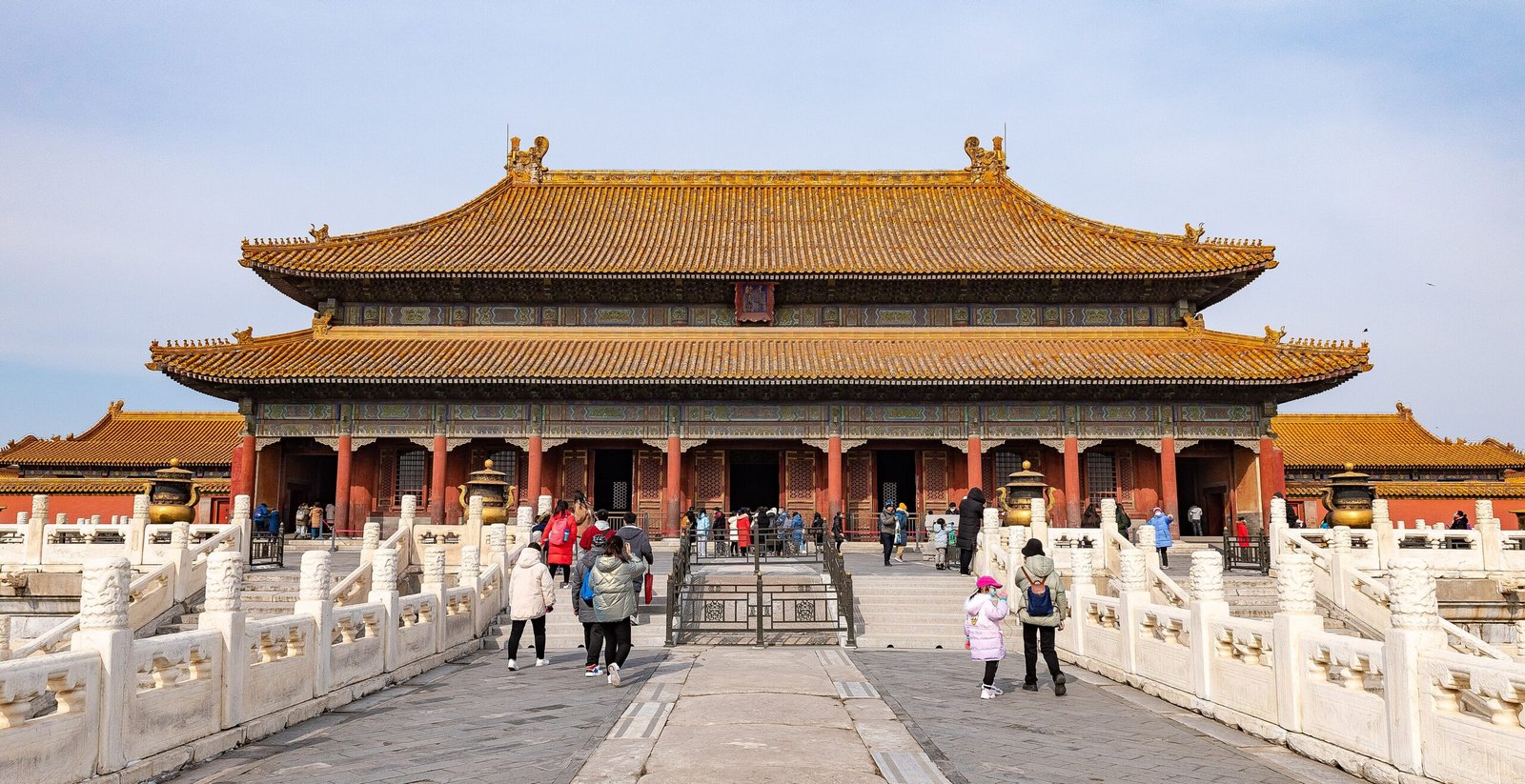
The largest hall of the Forbidden City’s Inner Court, the Palace of Heavenly Purity served as the Qing emperors’ principal audience chamber and seat of imperial authority.
At a glance
Qianqing Palace occupies a commanding position at the northern end of the Forbidden City’s ceremonial core. This grand audience hall dominated the inner palace’s political life, functioning as the emperor’s council chamber where he convened with the Grand Council on matters of state.
History
The Palace of Heavenly Purity emerged as a central institution during the Qing dynasty. As the largest of three interconnected halls forming the Inner Court, it became the fulcrum of imperial governance, where successive emperors received officials and made critical decisions affecting the empire.
What you see
The palace ranks as the most prominent structure within the Inner Court complex. Positioned north of the Hall of Union and the Palace of Earthly Tranquility, its architectural precedence reflects its ceremonial and political importance in the hierarchy of imperial spaces.
Cultural significance
The palace embodies the organizational logic of Forbidden City design, where spatial arrangement encoded political meaning. Its prominence as the emperor’s audience hall demonstrates how architecture served as a language of power during China’s final imperial dynasty.
Key facts
- Country: China
- City: Beijing
- Coordinates: 39.91877, 116.39075
- Chinese name: 乾清宫 (Qianqing Palace)
- Location: Inner Court of the Forbidden City
Practical information & getting there
The Palace of Heavenly Purity is accessible to the public as part of guided or independent visits to the Forbidden City. Consult current opening hours and ticketing details through the palace’s official information services before planning your visit.
Sources & resources
Find it on the map
See this place and what’s around it →📷 Become a Cultural Heritage Online photographer
Share your photos of places: they stay published under your name as the author. The more they're seen, the more you get noticed — and soon a contest will reward the most appreciated photos.
Log in or sign up free to add a photoIs this page about you?
This page is read by travellers and heritage enthusiasts who find it on Google. Tell us how you are connected to this place and we will take it from there.