
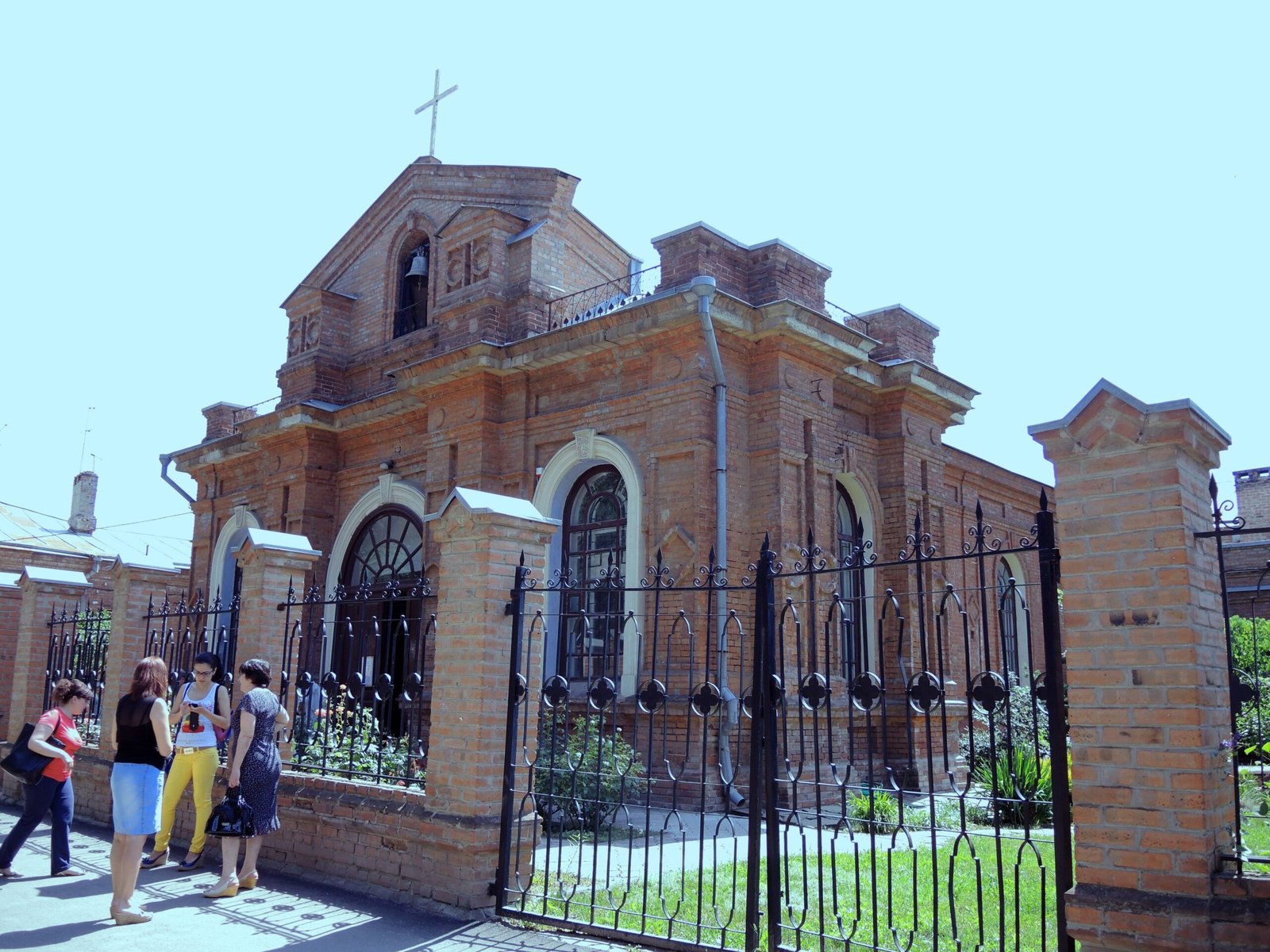
A Catholic church raised by exiled Poles on the steppe, still standing after decades of closure and confiscation.
At a glance
Our Lady of the Assumption Church serves Novocherkassk’s small Catholic community within the Diocese of Saint Clement at Saratov, under the deanship of Rostov. Built between 1902 and 1906, it replaced an earlier nineteenth-century church on the same site. The building survived Soviet closure and returned to parish use in 1994. It carries heritage-listed status today.
History
The parish traces back to Poles deported to the Don region after the uprising of 1861-1864 against Russian rule. They needed a church of their own. Polish architect Bronisław Brochwicz-Rogoyski designed the new building in 1902, and construction finished in 1906. By 1917 the parish counted 4,231 registered members, a striking figure for a community founded in exile. The congregation also included Catholic Armenians, present in the area since the eighteenth century, and a handful of Don German families. Soviet authority closed the church. Father Johann Lang kept ministering in secret to his scattered flock until his arrest and deportation in 1941; he died in the Gulag three years later. Only in the 1990s, as state and church relations thawed, could Catholics here worship openly again. The parish register was reestablished in 1993, and the church itself was returned in 1994.
What you see
The church stands as a rare Catholic landmark on the Don steppe, built to a design distinct from the Orthodox churches that dominate the region. Its origins as an exile community’s project shape its character more than any single architectural flourish. What remains notable is survival itself: a building that outlasted confiscation, decades of silence, and one priest’s disappearance into the camps. Visitors find in it less a monument to style than to endurance.
Cultural significance
The church is a physical trace of Poland’s nineteenth-century exiles, forced eastward after failed uprisings against imperial Russia. It also marks the layered, multi-ethnic Catholic presence in southern Russia, drawing together Poles, Armenians, and Don Germans under one roof. Father Lang’s clandestine ministry and death in the Gulag tie the building to the wider history of religious persecution under Soviet rule. Its reopening in the 1990s reflects the broader post-Soviet return of confiscated churches to their congregations.
Key facts
- Location: Novocherkassk, Rostov Oblast, Russia
- Dedication: Assumption of the Virgin Mary
- Architect: Bronisław Brochwicz-Rogoyski (1861-1921)
- Built: 1902-1906, replacing an earlier 19th-century church
- 1917 parishioners: 4,231
- Closed under Soviet rule; parish reestablished 1993, church returned 1994
- Diocese: Saint Clement at Saratov, Deanship of Rostov
- Heritage-listed status: confirmed
Practical information & getting there
The church stands in the historic city of Novocherkassk, near coordinates 47.416, 40.0878. Novocherkassk is reachable by regional train or bus from Rostov-on-Don, a short trip southeast into the Don region. You can check the parish’s own site for Mass times and current visiting arrangements before travelling.
Sources & resources
Find it on the map
See this place and what’s around it →📷 Become a Cultural Heritage Online photographer
Share your photos of places: they stay published under your name as the author. The more they're seen, the more you get noticed — and soon a contest will reward the most appreciated photos.
Log in or sign up free to add a photoIs this page about you?
This page is read by travellers and heritage enthusiasts who find it on Google. Tell us how you are connected to this place and we will take it from there.