
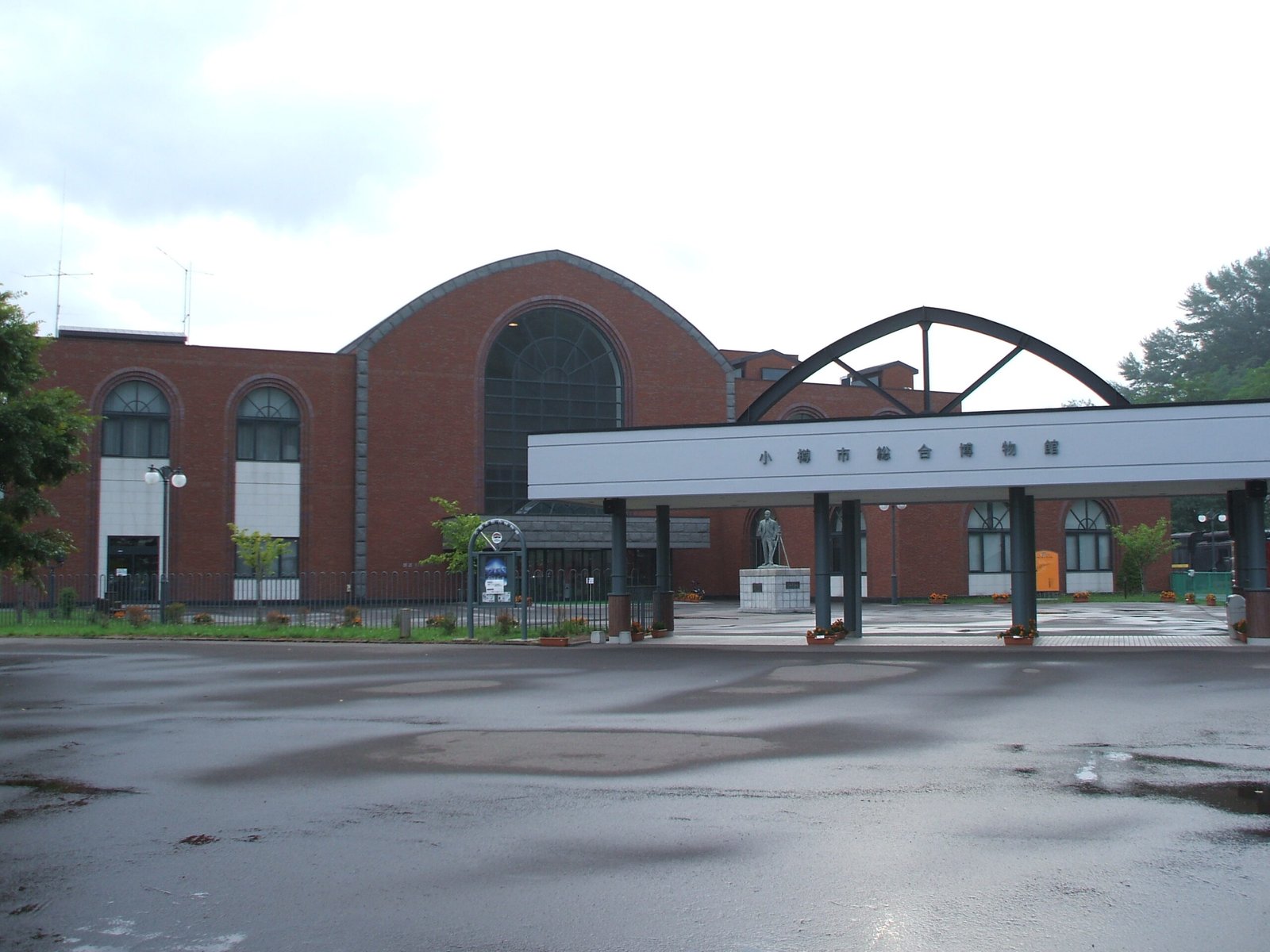
A sprawling museum built on the birthplace of Hokkaido’s railways, where a Meiji-era turntable and a century-old American steam locomotive share the same 5.8-hectare yard.
At a glance
The Otaru City General Museum opened on July 14, 2007, formed by merging the old Otaru City Museum with the Otaru City Youth Science and Technology Museum and folding both into the former Otaru Transportation Memorial Hall at Temiya Station. It sits on the site of Temiya Station itself, on the former Temiya Line, the earliest railway line in Hokkaido. A separate branch, the Canal Museum, occupies the former Otaru Warehouse near Otaru Canal and covers local history and natural history rather than transport.
History
The story begins in 1956, when the Otaru City Museum was founded in the old Nippon Yusen Otaru branch building. It moved in 1985 to the former Otaru Warehouse, a building now known as the Canal Museum. Railway heritage arrived separately. In December 1962 the Sapporo Railway Administration of Japan National Railways established the Hokkaido Railway Memorial Museum nearby, marking 85 years of Japanese railways, and installed the Taisho-go locomotive in 1964. That railway hall closed temporarily in 1992, reopened in 1996 as the expanded Otaru Transportation Museum under third-sector management, then shut again in 2006 as visitor numbers fell. The 2007 reorganisation brought everything under one roof at Temiya. Since then the site has also hosted the Otaru Classic Car Expo each September, and served as the starting point of the Tour de Hokkaido in 2007.
What you see
Three indoor buildings anchor the complex, alongside an open-air yard holding preserved locomotives and automobiles. The former Temiya Engine Warehouse, now the Railway Vehicle Preservation Center, is a designated National Important Cultural Property and one of Japan’s oldest surviving locomotive depots. Nearby stands the Temiyaguchi turntable, once used by the Otaru Chikko Locomotive Depot, and a marker for the zero milepost of Hokkaido’s rail network. The museum holds eight of Hokkaido’s twelve quasi-railway monuments. Among the working exhibits is Iron Horse, a 2-6-0 tender steam locomotive built by H.K. Porter, Inc. in 1909 and bought from an American theme park in 1993; visitors can still hear it run on the yard’s track.
Cultural significance
The museum preserves physical evidence of where Hokkaido’s rail network began, not a reconstruction. Its concentration of protected railway monuments is unusual for a single site in Japan. The 2018 restoration of Iron Horse, funded partly through crowdfunding after water damaged its firebox, showed how the community itself keeps this working heritage running. Paired with the Canal Museum’s warehouse buildings from the 1890s, the two sites together trace Otaru’s transformation from Ainu settlement to industrial port town.
Key facts
- Location: Temiya 1-chome, Otaru, Hokkaido, Japan
- Founded in current form: July 14, 2007
- Site area: 5.8 hectares, former Temiya Station
- Railway Vehicle Preservation Center: National Important Cultural Property
- Live exhibit: 1909 H.K. Porter steam locomotive “Iron Horse”
- Affiliated site: Canal Museum, former Otaru Warehouse (1890–1894)
Practical information & getting there
The museum stands near the Otaru Canal, within walking distance of central Otaru. You can combine a visit with the Canal Museum, which occupies the historic warehouse buildings closer to the water. Check the official website before travelling, since operating hours and seasonal locomotive runs can change.
Sources & resources
Find it on the map
See this place and what’s around it →📷 Become a Cultural Heritage Online photographer
Share your photos of places: they stay published under your name as the author. The more they're seen, the more you get noticed — and soon a contest will reward the most appreciated photos.
Log in or sign up free to add a photoIs this page about you?
This page is read by travellers and heritage enthusiasts who find it on Google. Tell us how you are connected to this place and we will take it from there.