

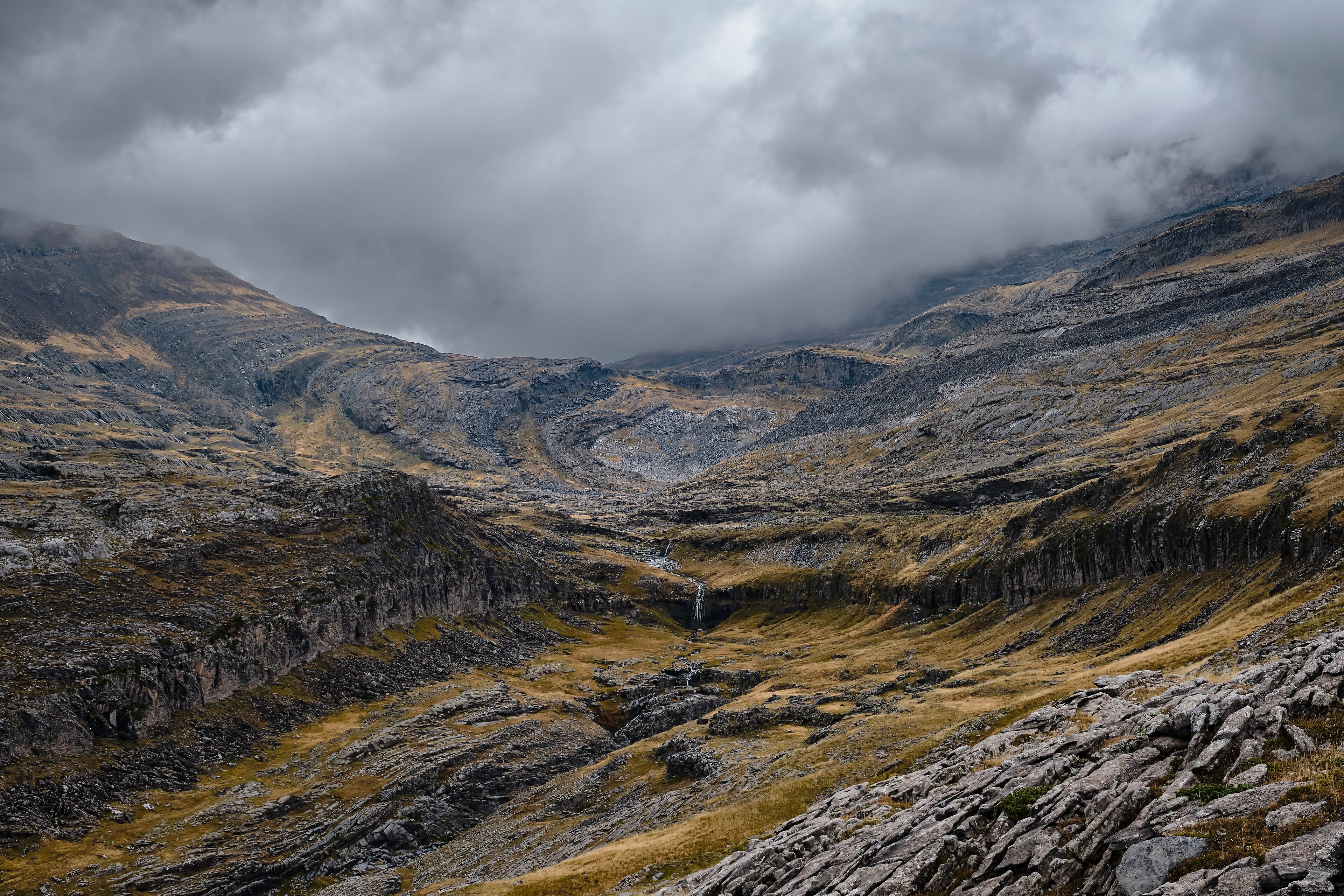
A UNESCO World Heritage site in the Pyrenees, celebrated for its dramatic geology and alpine wilderness.
At a glance
Ordesa y Monte Perdido spans 156.08 square kilometres across the Pyrenees. The park protects a landscape of sheer valleys, limestone formations, and high peaks that draw hikers and geologists alike.
History
The Ordesa Valley was designated a National Park in 1918, making it one of Spain’s earliest protected areas. Its scope expanded dramatically in 1982 to encompass the entire region, recognising the ecological and geological importance of the wider landscape.
What you see
The park is defined by its spectacular geologic landforms: deep canyons carved by glacial action, vertical limestone cliffs, and alpine meadows. Monte Perdido, the highest peak within the site, dominates the landscape and gives the park its name.
Cultural significance
UNESCO recognised Ordesa y Monte Perdido as a World Heritage Site in 1997, citing its exceptional geological features. The same year, it was designated a Biosphere Reserve as part of the cross-border Ordesa-Viñamala reserve, acknowledging its role in biodiversity conservation and sustainable land use across the Franco-Spanish border.
Key facts
- Country: Spain
- Area: 156.08 square kilometres
- Established: 1918; expanded 1982
- UNESCO World Heritage Site: 1997
- UNESCO Biosphere Reserve: 1997
- Coordinates: 42.67°N, 0.06°E
Practical information & getting there
The park is located in the Pyrenees in Aragon. You can access the main valleys via the towns of Torla and Aínsa. Summer offers the best conditions for hiking; winter snow closes higher trails. The park has no entrance fee, though parking at popular trailheads fills quickly during peak season.
Sources & resources
Find it on the map
See this place and what’s around it →
📷 Become a Cultural Heritage Online photographer
Share your photos of places: they stay published under your name as the author. The more they're seen, the more you get noticed — and soon a contest will reward the most appreciated photos.
Log in or sign up free to add a photo