
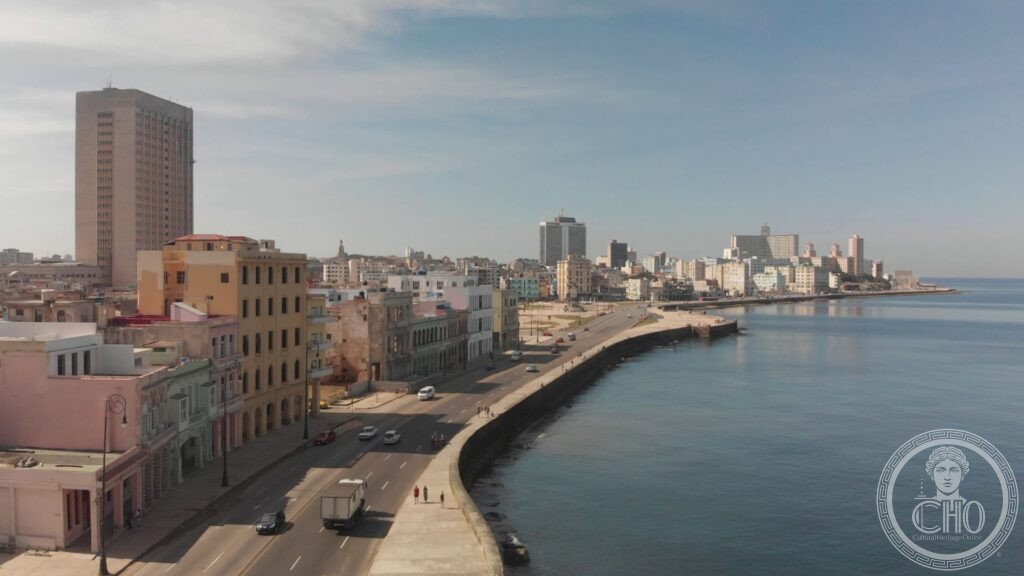
Old Havana is the historic core of the Cuban capital, a compact grid of colonial plazas, fortresses and townhouses that grew rich on the annual Spanish treasure fleet. Decades of isolation left it decaying rather than demolished, and it survives today as one of the most complete Spanish colonial districts in the Americas.
At a glance
La Habana Vieja is the historic core of Havana, founded in 1519 and made the capital of Cuba in 1553 once Spanish administrators recognised the superior natural harbour of Havana Bay. For over two centuries the city served as the mandatory assembly point for the Flota de Indias, the annual convoy that carried silver, gold and other American wealth back to Spain, and the money generated by that trade paid for the fortresses, plazas and cathedral that still define the district.
Its unusually complete state owes as much to modern history as to colonial wealth. After the 1959 Revolution and the subsequent United States trade embargo, private investment in the old city all but stopped. Buildings decayed rather than being pulled down for redevelopment, and the historic fabric survived largely intact until UNESCO inscribed the district as a World Heritage Site in 1982, triggering a systematic restoration programme run by the City Historian’s Office under Eusebio Leal Spengler, who oversaw the work from 1967 until his death in 2020.
Key facts
- Location: Havana, Cuba, on the north coast at the entrance to Havana Bay
- Founded: 1519, on Cuba’s south coast; relocated to its present site by 1553
- Historic core: roughly 2 km², with five fortresses, six plazas and around 900 buildings dating from the 16th to the 19th centuries
- UNESCO status: inscribed as a World Heritage Site in 1982
- Restoration authority: the Office of the City Historian (Oficina del Historiador de la Ciudad, OHCH)
History
Havana was founded in 1519 on Cuba’s south coast and moved to its present position on the north coast under Governor Hernando de Soto, becoming the island’s capital in 1553 once the exceptional shelter of its bay was recognised. From 1561 the Spanish crown required its transatlantic treasure fleet, the Flota de Indias, to assemble in Havana before the crossing to Spain, and the city’s population swelled each year with the sailors, merchants and officials of the combined convoy. The wealth this trade generated financed the district’s fortifications, churches, plazas and finest private houses, and made Havana the most heavily defended city in the Spanish Americas.
That defence was tested in 1762, when a British fleet besieged and captured Havana during the Seven Years’ War. British forces held the city for eleven months before returning it to Spain in exchange for Florida under the Treaty of Paris. The episode exposed the weakness of Havana’s fortifications and prompted Spain to build the Fortaleza de San Carlos de la Cabaña, the largest fort constructed in the Americas.
The explosion of the USS Maine in Havana harbour in 1898 provided the pretext for the Spanish-American War, after which Cuba gained formal independence. The following decades, especially the Prohibition era of the 1920s and 1930s, made Old Havana a fashionable destination for American visitors, and bars and hotels such as the Bodeguita del Medio, La Floridita and the Hotel Ambos Mundos, where Hemingway wrote part of For Whom the Bell Tolls, became well known. After the 1959 Revolution and the US trade embargo that followed, private redevelopment of the old city effectively stopped, and the resulting neglect, paradoxically, preserved the colonial fabric that the OHCH later restored.
What you see
Old Havana’s visitor circuit is built around six historic plazas. Plaza de Armas, the oldest, dates from 1582 and is bordered by colonial government buildings and the Castillo de la Real Fuerza of 1577, said to be the oldest fortification in the Americas; a second-hand book market operates in the square daily. Plaza Vieja, of 16th-century origin, shows the widest mix of architectural styles, with buildings spanning four centuries, and was fully restored in the 2000s. Plaza de la Catedral is dominated by the Cathedral de San Cristóbal de La Habana, built between 1748 and 1777, whose asymmetrical bell towers and undulating Baroque façade were described by the writer Alejo Carpentier as music frozen in stone. Plaza de San Francisco de Asís, once the colonial dockside square, holds the Basílica Menor de San Francisco de Asís of 1591, the city’s most important Baroque church.
The streets between the plazas are lined with three- and four-storey colonial buildings fronted by shaded colonnaded arcades, their façades typically painted in blue-green tones and their balconies dressed in wrought iron and flowering plants. Beyond the old city, the Malecón sea wall runs for several kilometres along the coast towards the Vedado district and is where Habaneros gather at sunset, with the Morro Castle and the Cabaña fortress visible across the harbour mouth.
Practical information
- Currency: Cuba operates a single currency, the Cuban Peso (CUP); cash US dollars are not accepted, though euros and Canadian dollars can be exchanged at CADECA offices or banks
- Getting around: Old Havana is best explored on foot, with the six main plazas forming a walkable circuit
- Currency exchange and hotel pricing: hotel rates may be quoted in CUP or in euros or US dollars depending on the establishment; check current arrangements with the hotel or official tourism channels before travelling
Getting there
Havana is served by José Martí International Airport, southwest of the old city, with direct flights arriving from Madrid, London, Mexico City and Cancún among other cities. Travellers should check current airline schedules and airport transfer options through official channels, since routes and services change.Nearby
- Castillo de los Tres Reyes del Morro — across the harbour entrance from Old Havana, built between 1589 and 1630
- Fortaleza de San Carlos de la Cabaña — beside the Morro Castle, the largest fort built in the Americas, raised after the British siege of 1762
- Malecón — Havana’s seafront promenade, running from Old Havana towards the Vedado district
- Hotel Ambos Mundos, La Floridita and Bodeguita del Medio — historic bars and a hotel within the old city, associated with Ernest Hemingway
Sources
- UNESCO
- Office of the City Historian of Havana (OHCH)
- Alejo Carpentier
Find it on the map
See this place and what’s around it →📷 Become a Cultural Heritage Online photographer
Share your photos of places: they stay published under your name as the author. The more they're seen, the more you get noticed — and soon a contest will reward the most appreciated photos.
Log in or sign up free to add a photo