
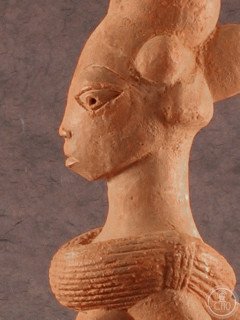
The Nok culture produced the earliest known sub-Saharan African sculpture — terracotta figurines of extraordinary sophistication, created across a vast swathe of central Nigeria more than 2,500 years ago.
At a glance
The Nok cultural tradition flourished across what is today northern and central Nigeria between roughly 1500 BC and 500 AD, covering approximately 78,000 square kilometres of the Jos Plateau and surrounding lowlands. It takes its name from the village of Nok in Kaduna State, where the first figurine fragment came to light in 1928. The culture left no known cities, palaces, or written records — only the terracotta, the iron furnaces, and unanswered questions.
Discovery
In 1928 a farmer near the village of Nok unearthed a terracotta head while digging. A British colonial officer, Bernard Fagg, recognised its significance and organised a systematic archaeological survey of the region. Subsequent fieldwork, continuing into the 21st century, recovered thousands of figurine fragments from the surface and from tin-mining operations that inadvertently disturbed buried deposits. No intact settlement sites have ever been found — the terracotta appears scattered across the landscape without obvious architectural context.
The terracotta figurines
Nok sculpture is unmistakable. The figurines — some approaching life-size — are fired in terracotta and follow a highly codified set of stylistic conventions: triangular or elongated eyes with pierced pupils that would have caught light; elaborate hairstyles ranging from complex braids to conical buns; cylindrical torsos; limbs rendered with varying degrees of naturalism. What distinguishes them from much ancient art is their unflinching depiction of the human condition: individuals show visible signs of disease — conditions interpreted as polio, elephantiasis, and facial paralysis — rendered not as caricature but with apparent empathy. Social rank is shown through jewellery and adornment. How a single tradition maintained such stylistic coherence across 2,000 years and 78,000 square kilometres, without apparent centralised political structure, remains one of the great unresolved questions of African archaeology.
Iron smelting
The Nok culture is associated with some of the earliest evidence of iron smelting in sub-Saharan Africa. Furnace sites dated to approximately 550 BC have been identified in the region. Whether the Nok independently invented iron technology or received it through trans-Saharan contact networks is still debated. Either way, the combination of advanced metallurgy and monumental sculpture marks the Nok as one of the most technologically sophisticated pre-urban cultures in African prehistory.
Purpose: the unanswered question
Why the figurines were made remains unknown. Proposed explanations include ancestor veneration, religious ritual, funerary markers, healing ceremonies, and representations of social hierarchy. No associated texts, shrines, or burial assemblages have been found in sufficient context to settle the question. The absence of settlement sites means archaeologists cannot reconstruct who made them, who used them, or what happened at the end of their functional life.
Looting and repatriation
The Nok heritage has suffered catastrophic losses. Beginning in the colonial era and accelerating in the 1990s, thousands of figurines were illegally excavated and trafficked to European and American collections. Major museums in Paris, Berlin, London, and New York hold Nok pieces acquired during periods of questionable provenance. Nigeria has initiated repatriation claims through UNESCO and bilateral negotiations, but progress has been slow. The result is that much of what we know about the Nok comes from objects removed from context, making archaeological interpretation permanently compromised.
Disappearance
Around 500 AD the Nok cultural tradition abruptly ended. No transitional period has been identified — the production of terracotta simply ceased. The cause is unknown: climate change, disease, political disruption, or population migration have all been proposed. No clear cultural continuity from Nok to later Nigerian peoples has been established. The Nok remain, in the most literal sense, a civilisation without a known origin story, purpose, or ending.
Key facts
- Location
- Kaduna State, central Nigeria (culture extends across ~78,000 km²)
- Period
- c. 1500 BC – 500 AD
- Discovery
- 1928, Bernard Fagg
- Medium
- Terracotta (fired clay)
- Significance
- Oldest known sub-Saharan sculptural tradition; early iron smelting
- Status
- Active repatriation dispute; archaeological site protected under Nigerian law
Visiting
The Nok cultural zone is a dispersed archaeological landscape, not a single managed site. The National Museum Jos (Jos, Plateau State) holds the most significant publicly accessible collection of Nok terracotta within Nigeria and is the recommended starting point — approximately 150 kilometres from the original Nok village find-site. The National Commission for Museums and Monuments (NCMM) oversees site protection.
Gallery
Find it on the map
See this place and what’s around it →📷 Become a Cultural Heritage Online photographer
Share your photos of places: they stay published under your name as the author. The more they're seen, the more you get noticed — and soon a contest will reward the most appreciated photos.
Log in or sign up free to add a photo