
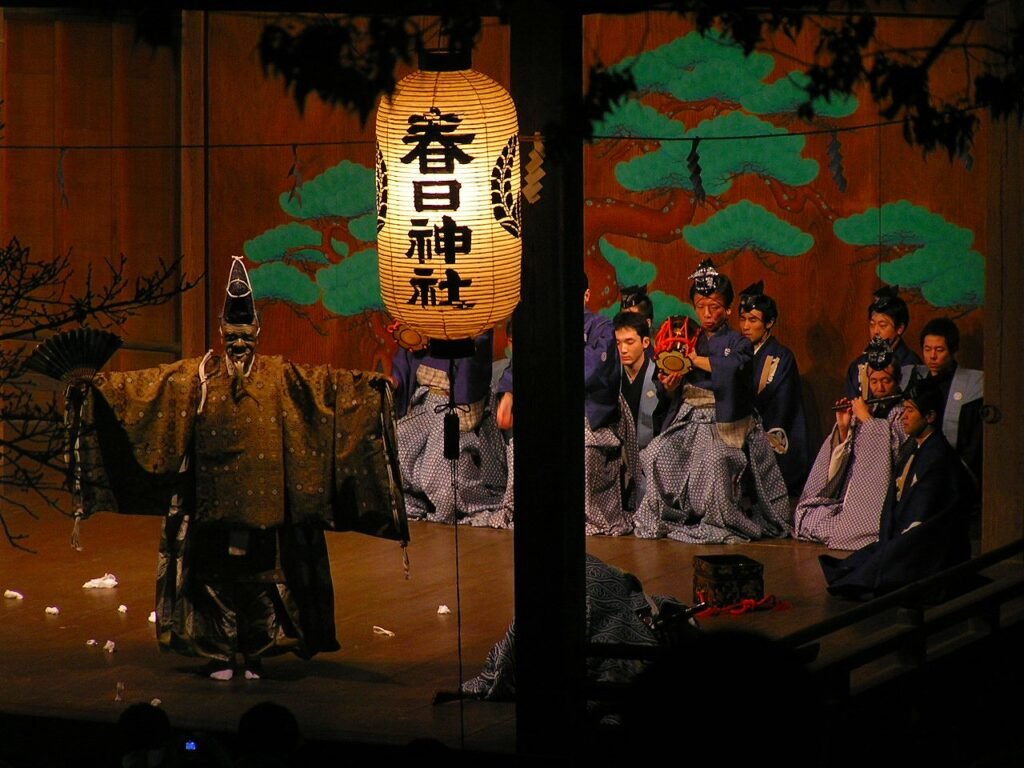
A lyric drama woven with comedy: noh and kyōgen performers have refined this theatrical tradition for centuries, combining masked actors, poetic language, and precise gesture to explore the human condition.
At a glance
Nōgaku is a classical Japanese theatrical form comprising two distinct but complementary genres: noh (lyric drama) and kyōgen (comic theatre). Traditionally performed in sequence during a single day, noh pieces alternate with kyōgen interludes, creating a rhythm that moves between contemplation and laughter. The practice has shaped Japanese performance aesthetics for more than six centuries and continues to influence later theatrical forms including Bunraku puppet theatre and Kabuki.
Origins & history
Nōgaku emerged from Japanese performance traditions and evolved into a sophisticated art form that achieved its classical refinement centuries ago. The structured pairing of noh and kyōgen reflects a deliberate aesthetic principle: noh’s symbolic depth and restraint are punctuated by kyōgen’s earthy humor and verbal play. This complementary relationship remains central to how the tradition is performed and understood.
The practice
In noh, masked actors move with controlled precision across the stage, their gestures spare yet expressive. The chorus chants the narrative while a small orchestra—typically including the flute (fue), drums, and other instruments—establishes mood and rhythm. Performers wear elaborate costumes and masks that convey character and emotion through sculptural form and subtle positioning.
Kyōgen performers abandon the mask and speak directly, their comic sketches often depicting everyday situations or satirizing social hierarchies. Their language is more colloquial than noh’s poetic diction, and their physical comedy contrasts sharply with noh’s meditative quality. The interplay between these two modes—the symbolic and the literal, the tragic and the comic—defines the Nōgaku experience.
Cultural significance
Nōgaku represents a refined philosophical approach to theatre in which beauty emerges through restraint and suggestion rather than spectacle. The tradition embodies Japanese aesthetic principles that privilege simplicity, asymmetry, and the power of what is not shown. By preserving and performing these works, practitioners maintain a direct link to centuries of artistic and intellectual history.
Key facts
- Countries: Japan
- Anchor community: Kyoto
- UNESCO Intangible Cultural Heritage inscription: 2008
- UNESCO reference number: 00012
Where to experience it
Kyoto remains the heartland of Nōgaku practice and performance. The tradition continues to be performed at established theatres and during cultural occasions throughout the region, where both professional and amateur performers maintain the repertoire and techniques passed down through generations of training.
Sources & resources
Find it on the map
See this place and what’s around it →📷 Become a Cultural Heritage Online photographer
Share your photos of places: they stay published under your name as the author. The more they're seen, the more you get noticed — and soon a contest will reward the most appreciated photos.
Log in or sign up free to add a photo