

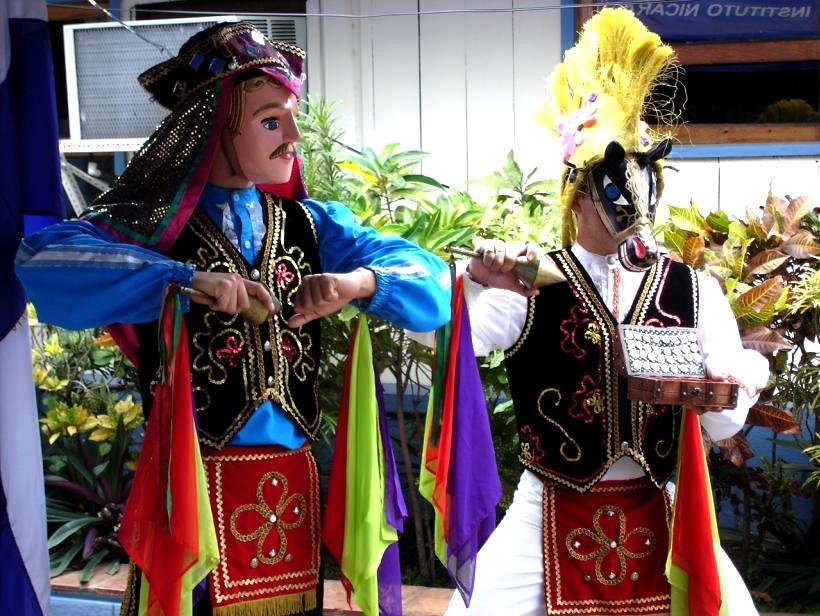
A satirical drama that blends music, dance, and theater, El Güegüense stands as Nicaragua’s signature folkloric masterpiece and the nation’s first literary work of the post-colonial era.
In UNESCO’s words
A forceful expression of protest against colonial rule, El Güegüense is a satirical drama well known throughout Nicaragua. It is performed during the feast of San Sebastián, patron saint of the city of Diriamba in Nicaragua’s Carazo province. El Güegüense, a synthesis of Spanish and indigenous cultures combining theatre, dance and music, is considered one of Latin America’s most distinctive colonial-era expressions. The earliest texts were probably composed in the early eighteenth century. The story revolves around encounters between the Spanish colonial authorities and native Americans, represented particularly by the central character. A powerful elder figure in pre-Hispanic Nicaragua, El Güegüense, countered charges levelled against him by the colonial officials through a series of clever verbal manoeuvres. Rather than directly confronting or challenging an authority, he attempts to appear consistently cooperative and compliant, while utilizing subterfuge to undermine Spanish authority. Interspersed in street processions, the plays are generally performed by eight main characters supported by dancers. Violins, guitars and drums provide the musical accompaniment. Costumes, wooden masks, hats and other attributes differentiate the various characters. The tradition is familiar to most of Nicaragua’s predominantly Spanish-speaking population owing to the nationwide television coverage of the annual Saint’s Day procession. In fact, it is so well known that Nicaraguans have coined the expression “to put on the Güegüense’s face” to refer to someone who outwardly appears to comply with the rules while working subtly to undermine them. Despite its popularity, El Güegüense is in danger of declining in popularity, and possibly disappearing, due to the country’s difficult economic situation, insufficient support for performers and a diminishing interest among young people.
Official description, UNESCO Intangible Cultural Heritage List — El Güegüense
At a glance
El Güegüense is a satirical drama performed during the feast of San Sebastián in Diriamba. It combines theatre, dance, and music in a synthesis of Spanish and indigenous cultures, and is considered one of Latin America's most distinctive colonial-era expressions. The performance centres on encounters between Spanish colonial authorities and native Americans, with the central character using wit and verbal skill to resist oppressive rule.
Origins & history
The earliest texts were probably composed in the early eighteenth century. El Güegüense emerged from the collision of Spanish and indigenous cultures during the colonial period. The story reflects how a powerful elder figure from pre-Hispanic Nicaragua confronted colonial officials through clever verbal manoeuvres rather than direct confrontation, establishing a tradition of subtle resistance encoded in performance.
The practice
Performances feature eight main characters supported by dancers, interspersed in street processions. Violins, guitars, and drums provide musical accompaniment. Performers wear wooden masks, hats, and distinctive costumes that differentiate the various characters. The annual performance during Saint's Day processions has reached a nationwide audience through television coverage, making the tradition familiar to most of Nicaragua's Spanish-speaking population.
Cultural significance
The expression 'to put on the Güegüense's face' has entered Nicaraguan language to describe outward compliance masking subtle resistance to authority. Despite its popularity and cultural importance, the tradition faces decline due to economic hardship, insufficient support for performers, and diminishing interest among young people.
Key facts
- Country: Nicaragua
- Inscribed: 2008
- UNESCO list: Representative List of the Intangible Cultural Heritage of Humanity
- UNESCO reference: 00111
- UNESCO vocabulary: Dance; Instrumental music; Theatre
- Map: Diriamba — the locality named in UNESCO’s official description of this element
Where to experience it
The feast of San Sebastián in Diriamba, Carazo province, is where El Güegüense comes alive each year. During this celebration honoring the city's patron saint, eight main characters in wooden masks and distinctive costumes perform the satirical drama through street processions, accompanied by violins, guitars, and drums. Though the tradition faces challenges from economic hardship and waning interest among younger generations, nationwide television coverage of the annual Saint's Day procession has kept El Güegüense familiar to most Nicaraguans, making it one of Latin America's most enduring colonial-era theatrical expressions.
Sources & resources
- UNESCO — official element page: El Güegüense
- UNESCO — open data record: Intangible Heritage List, reference 00111
- UNESCO — official video: UNESCO film on this element — embedded on this page
- UNESCO — official photograph: Photograph of this element — B Rodriguez — Instituto Nicaragüense de Cultura (INC)
- Reference — Wikipedia (secondary): El G%C3%BCeg%C3%BCense — consulted as a secondary reference, not as confirmation
- Cultural Heritage Online: Our archive and city guides

Find it on the map
See this place and what’s around it →📷 Become a Cultural Heritage Online photographer
Share your photos of places: they stay published under your name as the author. The more they're seen, the more you get noticed — and soon a contest will reward the most appreciated photos.
Log in or sign up free to add a photo