
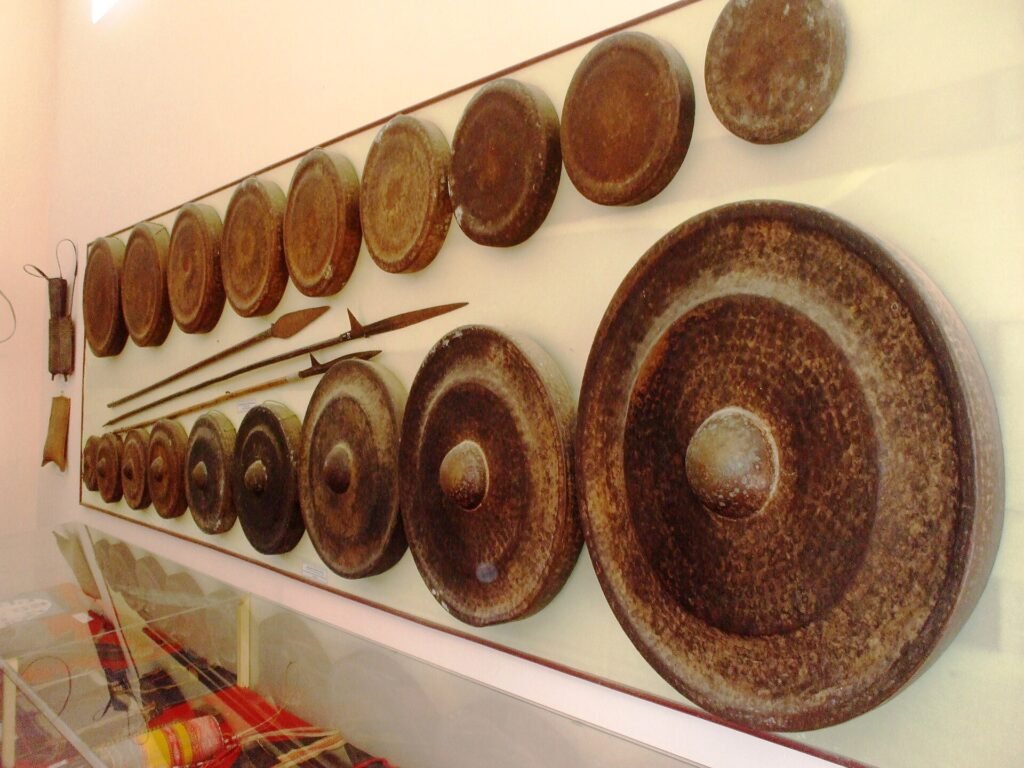
In Vietnam’s Central Highlands, gongs are far more than instruments—they are sacred vessels housing deities, central to ritual life among the Rade, Jarai, Bahnar, Mạ, and Koho peoples.
At a glance
The space of gong culture encompasses a living ritual and musical tradition spanning four provinces of the Central Highlands: Quảng Ngãi, Gia Lai, Đắk Lắk, and Lâm Đồng. Gongs serve as privileged connections between the human and supernatural worlds, with each instrument believed to house a deity whose spiritual power corresponds to the gong’s age. This practice integrates music, ceremony, communal gathering, and the sacred geography of longhouses, stilt houses, water sources, and nearby forests.
Origins & history
Gong culture runs deep in Highland ethnic tradition, woven into the ceremonial and social fabric of communities for generations. The practice has endured significant pressure from economic and social transformations that disrupted the transmission of knowledge from elder to youth and diminished the spiritual authority gongs once held. Despite these challenges, the tradition persists.
The practice
Gongs are played at key festivals marking the agricultural and spiritual calendar—the New Rice Festival and Water Wharf Ceremony among them. The instruments sound in communal spaces: the rông (longhouse), gươl houses, and gương (stilt houses), as well as at water sources and tombs. Each gong produces its own resonance; the sound carries ritual meaning and summons the divine presence within.
The practice binds together music, ceremony, and community. Ensemble gong playing creates complex layered soundscapes that accompany celebrations, rites of passage, and seasonal transitions. Knowledge of which gong to strike, when, and how passes from experienced musicians to learners through participation and oral instruction.
Cultural significance
For the Rade, Jarai, Bahnar, Mạ, and Koho peoples, gong culture expresses identity, cosmology, and connection to place. The gong’s voice bridges the living and the spirit realm. In recent decades, the annual Gong Culture Festival has emerged as both a vehicle for cultural preservation and a public celebration, affirming the practice’s relevance to contemporary Highland society.
Key facts
- UNESCO Intangible Cultural Heritage (reference 00120), recognized 2005
- Practiced across Quảng Ngãi, Gia Lai, Đắk Lắk, and Lâm Đồng provinces
- Bearers: Rade, Jarai, Bahnar, Mạ, and Koho ethnic communities
- Anchor heartland: Pleiku, Vietnam (13.97851°N, 108.00586°E)
- Key ceremonies: New Rice Festival, Water Wharf Ceremony
- Central gathering spaces: rông houses, stilt houses, water sources, tombs
Where to experience it
The heartland of gong culture is Pleiku and the Central Highlands region. The annual Gong Culture Festival draws visitors and practitioners from across the provinces. To experience the practice authentically, engage with local communities during seasonal ceremonies and agricultural festivals when gongs sound in their traditional contexts.
Sources & resources
- Space of gong culture – Wikipedia
- Space of Gong Culture – UNESCO Intangible Cultural Heritage
- Cultural Heritage Online
Find it on the map
See this place and what’s around it →📷 Become a Cultural Heritage Online photographer
Share your photos of places: they stay published under your name as the author. The more they're seen, the more you get noticed — and soon a contest will reward the most appreciated photos.
Log in or sign up free to add a photo