
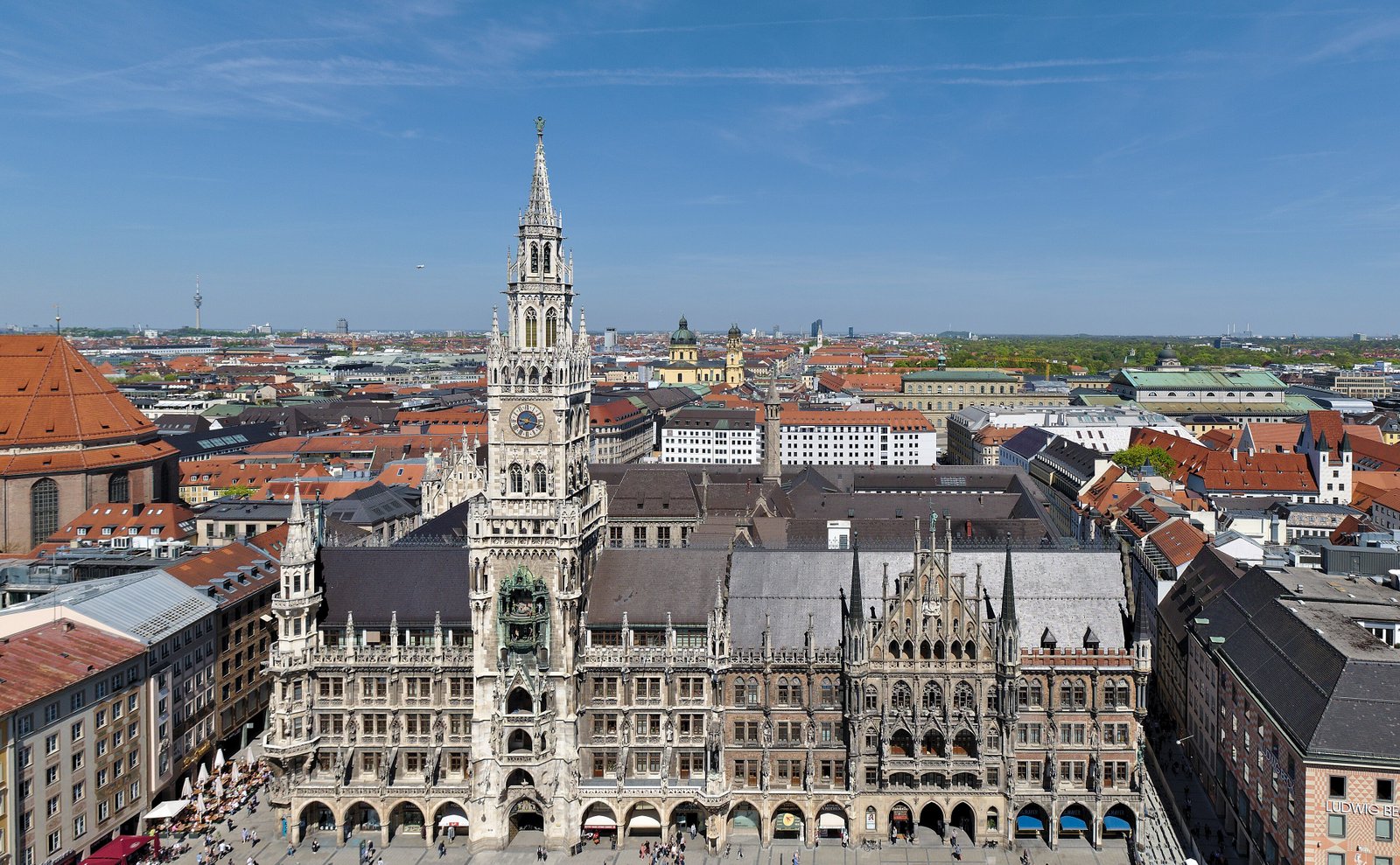
Munich’s civic heart occupies the northern edge of Marienplatz, where Gothic Revival architecture houses the municipal government and city council.
At a glance
The New Town Hall dominates Marienplatz’s northern boundary in Munich’s historic Altstadt. It serves as the primary seat of city government, accommodating the city council, mayoral offices, and administrative departments. The building represents the city’s expansion and modernization in the late nineteenth century.
History
In 1874, Munich’s municipality relocated from the Old Town Hall to this new purpose-built civic structure. The move reflected the city’s growth and the need for expanded administrative capacity during Bavaria’s industrial expansion.
What you see
The building’s northern position on Marienplatz makes it a defining landmark of the square. Its prominent placement and architectural presence frame one of Munich’s most important public spaces.
Cultural significance
The New Town Hall anchors Marienplatz as the civic and symbolic center of Munich. It represents the nineteenth-century modernization of Bavaria’s capital and continues to serve as the seat of municipal government and public life.
Key facts
- Country: Germany
- City: Munich, Bavaria
- Relocated from Old Town Hall: 1874
- Coordinates: 48.1375° N, 11.5756° E
Practical information & getting there
The New Town Hall fronts Marienplatz in Munich’s city center, accessible by public transport and on foot from the surrounding Altstadt. Visitors can experience the building’s exterior and public spaces; inquire locally about interior access and visiting hours.
Sources & resources
Find it on the map
See this place and what’s around it →📷 Become a Cultural Heritage Online photographer
Share your photos of places: they stay published under your name as the author. The more they're seen, the more you get noticed — and soon a contest will reward the most appreciated photos.
Log in or sign up free to add a photoIs this page about you?
This page is read by travellers and heritage enthusiasts who find it on Google. Tell us how you are connected to this place and we will take it from there.