

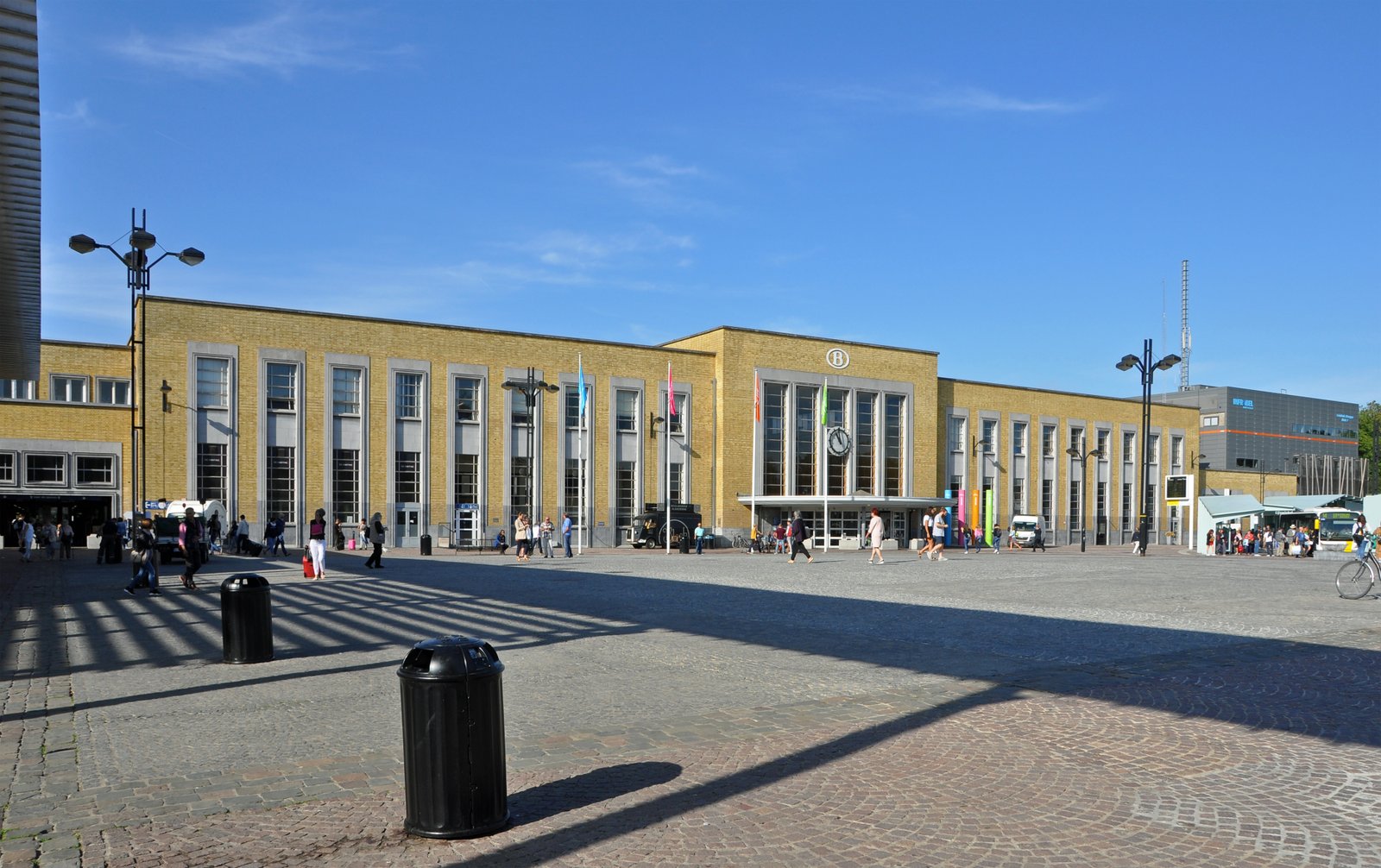
Belgium’s principal railway gateway to Bruges, this modernist station has served one of Europe’s most historic cities for nearly a century, connecting travelers to the medieval heart of Flanders.
At a glance
Brugge railway station is the main transport hub for Belgium’s ancient cloth-weaving capital. The station ranks among the busiest in Belgium and operates multiple railway lines connecting Bruges to the broader Belgian and European rail network.
History
The first railway station in Bruges opened on 12 August 1838, establishing the city’s connection to three major railway lines: 50A, 51, and 66. The station has undergone significant modernization; the current building dates to 1939 and remains in active use today. Train services are operated by the National Railway Company of Belgium (NMBS/SNCB).
What you see
The 1939 station building represents the era of modernist railway architecture in Interwar Europe. It functions as a major transport interchange serving thousands of daily travelers and international connections.
Cultural significance
The station plays a vital role in Bruges’ continued status as a major tourist and cultural destination. It provides essential access to the city’s UNESCO-listed historic center and connects the medieval streets to modern European transportation networks.
Key facts
- Country: Belgium
- City: Bruges, West Flanders
- Current building: 1939
- Original station opened: 12 August 1838
- Coordinates: 51.197°N, 3.217°E
- Operator: National Railway Company of Belgium (NMBS/SNCB)
- Status: One of Belgium’s busiest stations
Practical information & getting there
Brugge railway station is the primary arrival point for visitors traveling to Bruges by train. It connects to multiple Belgian and international rail routes, with services managed by the national rail operator. The station is centrally located for access to Bruges’ historic city center.
Sources & resources
Find it on the map
See this place and what’s around it →📷 Become a Cultural Heritage Online photographer
Share your photos of places: they stay published under your name as the author. The more they're seen, the more you get noticed — and soon a contest will reward the most appreciated photos.
Log in or sign up free to add a photoIs this page about you?
This page is read by travellers and heritage enthusiasts who find it on Google. Tell us how you are connected to this place and we will take it from there.