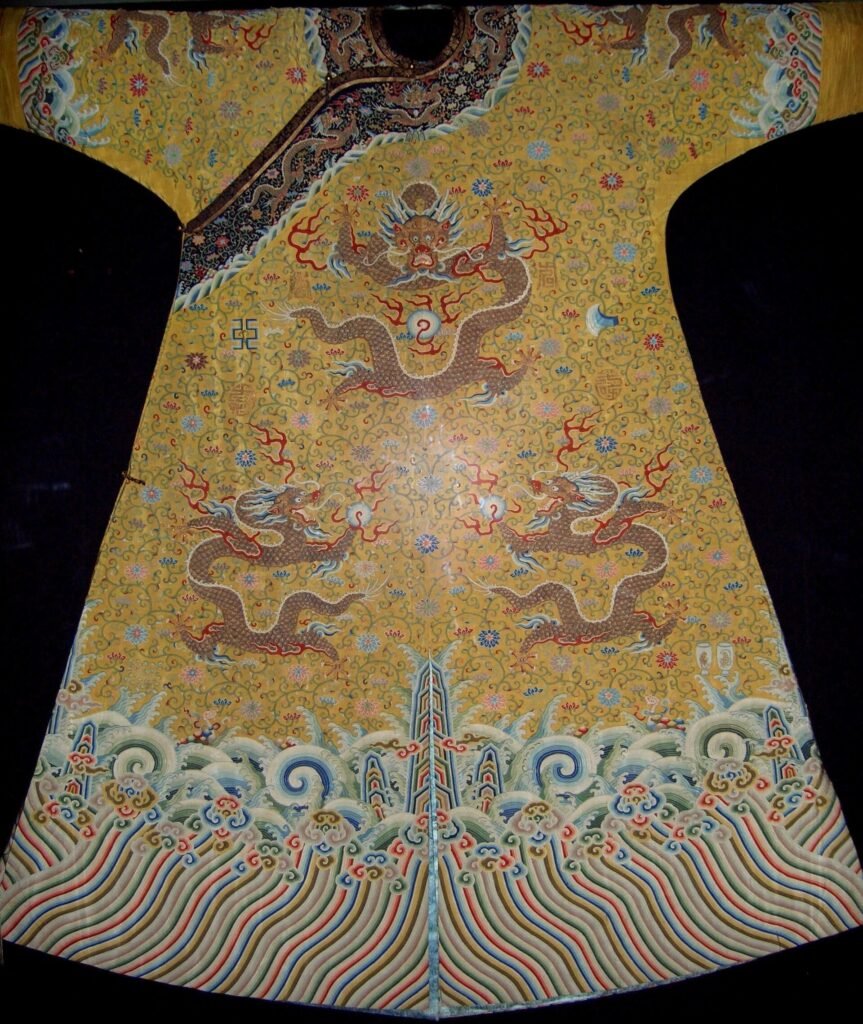
A luminous silk weave that blends gold and silver threads with colour, Nanjing yunjin—or cloud brocade—has been woven in the city for nearly a thousand years, embodying techniques refined across dynasties.
In UNESCO’s words
In the Chinese tradition of weaving Nanjing Yunjin brocade, two craftspeople operate the upper and lower parts of a large, complicated loom to produce textiles incorporating fine materials such as silk, gold and peacock feather yarn. The technique was once used to produce royal garments such as the dragon robe and crown costume; today, it is still used to make high-end attire and souvenirs. Preserved primarily in Jiangsu province in eastern China, the method comprises more than a hundred procedures, including manufacturing looms, drafting patterns, the creation of jacquard cards for programming weaving patterns, dressing the loom and the many stages of weaving itself. As they ‘pass the warp’ and ‘split the weft’, the weavers sing mnemonic ballads that remind them of the techniques they employ and enhance the cooperative, artistic atmosphere at the loom. The workers view their craft as part of a historical mission since, in addition to creating fabrics for contemporary use, yunjin is used to replicate ancient silk fabrics for researchers and museums. Named for the cloud-like splendour of the fabrics, yunjin remains popular throughout the country.
Official description, UNESCO Intangible Cultural Heritage List — Craftsmanship of Nanjing Yunjin brocade
At a glance
Nanjing Yunjin brocade is a weaving tradition that produces textiles from fine materials including silk, gold, and peacock feather yarn. Two craftspeople work together at a large, complicated loom to create these fabrics. The technique remains in use today for high-end attire and souvenirs, continuing a practice once reserved for royal garments such as dragon robes and crown costumes.
Origins & history
The craft emerged in Nanjing at the end of the Song dynasty, drawing on weft-weaving techniques inherited from both the Song and Tang periods. During the Ming dynasty, yunjin weavers developed a revolutionary technique of swivel weaving. This innovation allowed them to weave elaborate colourful designs onto base fabrics such as satin, vastly expanding the range of patterns possible within the medium.
The practice
Yunjin weaving involves more than a hundred procedures, from manufacturing looms and drafting patterns to creating jacquard cards and dressing the loom. Two weavers operate the upper and lower parts of the loom together, passing the warp and splitting the weft. As they work, they sing mnemonic ballads that guide their technique and create an artistic atmosphere. The craft requires skill in handling silk, gold, and peacock feather yarns to produce textiles of great fineness.
Cultural significance
Yunjin weavers view their work as part of a historical mission. Beyond creating fabrics for contemporary use, they replicate ancient silk textiles for researchers and museums, preserving knowledge of historical weaving. The tradition remains popular throughout the country and is named for the cloud-like splendour of its fabrics.
Key facts
- Country: China
- Inscribed: 2009
- UNESCO list: Representative List of the Intangible Cultural Heritage of Humanity
- UNESCO reference: 00200
- UNESCO vocabulary: Brocade; Clothing; Weaving
- Map: Nanjing — the locality named in UNESCO’s official description of this element
Where to experience it
Yunjin brocade weaving is preserved primarily in Jiangsu province in eastern China, where visitors can observe the intricate work of two craftspeople operating large, complicated looms in textile workshops and heritage centres. The weavers' cooperative efforts—singing mnemonic ballads as they 'pass the warp' and 'split the weft'—create an distinctive artistic atmosphere. Visitors may witness the remarkable complexity of the technique, which comprises more than a hundred procedures from loom manufacturing to the final stages of weaving with silk, gold, and peacock feather yarn. High-end contemporary pieces and souvenirs remain available, while some yunjin is specially created to replicate ancient silk fabrics for researchers and museums.
Sources & resources
- UNESCO — official element page: Craftsmanship of Nanjing Yunjin brocade
- UNESCO — open data record: Intangible Heritage List, reference 00200
- UNESCO — official video: UNESCO film on this element — embedded on this page
- UNESCO — official photograph: Photograph of this element — Ma Zhenxiang — Nanjing 'Yujin' Brocade Research Institute Company Limited, 2008
- Reference — Wikipedia (secondary): Yunjin — consulted as a secondary reference, not as confirmation
- Cultural Heritage Online: Our archive and city guides

Find it on the map
See this place and what’s around it →📷 Become a Cultural Heritage Online photographer
Share your photos of places: they stay published under your name as the author. The more they're seen, the more you get noticed — and soon a contest will reward the most appreciated photos.
Log in or sign up free to add a photo