
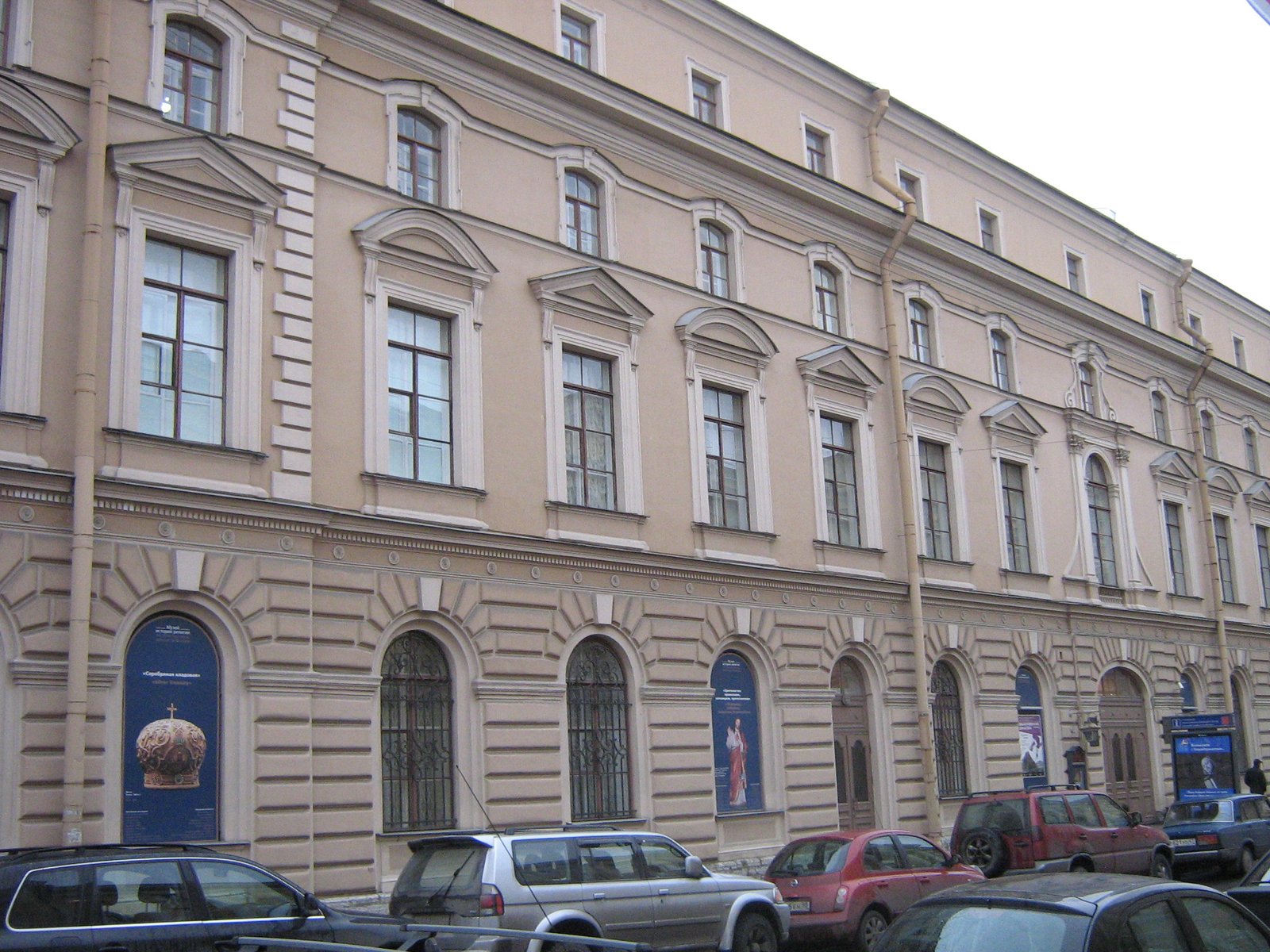
A Soviet-era museum built to dismantle faith now devoted to explaining it, tracing belief across continents from a stately Petersburg address.
At a glance
Founded in 1932, the museum began life with an openly ideological brief: to catalogue and critique religion under Soviet atheism. It has since become one of Russia’s principal repositories on comparative religion, holding artifacts drawn from faiths across the world.
History
The Presidium of the Soviet Academy of Sciences established the museum in 1932 under the name Museum of the History of Religion and Atheism. Its roots lay in an anti-religious exhibition mounted in the Winter Palace in 1930. Vladimir Bogoraz, known as “Tan,” an ethnographer and anthropologist, pushed for the museum’s creation and became its first director. His scholarly background shaped an institution that, despite its polemical name, gathered material for serious study rather than mere propaganda. For decades the museum occupied the former Kazan Cathedral, a building whose sacred architecture sat uneasily with its official anti-religious mission. That arrangement lasted until 2000. In 1991, as the Soviet Union unraveled, the museum gained a new home: the former residence of Count Sergey Yaguzhinsky, a building later used by the Russian imperial Post Office.
What you see
The current premises carry the layered history of an aristocratic townhouse repurposed for public administration and then for scholarship. Rooms once designed for private domestic life or postal bureaucracy now house display cases spanning shamanism, Christianity, Islam, Buddhism, and Judaism. The contrast is deliberate. Visitors move through spaces built for count and clerk alike, now filled with icons, ritual objects, and manuscripts. Nothing here was built as a museum. Everything has been adapted.
Cultural significance
Few institutions embody the twentieth century’s turn against religion, and its later reversal, as plainly as this one. Its founding purpose was polemical. Its collections, however, survived changing politics to become a genuine scholarly resource. The decades spent inside Kazan Cathedral itself tell a story: a monument to faith turned into a stage for its critique, then returned to religious use once the museum moved on in 2000. That history is inseparable from the collection it now houses.
Key facts
- Founded: 1932, by the Presidium of the Soviet Academy of Sciences
- Original name: Museum of the History of Religion and Atheism
- First director: Vladimir Bogoraz “Tan”
- Former home: Kazan Cathedral (until 2000)
- Current building: former residence of Count Sergey Yaguzhinsky, later the Russian imperial Post Office, transferred to the museum in 1991
- Location: Saint Petersburg, Russia
- Status: heritage-listed site
Practical information & getting there
The museum sits within central Saint Petersburg, reachable on foot or by the city’s metro and tram network. Check the official website before visiting for current opening hours, ticket prices, and any temporary closures. Allow time to walk between this site and the nearby Kazan Cathedral, the museum’s original home, to appreciate the contrast between the two buildings.
Sources & resources
Find it on the map
See this place and what’s around it →📷 Become a Cultural Heritage Online photographer
Share your photos of places: they stay published under your name as the author. The more they're seen, the more you get noticed — and soon a contest will reward the most appreciated photos.
Log in or sign up free to add a photoIs this page about you?
This page is read by travellers and heritage enthusiasts who find it on Google. Tell us how you are connected to this place and we will take it from there.