
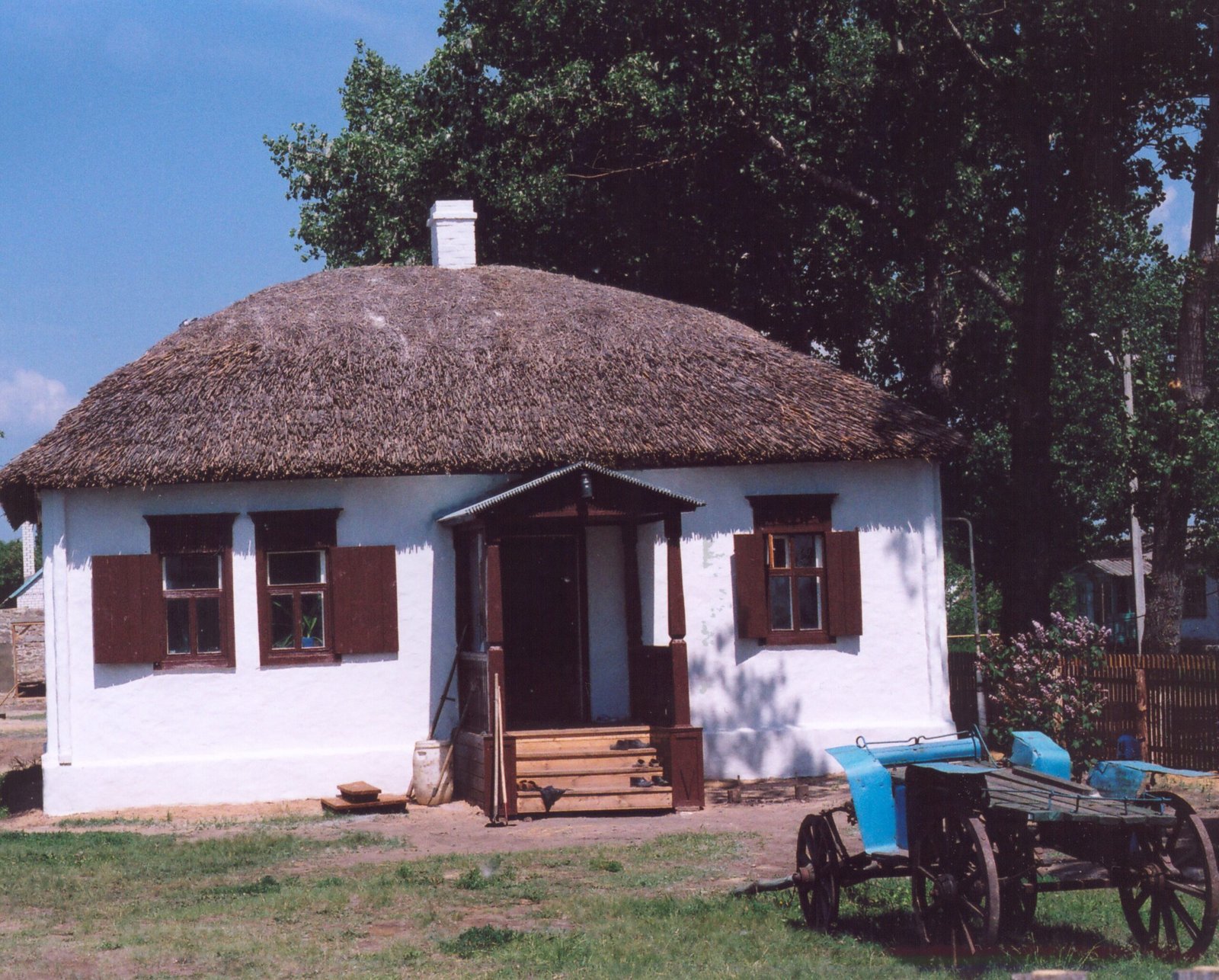
A scattered constellation of houses and khutors on the Upper Don, gathered since 1984 to preserve the working and family life of Nobel laureate Mikhail Sholokhov.
At a glance
The museum-reserve is not one building but five, spread across Vyoshenskaya, Karginskaya, Kruzhilinskaya and Rostov-on-Don. Together they hold more than 70,000 items: manuscripts, letters, furniture, tools, even whole household plots. It is a heritage-listed complex. The distances between sites are real; visiting all of them means crossing a stretch of the Don steppe itself.
History
Mikhail Sholokhov was born in the khutor of Kruzhilinsky, where his family lived until 1910. He later moved through the region, writing in Karginskaya and finally settling in Vyoshenskaya. The house there became his family’s home from 1949 until his death in 1984. That same year the museum-reserve was formally established, drawing together the buildings tied to his life. The Karginskaya house had already been turned into a museum earlier, in 1972, ahead of the wider complex. Each site was chosen because something specific happened there, not for architectural grandeur.
What you see
The Kruzhilinsky manor keeps its orchard, yard, a small dolly-shop, a banya and a stable, giving a sense of a working rural household rather than a writer’s shrine. The Karginskaya house reflects the plain timber building style common to Upper Don villages in the early twentieth century. In Rostov-on-Don, the Sholokhov Centre occupies the Martyn Brothers House, a villa linked to architect N. Sokolov, repurposed as exhibition space. Its rooms host lectures and creative evenings rather than static display cases. The contrast between rustic khutor and urban villa is part of the story.
Cultural significance
The reserve anchors Sholokhov’s fiction to physical ground. And Quiet Flows the Don was partly written in the Vyoshenskaya house, alongside Newground under Plough. Fate of a Man and They Fought for the Homeland followed from the same rooms. For readers of Soviet-era literature, walking between Kruzhilinskaya, Karginskaya and Vyoshenskaya traces the arc of a single working life. The Rostov-on-Don centre extends that legacy into contemporary cultural programming, keeping the name active beyond archival preservation.
Key facts
- Founded: 1984
- Collection size: over 70,000 items
- Sites: five, across Vyoshenskaya, Karginskaya, Kruzhilinskaya and Rostov-on-Don
- Karginskaya house opened as a museum in 1972
- Heritage-listed status: yes
- Location: Rostov Oblast, Russia
Practical information & getting there
You will need to plan for distance. The core sites sit in and around Vyoshenskaya, a stanitsa in Rostov Oblast, with an additional branch in Rostov-on-Don itself. Check the official museum website before travelling, since opening days and access can vary by season and by individual house. Comfortable footwear helps; some of the household plots involve uneven ground.
Sources & resources
Find it on the map
See this place and what’s around it →📷 Become a Cultural Heritage Online photographer
Share your photos of places: they stay published under your name as the author. The more they're seen, the more you get noticed — and soon a contest will reward the most appreciated photos.
Log in or sign up free to add a photoIs this page about you?
This page is read by travellers and heritage enthusiasts who find it on Google. Tell us how you are connected to this place and we will take it from there.