
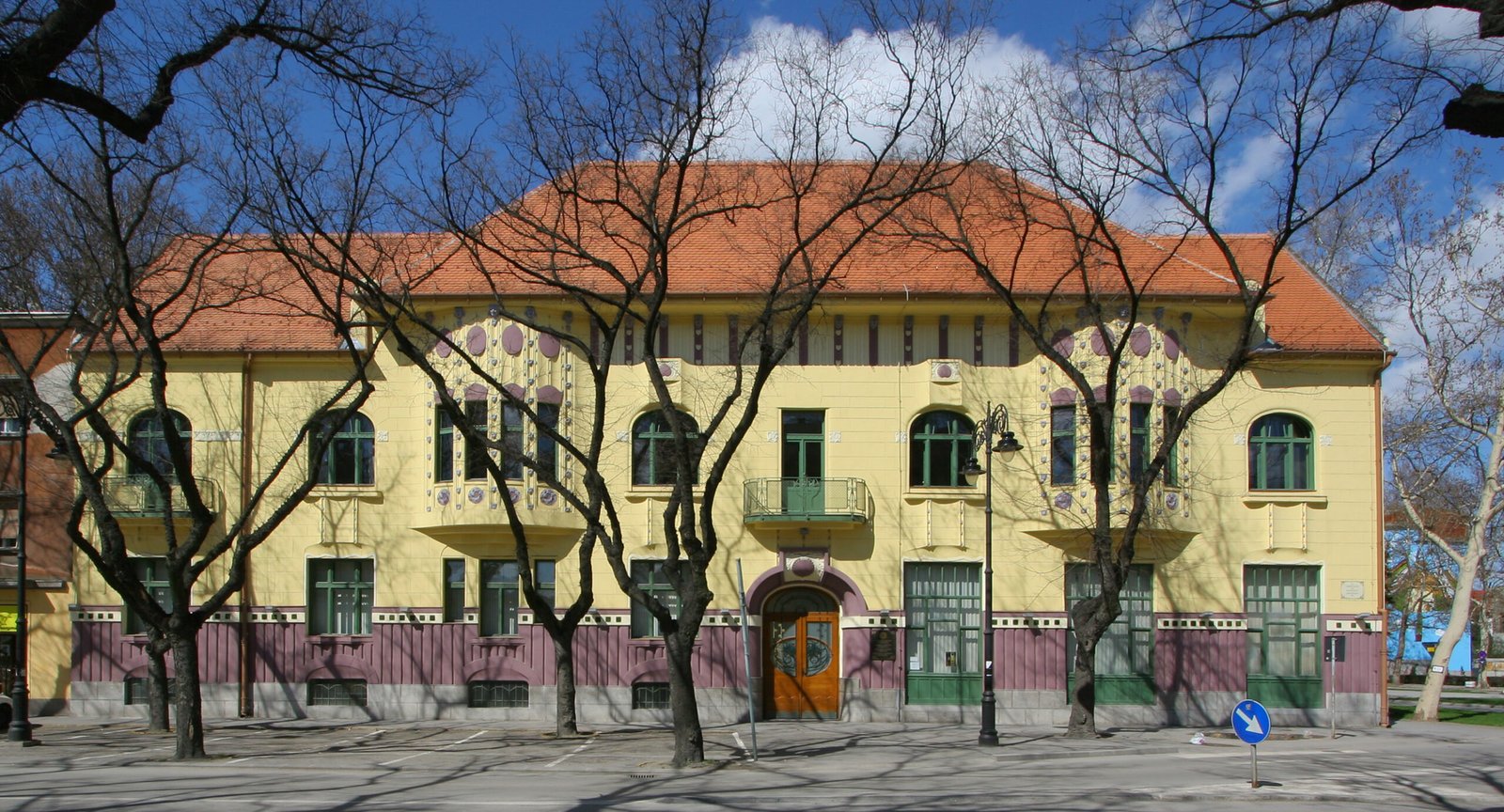
A repository of north Bačka’s material heritage, housed in an elegant early-twentieth-century palace designed by Budapest’s celebrated Vago brothers.
At a glance
The Municipal Museum of Subotica preserves and interprets historical objects and artifacts central to the identity of the north Bačka region. Its collection spans centuries of Subotica’s multicultural past, presented within an architecturally significant palazzo.
History
The museum’s origins date to 1892, marking early institutional interest in local heritage preservation. After World War II disrupted cultural institutions across Yugoslavia, the museum was formally re-established in 1948 by the Subotica Municipal Assembly, resuming its mission under new state structures.
The palazzo itself was built in 1906 for Dr. Mikša Demeter. Its design came from the Vago brothers of Budapest, whose architectural practice shaped much of Central Europe’s urban landscape during this period of prosperity and cultural confidence.
What you see
The museum occupies a purpose-built palace that reflects early-twentieth-century taste and ambition. The Vago brothers’ design exemplifies the refined eclecticism common to prosperous provincial centers of the Austro-Hungarian era—a building that announces cultural aspiration through architectural presence.
Cultural significance
The museum anchors collective memory of north Bačka, a region shaped by overlapping Hungarian, Serbian, and Jewish cultures. Its holdings document daily life, civic identity, and social transformation across multiple centuries and communities.
Key facts
- Country: Serbia
- City: Subotica, Vojvodina
- Founded: 1892; re-established 1948
- Building designed: 1906
- Architects: Vago brothers (Budapest)
- Patron: Dr. Mikša Demeter
- Coordinates: 46.10221, 19.66134
Practical information & getting there
Subotica lies in northern Serbia near the Hungarian border. For current opening hours, admission fees, and exhibition details, consult the museum’s official sources or contact the Subotica Municipal Assembly.
Sources & resources
Find it on the map
See this place and what’s around it →📷 Become a Cultural Heritage Online photographer
Share your photos of places: they stay published under your name as the author. The more they're seen, the more you get noticed — and soon a contest will reward the most appreciated photos.
Log in or sign up free to add a photoIs this page about you?
This page is read by travellers and heritage enthusiasts who find it on Google. Tell us how you are connected to this place and we will take it from there.