
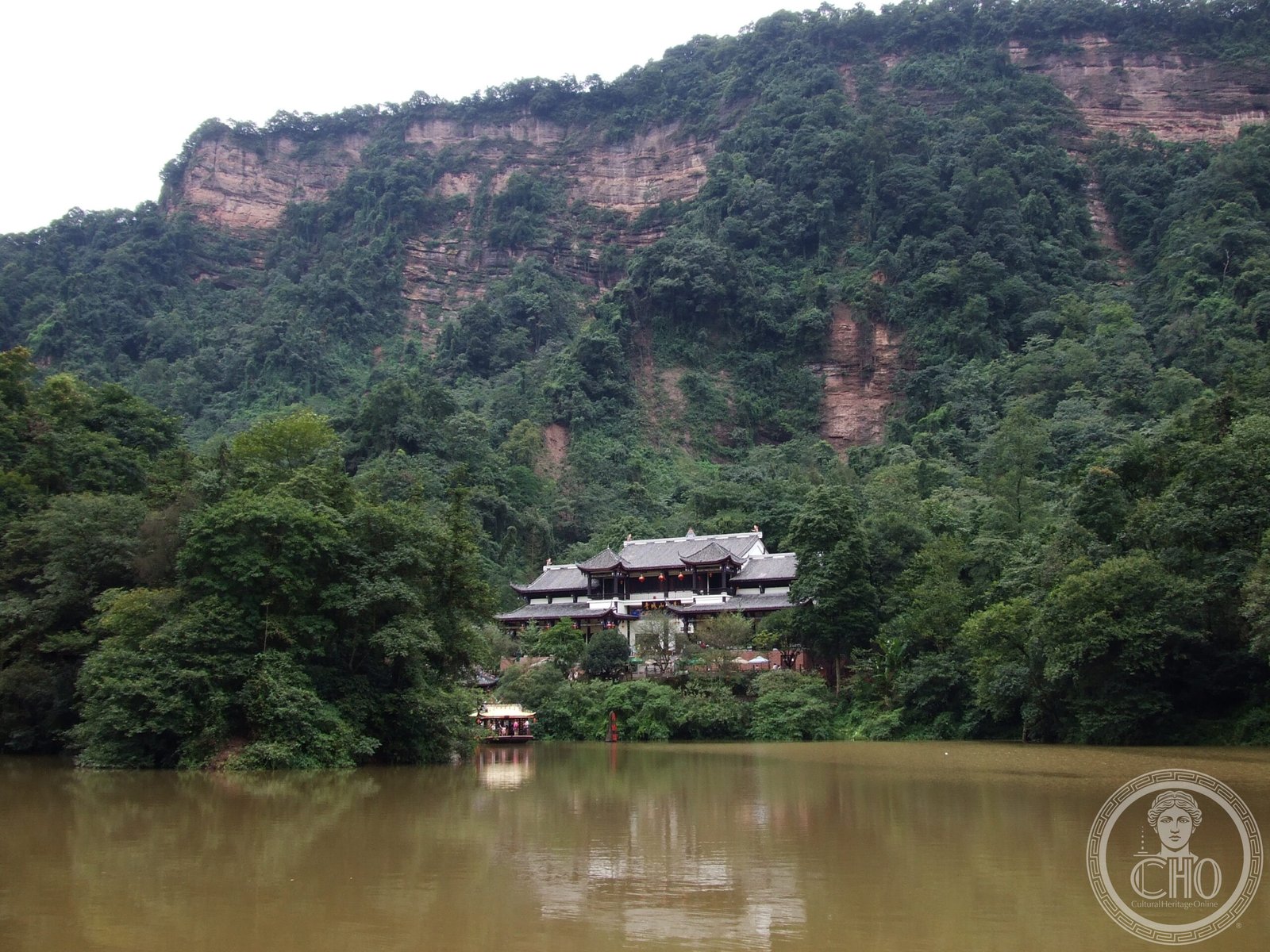
A sacred Taoist mountain and one of the religion’s oldest spiritual centers, Mount Qingcheng rises above Dujiangyan as both a pilgrimage site and a sanctuary for countless temples and monasteries.
At a glance
Mount Qingcheng stands as one of China’s most significant Taoist religious sites, its 36 peaks anchoring a landscape steeped in spiritual practice. The mountain hosts the Dujiangyan Giant Panda Center and has been protected as a UNESCO World Heritage Site since 2000.
History
In Taoist mythology, Mount Qingcheng holds the distinction of being the site where the Yellow Emperor studied under the sage Ning Fengzi. This legendary connection established the mountain as one of Taoism’s birthplaces, drawing practitioners and monks across centuries. The mountain’s sacred status led to the construction of numerous temples and monasteries that shaped its spiritual identity. The 2008 Wenchuan Earthquake caused significant damage to the site.
What you see
The mountain’s distinctive arrangement of 36 peaks creates a dramatic landscape of ridges and valleys. Taoist temples and monasteries are distributed across the slopes, reflecting generations of religious construction and renewal.
Cultural significance
Mount Qingcheng remains one of China’s most important Taoist centers, embodying the religion’s philosophical and spiritual traditions. Its status as a UNESCO World Heritage Site recognizes both its cultural importance and its role as home to the Dujiangyan Giant Panda Center, linking heritage conservation with wildlife protection.
Key facts
- Country: China
- Location: Dujiangyan, Chengdu, Sichuan
- Coordinates: 30.9105, 103.5578
- UNESCO World Heritage Site: Since 2000
- Notable feature: 36 peaks
Practical information & getting there
Mount Qingcheng is accessible from Dujiangyan, a city in Chengdu’s greater metropolitan area in Sichuan Province. The mountain remains an active pilgrimage and tourist destination. Check local conditions and opening hours before visiting, as the site experienced earthquake damage in 2008.
Sources & resources
Find it on the map
See this place and what’s around it →📷 Become a Cultural Heritage Online photographer
Share your photos of places: they stay published under your name as the author. The more they're seen, the more you get noticed — and soon a contest will reward the most appreciated photos.
Log in or sign up free to add a photo