
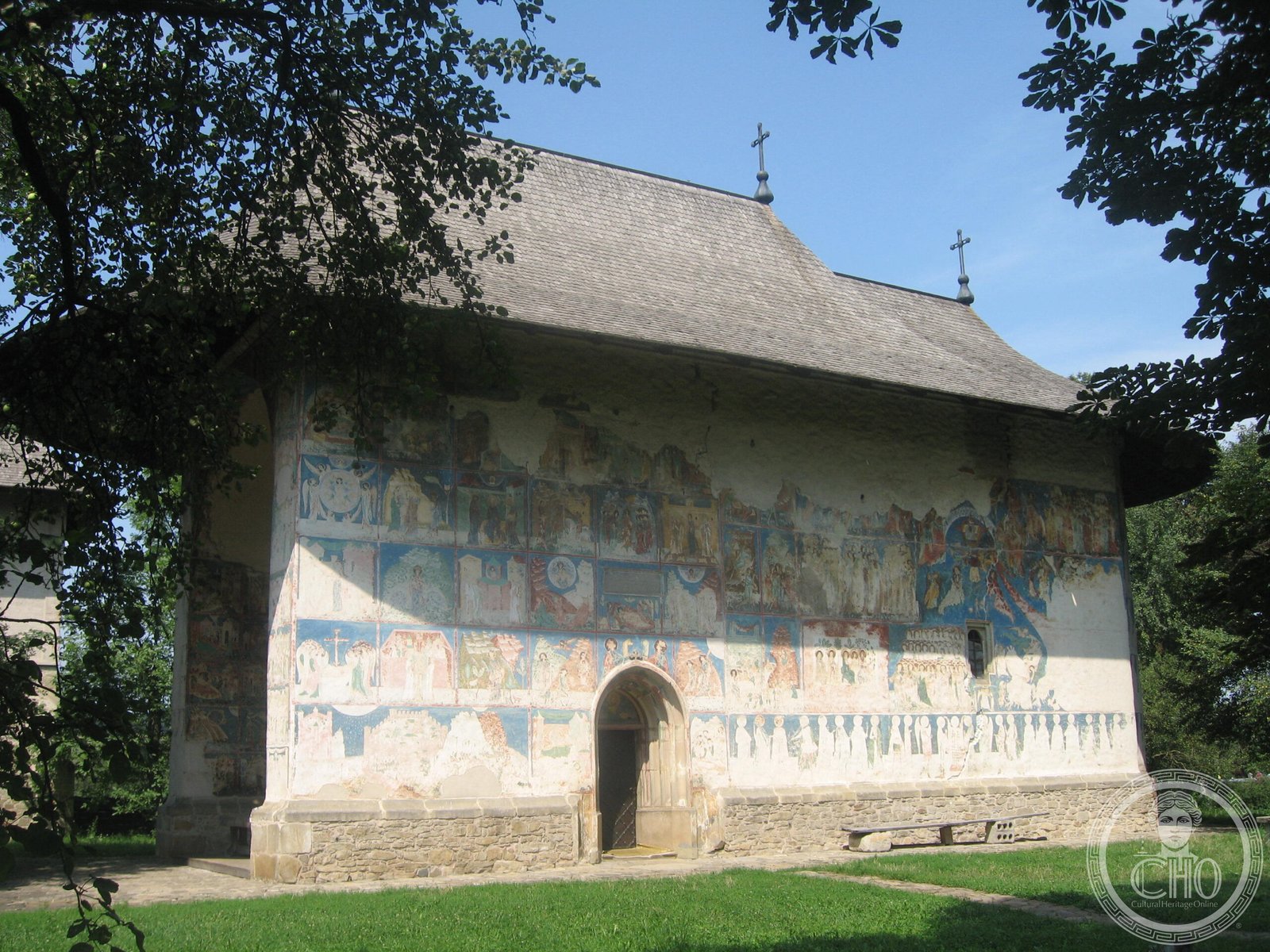
A Romanian Orthodox monastery church built in the early 16th century, Arbore stands among Moldavia’s most significant ecclesiastical monuments. Its dedication to the Beheading of St. John the Baptist reflects the spiritual devotion of its founder, Luca Arbore.
At a glance
Arbore Church serves as a Romanian Orthodox monastery church and one of eight buildings comprising the Churches of Moldavia UNESCO World Heritage Site. Built in 1502, it remains a recognized historic monument under Romania’s Ministry of Culture and Religious Affairs.
History
The church was constructed in 1502 by Luca Arbore as a monastery dedicated to the Beheading of St. John the Baptist. It represents an important chapter in Moldavian religious architecture during the early modern period, when the region’s Orthodox leadership commissioned significant ecclesiastical buildings.
What you see
The church exemplifies the architectural traditions of Moldavian Orthodox monasteries. Its construction and design reflect the religious and artistic priorities of its founder and the broader ecclesiastical community of the period.
Cultural significance
Arbore Church’s inclusion in the UNESCO World Heritage Site designation for the Churches of Moldavia recognizes its importance to Romania’s cultural patrimony. The building testifies to Orthodox monastic traditions in Moldavia and remains an active place of worship and historical witness.
Key facts
- Country: Romania
- Location: Arbore Commune, Suceava County
- Coordinates: 47.7331°N, 25.9292°E
- Founded: 1502
- Founder: Luca Arbore
- Dedication: Beheading of St. John the Baptist
- UNESCO: Churches of Moldavia World Heritage Site
- Status: Historic monument (Romania’s Ministry of Culture and Religious Affairs)
Practical information & getting there
Arbore Church is located in Arbore Commune in Suceava County, in northeastern Romania. As an active Orthodox monastery church, visiting hours and access may be regulated; visitors should verify conditions locally before traveling.
Sources & resources
Find it on the map
See this place and what’s around it →📷 Become a Cultural Heritage Online photographer
Share your photos of places: they stay published under your name as the author. The more they're seen, the more you get noticed — and soon a contest will reward the most appreciated photos.
Log in or sign up free to add a photoIs this page about you?
This page is read by travellers and heritage enthusiasts who find it on Google. Tell us how you are connected to this place and we will take it from there.