
Born from a bitter split of the storied Moscow Art Theatre, this stage carries Maxim Gorky’s name and a conservative repertoire shaped for three decades by one formidable actress.
At a glance
Founded in 1987, the theatre occupies its own place in Moscow’s crowded dramatic landscape. It is one half of a company divided by decree, the other half becoming the Chekhov Moscow Art Theatre. The building’s Soviet Modernist architecture reflects the era of its founding, and the site carries heritage protection today.
History
The theatre exists because of an order signed by Soviet Culture Minister Vasily Zakharov. That order split the Moscow Art Theatre in two. Tatiana Doronina took charge of the branch that kept the Gorky name, granted originally in 1932. Oleg Efremov led the other, later named for Chekhov. The rupture had roots going back to 1970, when Efremov’s appointment as artistic director provoked a lasting conflict over what the company’s art should be. Doronina’s theatre earned a reputation as conservative, often called simply the “Doroninsky” Art Theatre after her. Change came in December 2018, when Eduard Boyakov became artistic director and Doronina moved into a newly created role as president. Sergey Puskepalis briefly served as creative deputy director before departing in 2019 for the Volkov Theatre. Leadership shifted again through the following years, with Tatyana Yaroshevskaya and then Oleg Mikhailov overseeing the theatre, until Vladimir Kekhman was appointed general director in October 2021.
What you see
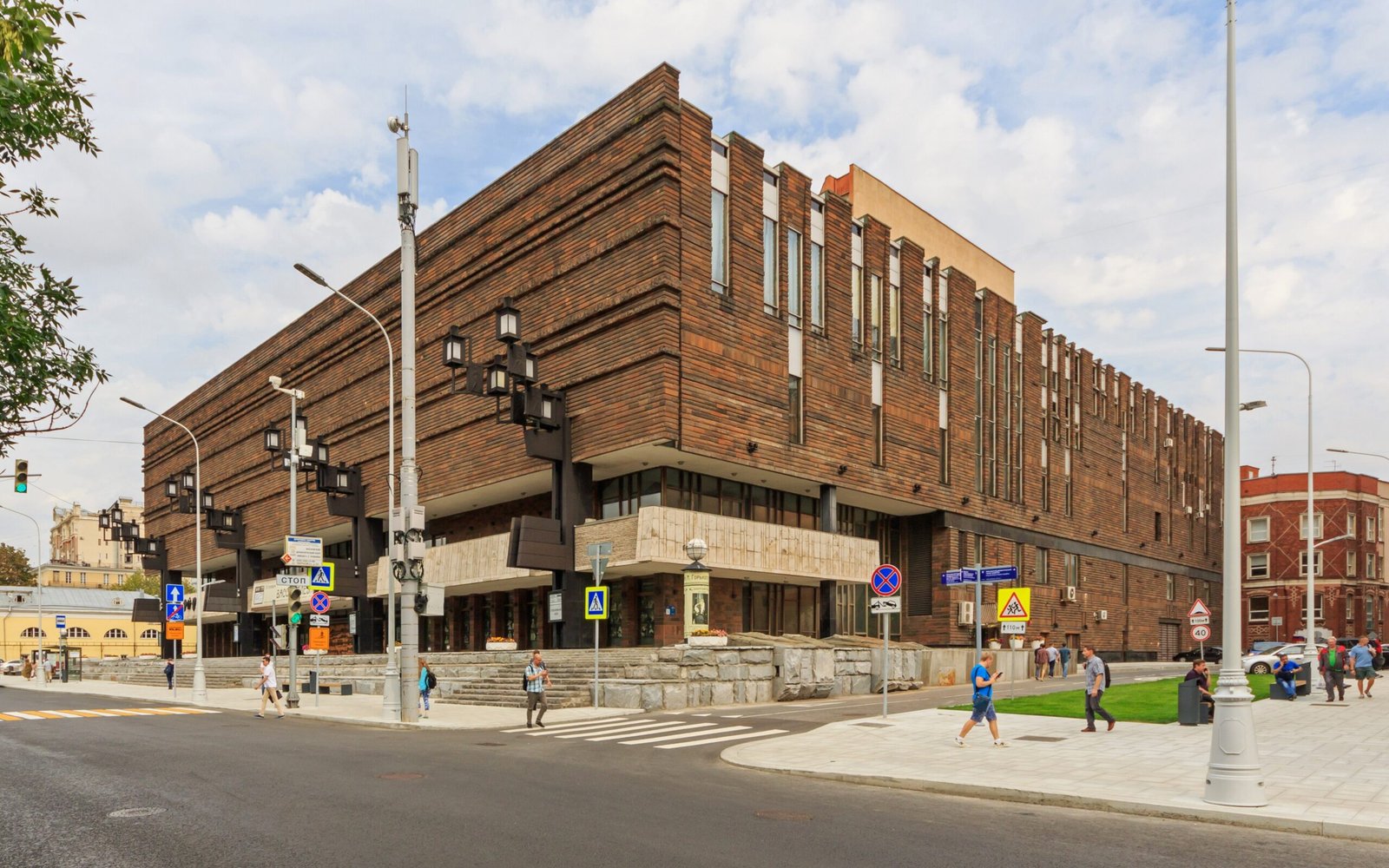
The building presents the sober lines typical of Soviet Modernist design. Nothing ornamental interrupts its civic bearing. Inside, the auditorium and stage were built to serve a large, established repertory company, a legacy of the Moscow Art Theatre’s own scale and ambition. The article gives no further architectural detail, and none should be invented here.
Cultural significance
This theatre represents an ideological fault line in Russian theatrical life. Its founding split one of the world’s most influential dramatic institutions, the company shaped by Konstantin Stanislavski’s legacy, into two rival heirs. Under Doronina, the Gorky theatre stood for tradition against experimentation. Later appointments, including writer Zakhar Prilepin as literary deputy, signaled continued engagement with contemporary cultural politics. Few Moscow stages carry so direct a link to the internal debates that have long defined Russian theatre.
Key facts
- Founded: 1987, by division of the Moscow Art Theatre
- Named after: Maxim Gorky
- Architectural style: Soviet Modernist
- Founder and former president: Tatiana Doronina
- Current director: Vladimir Kekhman
- Heritage status: listed
- Location: Moscow, Russia
Practical information & getting there
The theatre stands in central Moscow, accessible by the city’s metro network. Check the official website for current productions and ticketing before you go. Performances follow a repertory schedule typical of Russian state theatres, so timing your visit around a specific play is wise.
Sources & resources
Find it on the map
See this place and what’s around it →📷 Become a Cultural Heritage Online photographer
Share your photos of places: they stay published under your name as the author. The more they're seen, the more you get noticed — and soon a contest will reward the most appreciated photos.
Log in or sign up free to add a photoIs this page about you?
This page is read by travellers and heritage enthusiasts who find it on Google. Tell us how you are connected to this place and we will take it from there.