
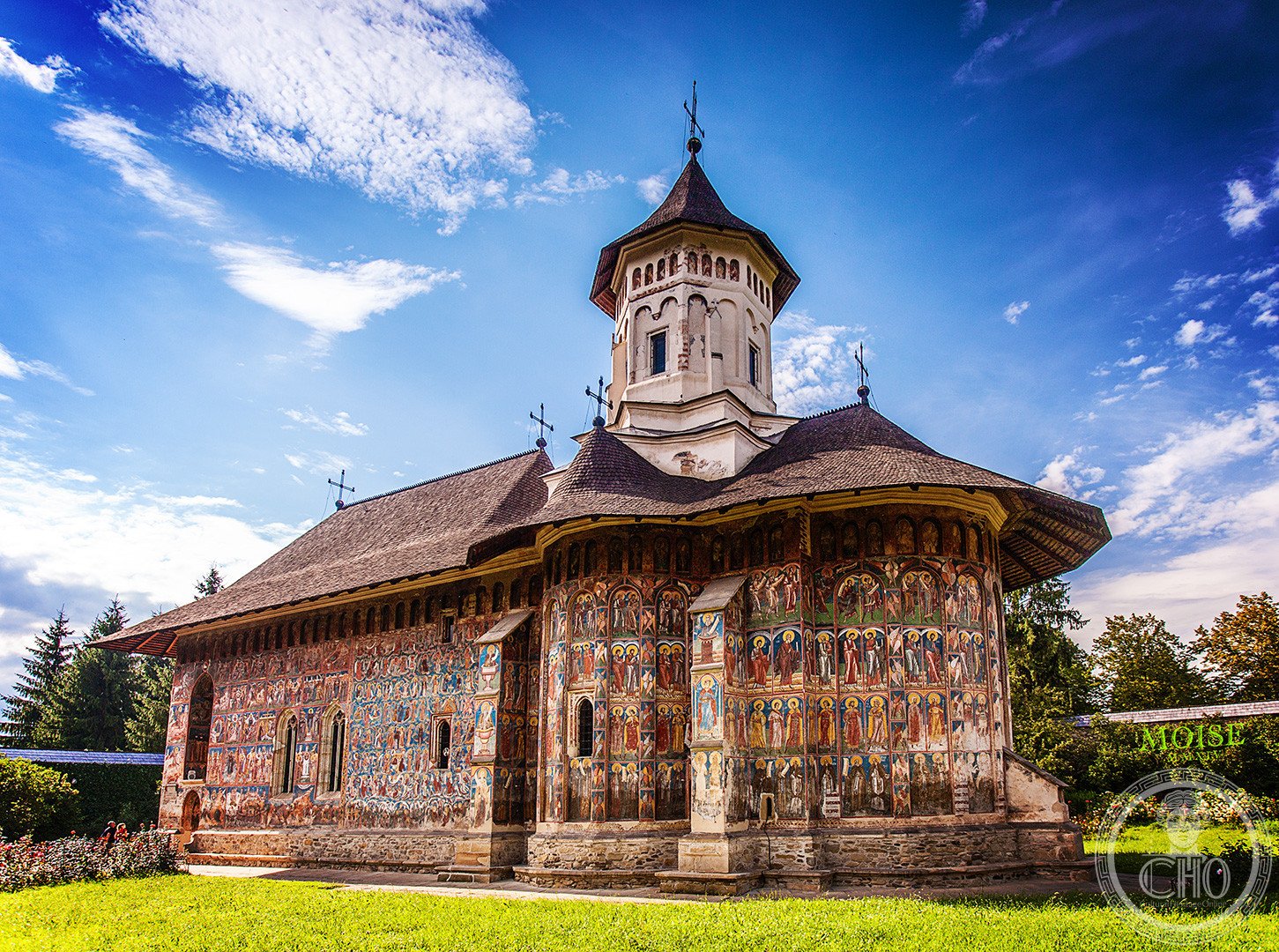
A fortified Orthodox sanctuary built in 1532 to defend against Ottoman expansion, this monastery stands as a symbol of Moldavian resistance and religious devotion on the eastern frontier.
At a glance
Moldovița Monastery is a Romanian Orthodox establishment founded during a turbulent period of regional conflict. Built within a decade of the Ottoman siege of Constantinople, the monastery served both spiritual and defensive purposes for the principality of Moldavia.
History
Petru Rareș, an illegitimate son of Stephen III of Moldavia, commissioned the monastery’s construction in 1532. The timing was strategic: the Ottoman Empire posed an increasing threat to the region, and the monastery functioned as a protective barrier against Muslim conquest from the East. This dual role as both religious center and fortification reflected the precarious position of Orthodox Moldavia between European Christendom and Ottoman expansion.
What you see
The monastery’s architectural details remain shaped by its defensive purpose. The physical layout and structural elements reflect the 16th-century need to combine monastic function with protective strength.
Cultural significance
Moldovița Monastery represents a critical moment in Orthodox Christian history—the preservation of faith and culture in the face of Ottoman pressure. As a foundation of Petru Rareș, it embodied princely patronage and the determination to maintain Christian identity in Moldavia during the empire’s expansion.
Key facts
- Founded: 1532
- Founder: Petru Rareș
- Location: Vatra Moldoviței, Suceava County, Romania
- Coordinates: 47.65704854, 25.57112932
- Religious tradition: Romanian Orthodox
Practical information & getting there
The monastery is located in Vatra Moldoviței commune, Suceava County, in the Moldavia region of northeastern Romania. Further information about access and visiting conditions can be obtained from local tourism resources.
Sources & resources
Find it on the map
See this place and what’s around it →📷 Become a Cultural Heritage Online photographer
Share your photos of places: they stay published under your name as the author. The more they're seen, the more you get noticed — and soon a contest will reward the most appreciated photos.
Log in or sign up free to add a photoIs this page about you?
This page is read by travellers and heritage enthusiasts who find it on Google. Tell us how you are connected to this place and we will take it from there.