

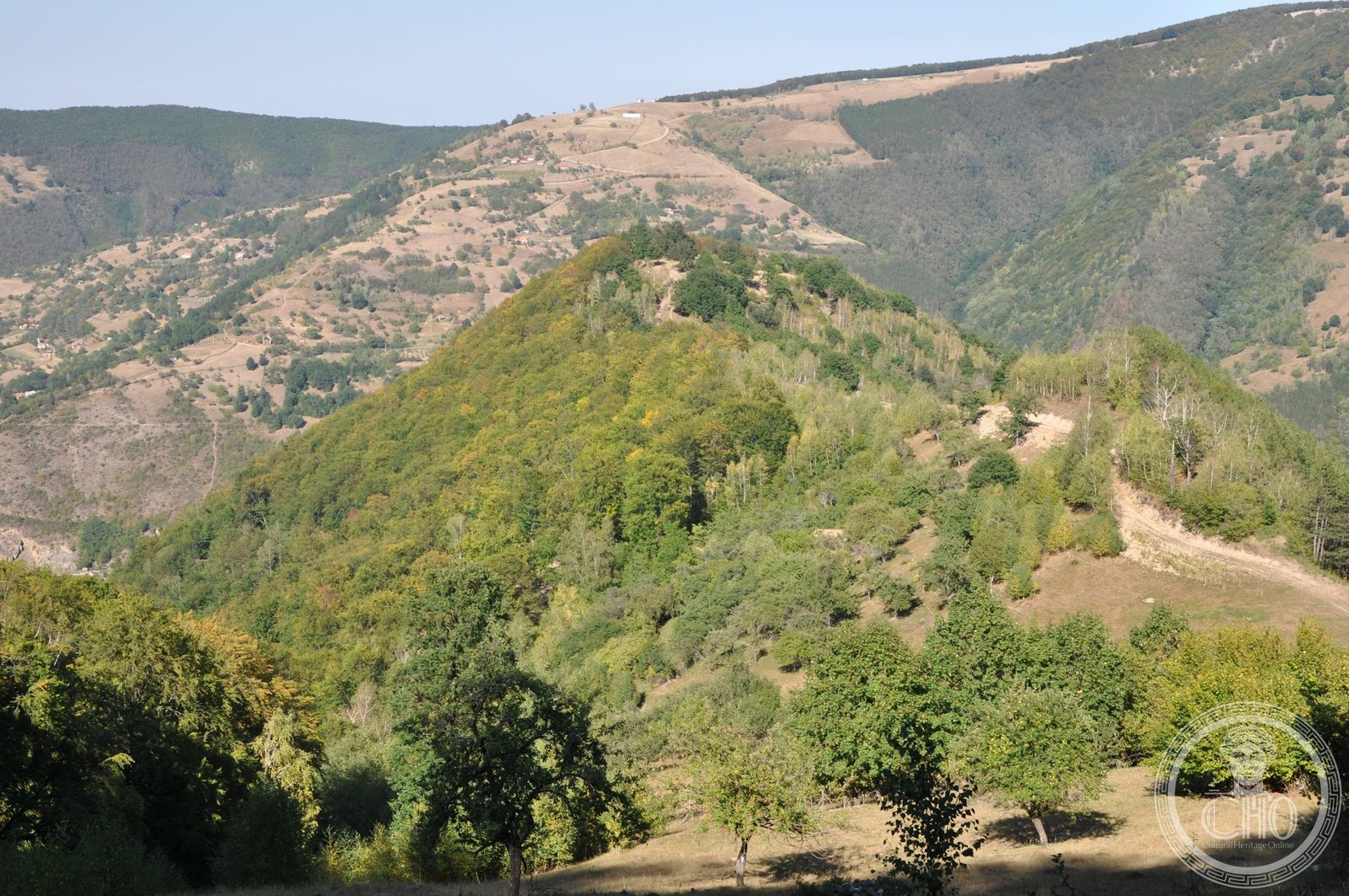
Perched on a steep hillside, this Dacian stronghold defended the approach to the kingdom’s capital and witnessed the pivotal conflicts of Trajan’s conquest.
At a glance
A strategic military fortress built in the second half of the 1st century BC, Căpâlna guarded the entrance from the Sebeș Valley to Sarmizegetusa Regia, the Dacian capital. The site combines monumental defensive architecture with evidence of elite habitation and sacred ritual.
History
Constructed during the late pre-Roman Dacian period, the fortress likely served as the residence of a Dacian chieftain. Archaeological finds reveal the richness of life within its walls: ceramics, iron and bronze tools, silver and bronze jewellery, and coins spanning the Roman Republican and Imperial eras. A remarkable hoard discovered around 2002–2003—a gold necklace and two gold earrings—testifies to the fort’s importance.
The fortress became a flashpoint during Trajan’s Dacian Wars. Roman forces captured it in the first campaign; the defenders hastily rebuilt the damaged walls before the second war erupted. Around 106 AD, the Romans destroyed the fortress, reducing its prominence but not erasing its story from the landscape.
What you see
The fortress is defined by an elliptical defensive wall approximately 270 metres long, constructed in the characteristic murus Dacicus style shared by other fortified sites in the Orăștie Mountains. Outside this perimeter lay three defensive ditches.
Two terraced levels occupied the interior. The upper terrace, at the highest point, contained an observatory tower that commanded views across the valley below. A tower house measuring 9.5 by 9.5 metres stood strategically near the main gate. A second gate accessing the Sebeș Valley was deliberately blocked after the Roman occupation in the first war, sometime after 102 AD.
Excavations conducted in 1982–1983 uncovered the ruins of a Dacian sanctuary, revealing the spiritual dimensions of the fort beyond its military function.
Cultural significance
Căpâlna exemplifies the sophisticated military engineering of pre-Roman Dacia and documents the kingdom’s sophisticated response to external threats. As a witness to the dramatic confrontation between two empires, the fortress provides tangible evidence of the Dacian Wars’ human and strategic dimensions—from the defiant rebuilding of walls to the final conflagration of 106 AD.
Key facts
- Country: Romania
- Region: Sebeș Valley
- Period: 1st century BC (construction); destroyed c. 106 AD
- Coordinates: 45.8223, 23.60347
- UNESCO World Heritage Site: Listed 1999
Practical information & getting there
The fortress lies in central Romania within the broader Dacian Fortresses of the Orăștie Mountains UNESCO site. The steep hillside location rewards a visit with panoramic views over the Sebeș Valley and the broader landscape of ancient Dacia. Contact local tourism authorities for current access conditions and any guided-tour availability.
Sources & resources
Find it on the map
See this place and what’s around it →📷 Become a Cultural Heritage Online photographer
Share your photos of places: they stay published under your name as the author. The more they're seen, the more you get noticed — and soon a contest will reward the most appreciated photos.
Log in or sign up free to add a photoIs this page about you?
This page is read by travellers and heritage enthusiasts who find it on Google. Tell us how you are connected to this place and we will take it from there.