

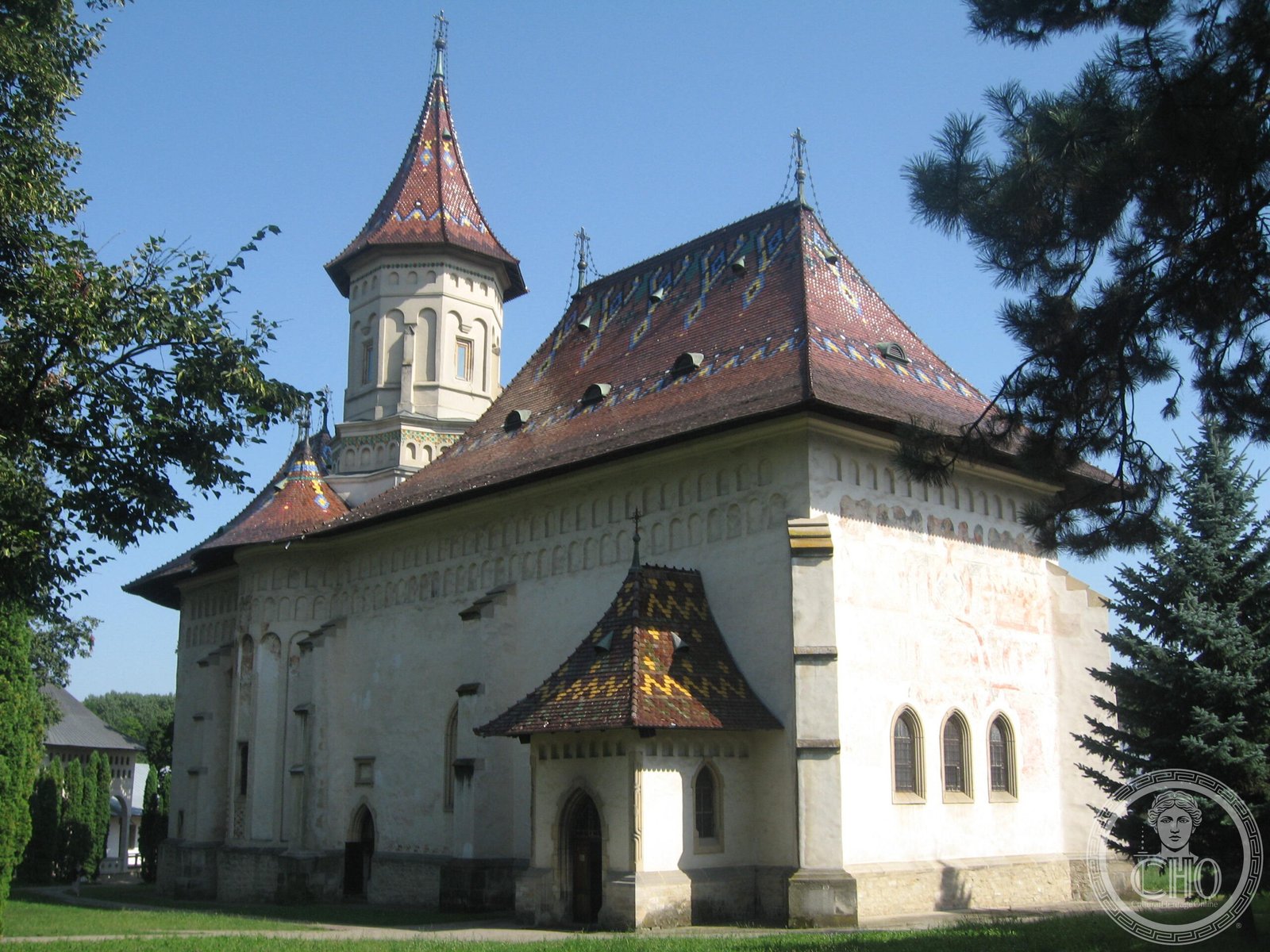
A Romanian Orthodox monastery in Suceava, built between 1514 and 1522 as the metropolitan cathedral of Moldavia, adorned with the region’s characteristic exterior frescoes and dedicated to a martyred local saint.
At a glance
Saint John the New Monastery stands as one of eight component buildings of the Churches of Moldavia UNESCO World Heritage Site. Constructed during the transition between the reigns of Bogdan III the One-Eyed and Stephen IV of Moldavia, it replaced the nearby Mirăuți Church after the latter was devastated in 1513. The monastery functioned as Moldavia’s metropolitan cathedral until 1677 and now serves as the cathedral of the Archdiocese of Suceava and Rădăuți.
History
Construction began under voivode Bogdan III the One-Eyed and was completed by Stephen IV of Moldavia, spanning 1514 to 1522. The urgency of its building reflected the need for a replacement after the regional metropolitan seat was destroyed the previous year.
The monastery takes its name from Saint John the New of Suceava, a Moldavian monk who preached during Turkish occupation and was martyred in Cetatea Albă, now Bilhorod-Dnistrovskyi in Ukraine. Prince Alexander I of Moldavia brought his relics to Suceava in 1402, establishing the spiritual foundation for the later monastery.
The complex expanded over subsequent centuries. A bell tower was added in 1589 under Peter the Lame. Clergyman Anastasie Crimca founded a chapel between 1626 and 1629. Monastic cells were constructed in the 19th century, and the abbot’s house was built between 1894 and 1896.
What you see
The monastery church, dedicated to Saint George, exemplifies Moldavian religious architecture with painted frescoes covering its exterior walls—a distinctive regional characteristic. The main structure forms the heart of a complex that includes the later bell tower, chapel, residential buildings, and surrounding protective walls.
Cultural significance
As one of the Churches of Moldavia UNESCO World Heritage Site, the monastery embodies the architectural and spiritual heritage of medieval Moldavia. Its long service as metropolitan cathedral established it as a seat of ecclesiastical authority and pilgrimage through the Ottoman period and beyond.
Key facts
- Country: Romania
- City: Suceava
- Coordinates: 47.6419, 26.2627
- Built: 1514–1522
- UNESCO: Churches of Moldavia World Heritage Site
- Status: Historic monument (Ministry of Culture and Religious Affairs)
Practical information & getting there
The monastery is located in Suceava in northeastern Romania. As an active cathedral of the Archdiocese of Suceava and Rădăuți, it remains an important pilgrimage destination. Visitors should check current opening hours and any access restrictions before planning a visit.
Sources & resources
Find it on the map
See this place and what’s around it →📷 Become a Cultural Heritage Online photographer
Share your photos of places: they stay published under your name as the author. The more they're seen, the more you get noticed — and soon a contest will reward the most appreciated photos.
Log in or sign up free to add a photoIs this page about you?
This page is read by travellers and heritage enthusiasts who find it on Google. Tell us how you are connected to this place and we will take it from there.