
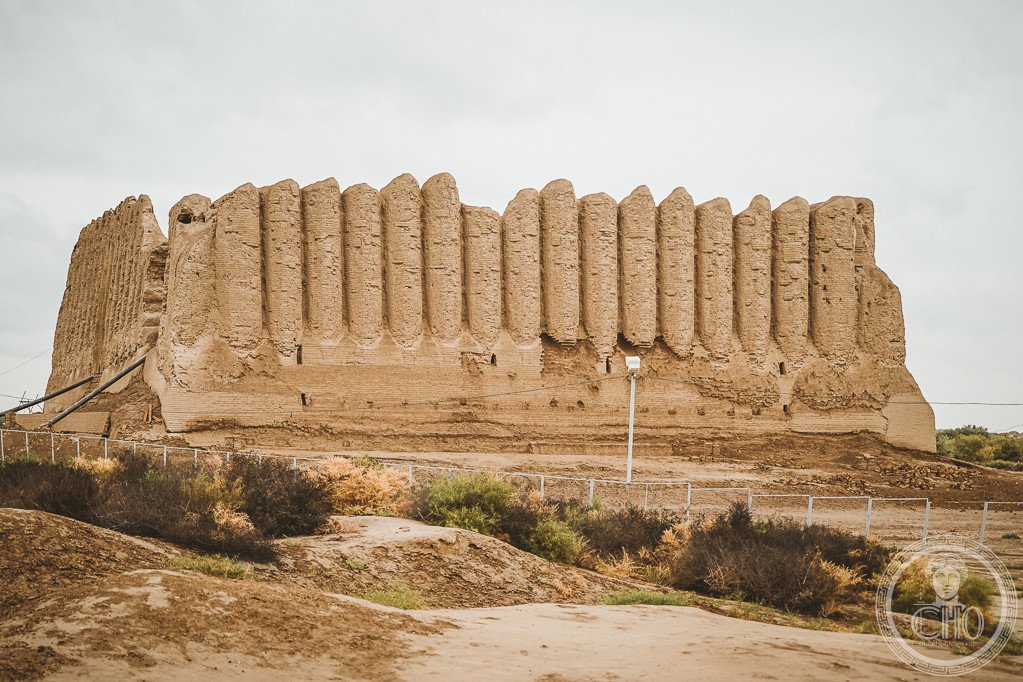
Once the largest city in the world, Merv was a paramount center of Islamic science, culture, and faith—commanding empires from the Silk Road’s heart for millennia before Mongol conquest and political collapse reduced it to ruins.
At a glance
Merv was a major Iranian city in Central Asia that served as capital to multiple empires and caliphates over two thousand years. At its peak in the 12th–13th centuries, it may have housed 500,000 people and was known as “Merv the Great.” The site is now preserved as a State Historical and Cultural Park and UNESCO World Heritage Site.
History
Human settlements existed at Merv from the 3rd millennium BC. Under the Achaemenid Empire, it was the satrapy center of Margiana. The city subsequently fell under Hellenistic, Parthian, Sasanian, Arab, Ghaznavid, Seljuq, Khwarazmian and Timurid rule.
In the early 9th century, Merv became the seat of Caliph al-Ma’mun and capital of the entire Islamic caliphate. It later served the Tahirid governors and, in the 11th–12th centuries, became the capital of the Great Seljuk Empire—a position it held until the empire’s fall.
The city’s prosperity ended abruptly in 1221, when it opened its gates to an invading Mongol horde. Historical accounts report massive slaughter; Tolui Khan is said to have killed 700,000 people. Though partly rebuilt, Merv never recovered. Between 1788 and 1789, Shah Murad of Bukhara razed the city and deported its population. By the 1800s, the surrounding area had been completely deserted.
What you see
Several buildings and structures remain, particularly those constructed within the last two millennia. According to geographer Yaqut al-Hamawi, the medieval city and its structures were visible from a day’s journey away, attesting to their monumental scale.
Cultural significance
Merv was an unparalleled center of Islamic learning and culture. The great Persian polymath Omar Khayyam worked at its observatory. Yaqut al-Hamawi documented ten giant libraries within the city, including one in a major mosque containing 12,000 volumes. Al-Istakhri noted that Merv’s people were “noted for their talents and education” among all Iranian lands.
The city held religious importance across faiths. In Zoroastrianism, Merv was one of sixteen perfect lands created by Ahura Mazda. An East Syrian metropolitan province was seated there from the 5th–11th centuries. The 8th Imam of Twelver Shia Islam, Ali ar-Ridha, resided there for several years after moving from Baghdad. Al-Muqanna, the “Veiled Prophet,” was born and launched his movement in Merv.
Key facts
- Country: Turkmenistan
- Coordinates: 37.66°N, 62.19°E
- Founding: Settlements from 3rd millennium BC
- Peak population: Up to 500,000 (12th–13th centuries)
- UNESCO World Heritage Site: Yes
- Protected as: State Historical and Cultural Park “Ancient Merv” (established 1987)
Practical information & getting there
The site is located near the town of Mary in Turkmenistan and is preserved by the Turkmenistan government as the State Historical and Cultural Park “Ancient Merv.” It is the oldest and most perfectly preserved oasis city along the historical Silk Road in Central Asia. For current visiting information and access details, consult the UNESCO World Heritage List or contact Turkmenistan’s cultural authorities.
Sources & resources
Find it on the map
See this place and what’s around it →📷 Become a Cultural Heritage Online photographer
Share your photos of places: they stay published under your name as the author. The more they're seen, the more you get noticed — and soon a contest will reward the most appreciated photos.
Log in or sign up free to add a photo