

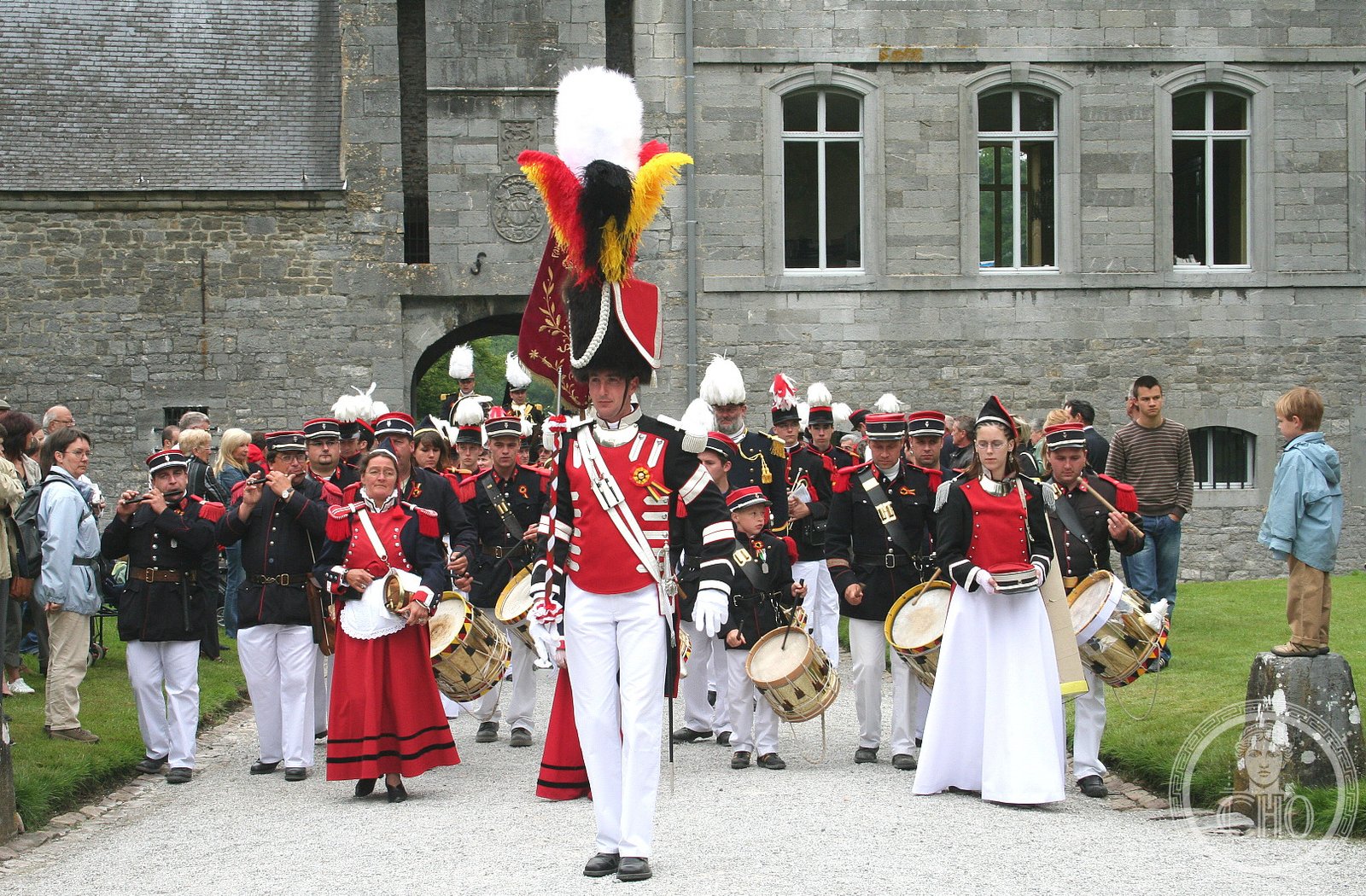
Each spring and summer, the valleys of the Sambre and Meuse rivers fill with the sounds of ancient processions—part religious devotion, part folk spectacle—where armed escorts march alongside parishioners honoring their local saints.
At a glance
The Marches of Entre-Sambre-et-Meuse are a suite of traditional folk processions held from May through October across the region between the Sambre and Meuse rivers in southern Belgium. Armed escorts accompany each march, a practice as deeply rooted in local custom as the processions themselves. Religious in origin yet folkloric in character today, these marches represent a living blend of sacred and secular tradition.
Origins and history
These marches evolved from ancient religious processions dedicated to local saints, each one a patron protector of its parish. Over centuries, while their spiritual purpose endured, the processions acquired an increasingly folkloric dimension. The armed escorts—uniformed companies that march in formation—became integral to the spectacle, their presence transforming what might have remained purely religious into a community-wide festival.
The tradition today
Contemporary marches unfold across multiple weekends between spring and autumn, drawing participants and onlookers from villages throughout the region. Each procession maintains its distinctive character while following patterns established over generations. The armed escorts, dressed in period uniform and carrying traditional weapons, march with ceremonial precision. Music, banners, and the presence of church officials remain central, yet the atmosphere blends reverence with celebration.
Cultural significance
The marches represent a rare surviving example of how religious and folk traditions can coexist and evolve together without either erasing the other. They anchor community identity across the Entre-Sambre-et-Meuse region, connecting participants and spectators to centuries of local history. The armed escorts particularly embody the region’s distinctive military heritage and civic pride.
Key facts
- Country: Belgium
- Anchor community: Thuin and surrounding parishes in the Entre-Sambre-et-Meuse region
- Season: May to October
- UNESCO recognition: Fifteen marches inscribed on the Representative List of the Intangible Cultural Heritage of Humanity (2012)
- Core elements: Religious processions, armed escorts, local saint veneration, folk character
Where to experience it
The marches take place throughout the Entre-Sambre-et-Meuse region from May through October. Each parish hosts its own march on different dates, creating an extended season of celebrations across southern Belgium. Contact local tourism offices in Thuin or nearby towns for specific dates and locations of upcoming marches.
Sources & resources
Find it on the map
See this place and what’s around it →📷 Become a Cultural Heritage Online photographer
Share your photos of places: they stay published under your name as the author. The more they're seen, the more you get noticed — and soon a contest will reward the most appreciated photos.
Log in or sign up free to add a photo