
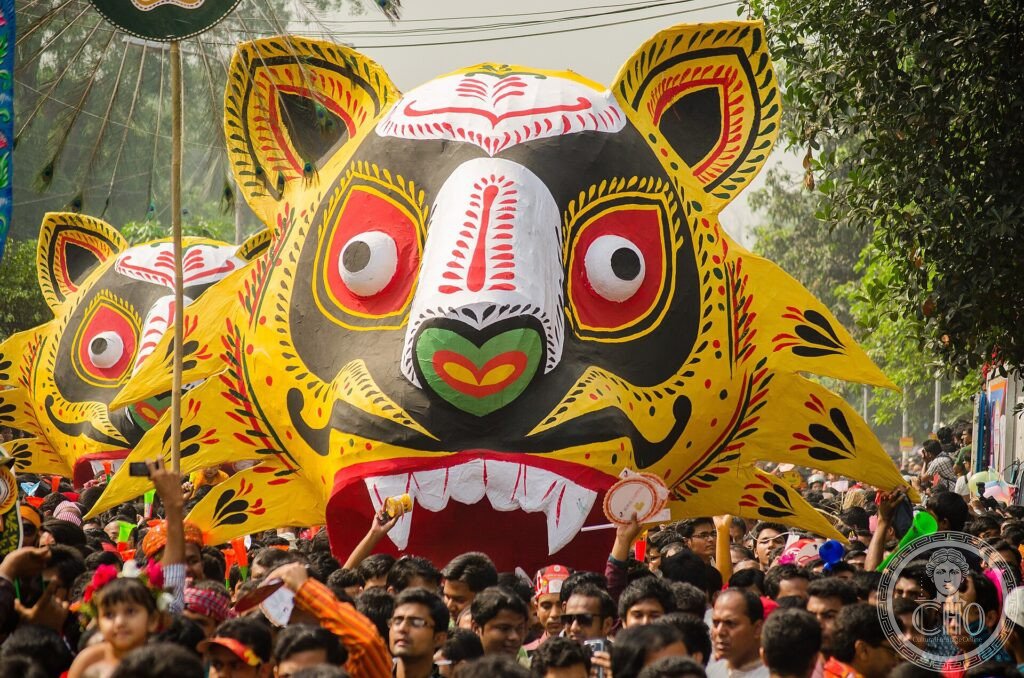
At dawn on Pahela Baishakh, the first day of the Bengali New Year, thousands of Bangladeshis pour into the streets of Dhaka in a magnificent procession of masks, music, and secular joy—a collective celebration of unity and cultural pride.
At a glance
Mangal Shobhajatra is a dawn procession held annually on Pahela Baishakh in Bangladesh, drawing tens of thousands of participants and spectators. The word shobhajatra means "grand procession," and the word mangal conveys auspiciousness. The festival has been officially titled Boishakhi Shobhajatra since 2026, and was known as Barshabaran Ananda Shobhajatra in earlier decades. It is organized primarily by the Faculty of Fine Arts at the University of Dhaka, whose teachers and students lead the largest contingent each year.
Origins & history
Mangal Shobhajatra emerged as a public celebration marking the Bengali New Year calendar change. The practice has evolved over time, with different official names reflecting shifts in its organization and emphasis. It grew to become one of South Asia’s most significant secular festivals, embodying the cultural and civic identity of Bangladesh.
The practice
The procession unfolds at dawn, when darkness still softens the streets. Participants wear elaborate masks—animal heads, mythical creatures, abstract forms crafted from papier-mâché, clay, and painted wood. Musicians play traditional and contemporary instruments. Dancers move through the streets; drummers set the rhythm. The procession flows with floats, banners, and costume groups that have rehearsed for months. Performers carry effigies and symbolic figures; many wear bright fabrics and face paint. The atmosphere blends reverence and revelry—chants, songs, and the sound of feet and instruments moving as one tide through Dhaka’s avenues.
Cultural significance
Mangal Shobhajatra stands as an expression of secular identity and cultural solidarity for Bangladeshi people. In a society where religious diversity coexists with strong traditions, the festival represents a shared civic space—a moment when the nation’s artistic and humanistic values take visible form. It affirms unity across communities and celebrates the Bengali calendar and language heritage. The procession is understood as a collective voice for tolerance, creativity, and social cohesion.
Key facts
- Country: Bangladesh
- Anchor city: Dhaka
- Coordinates: 23.76917, 90.38863
- UNESCO Intangible Cultural Heritage, 2016 (Reference 01091)
- Held annually at dawn on Pahela Baishakh (1st day of Bengali New Year)
- Primary organizers: Faculty of Fine Arts, University of Dhaka
Where to experience it
Mangal Shobhajatra takes place in Dhaka, particularly along central routes where the Faculty of Fine Arts procession and other groups gather and move through the city. The procession begins before sunrise on Pahela Baishakh (typically mid-April in the Gregorian calendar), and crowds gather hours before to secure viewing positions.
Sources & resources
Find it on the map
See this place and what’s around it →📷 Become a Cultural Heritage Online photographer
Share your photos of places: they stay published under your name as the author. The more they're seen, the more you get noticed — and soon a contest will reward the most appreciated photos.
Log in or sign up free to add a photo