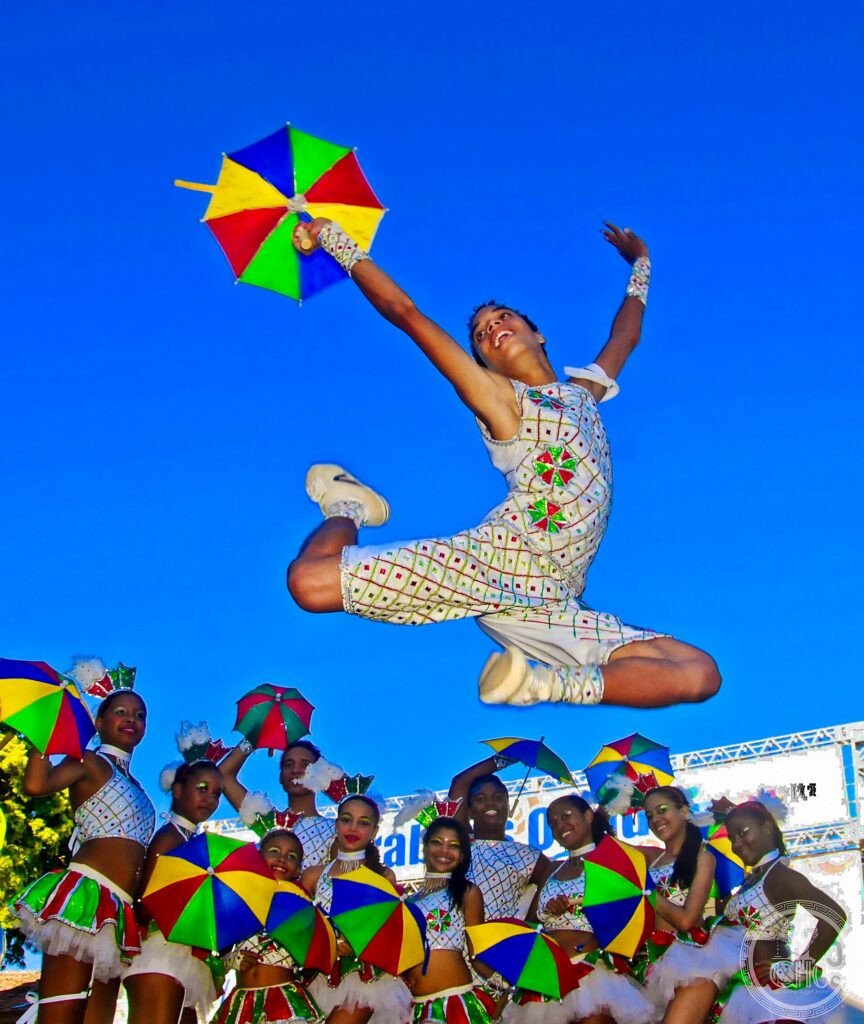
A kinetic dance and musical tradition born in Recife’s Carnival, where performers and orchestras move with explosive energy—the name itself derived from the Portuguese word for boiling, capturing the fever of the street.
In UNESCO’s words
Frevo is a Brazilian artistic expression comprising music and dance, performed mainly during the Carnival of Recife. Its quick frenetic and vigorous rhythm draws upon the fusion of musical genres such as marching music, Brazilian tango, square dance, polka and pieces of classical repertoire, performed by martial bands and fanfares. The music is essentially urban, and like the accompanying dance, ‘Passo’, is vigorous and subversive. The dance stems from the skill and agility of capoeira fighters, who improvise leaps to the electrifying sound of steel orchestras and bands. Practitioners of Frevo and Passo are part of associations, each of which participates in parades for the carnival. Their headquarters provide support for the development, preservation and transmission of knowledge and skills related to Frevo. The element also has a close connection to the beliefs and symbolic universe of the practitioners’ religion. Several associations have colours related to the members’ devotion and various embellishments have religious meanings. Frevo is formed through the creativity and cultural riches that comes from the great mix of music, dance, capoeira and crafts, among others, demonstrating the ingenuity and creative ability of its practitioners. This ability to promote human creativity and respect for cultural diversity is inherent to Frevo.
Official description, UNESCO Intangible Cultural Heritage List — Frevo, performing arts of the Carnival of Recife
At a glance
Frevo is a Brazilian artistic expression that fuses music and dance, performed chiefly during Carnival. The style draws its identity from a quick, frenetic rhythm that blends marching music, Brazilian tango, square dance, polka, and classical pieces. The accompanying dance, known as Passo, is vigorous and improvisational, stemming from the skill and agility of capoeira fighters who leap to the electrifying sound of steel orchestras and bands.
Origins & history
Frevo emerged as an urban musical and dance form that incorporated techniques from capoeira alongside diverse musical genres performed by martial bands and fanfares. The tradition developed through the creativity and cultural mixing of music, dance, capoeira, and crafts, reflecting the ingenuity of its practitioners. Over time, it became deeply woven into Carnival celebrations and community life.
The practice
Practitioners of Frevo and Passo belong to associations that participate in carnival parades. These associations maintain headquarters that support the development and transmission of the skills and knowledge required for the tradition. The performance itself is vigorous and subversive, with dancers improvising leaps to accompany the rapid orchestral sound. The associations also maintain colours and embellishments that carry religious meaning for their members.
Cultural significance
Frevo matters profoundly to its practitioners because it embodies their religious beliefs and symbolic universe—many associations adopt colours reflecting members' devotion, and various embellishments hold spiritual significance. The tradition demonstrates respect for cultural diversity and the creative ability of its community, promoting human creativity while remaining central to collective identity and cultural expression.
Key facts
- Country: Brazil
- Inscribed: 2012
- UNESCO list: Representative List of the Intangible Cultural Heritage of Humanity
- UNESCO reference: 00603
- UNESCO vocabulary: Carnival; Dance; Instrumental music
- Map: Recife — the locality named in UNESCO’s official description of this element
Where to experience it
Frevo thrives in Recife during Carnival season, when the streets come alive with performers and musicians. The dance and music are performed primarily during these parades, where associations—each with their own colours and embellishments—showcase the tradition. Visitors can witness the vigorous Passo dance performed to the electrifying sound of steel orchestras and martial bands. The headquarters of these associations provide insight into how knowledge and skills are transmitted across generations, preserving this uniquely Brazilian fusion of music, dance, capoeira, and crafts.
Sources & resources
- UNESCO — official element page: Frevo, performing arts of the Carnival of Recife
- UNESCO — open data record: Intangible Heritage List, reference 00603
- UNESCO — official photograph: Photograph of this element — Prefeitura de Recife (PCR) — Acervo PCR, 2010
- Reference — Wikipedia (secondary): Frevo — consulted as a secondary reference, not as confirmation
- Cultural Heritage Online: Our archive and city guides

Find it on the map
See this place and what’s around it →📷 Become a Cultural Heritage Online photographer
Share your photos of places: they stay published under your name as the author. The more they're seen, the more you get noticed — and soon a contest will reward the most appreciated photos.
Log in or sign up free to add a photo