
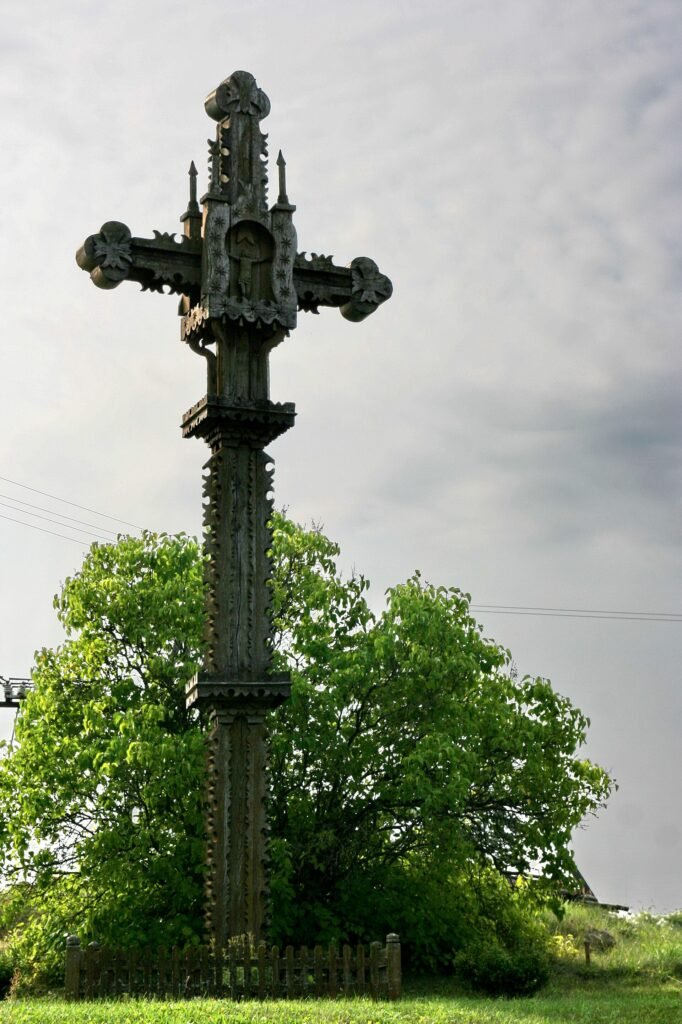
Master carvers known as kryždirbiai shape oak wood into intricate crosses that embody Lithuanian identity and Catholic faith, traveling the countryside to craft symbols of resilience and spiritual devotion.
At a glance
Lithuanian cross-crafting is the traditional art of carving elaborate wooden crosses, often enriched with iron or stone elements. The practice connects deeply to Roman Catholic belief and national identity, with craftspeople—kryždirbiai—passing knowledge across generations while preserving techniques that date to the 19th century and beyond.
Origins & history
The making of altars and crosses has long anchored Lithuanian religious and cultural life. Since Lithuania became part of the Russian Empire in the 19th century, these crosses transformed into symbols of national identity and resistance. Vincas Svirskis (1835–1916), a self-taught master of the craft, elevated cross-carving to an art form; his intricate works once adorned central Lithuania and now reside in national museums, testament to his influence on the tradition.
The practice
Kryždirbiai work primarily in oak wood, carving each cross by hand with meticulous detail. Some crosses incorporate wrought iron embellishments or decorative metalwork; others feature carved stone or elaborate jewelry elements. The craftspeople travel throughout Lithuania, often working to commission or displaying their pieces in communities. Each cross reflects both technical mastery and spiritual intention, with designs ranging from geometric patterns to figurative ornamentation.
Cultural significance
These crosses serve as physical expressions of Lithuanian Catholicism and national continuity. They mark sacred spaces, honor ancestors, and affirm cultural identity at a time when external forces threatened Lithuanian autonomy. The craft remains a living connection to the past—each carver who learns and practices the tradition sustains not only artistic knowledge but also the spiritual and political resonance these objects carry for the Lithuanian people.
Key facts
- Practice: Traditional carving of wooden crosses, often with iron or stone elements
- Heartland: Šiauliai region, Lithuania
- Practitioners: Kryždirbiai (master cross-carvers)
- Primary material: Oak wood
- UNESCO Intangible Cultural Heritage inscription: 2001 (reference 00013)
- Lithuanian national inventory: 2017
Where to experience it
Šiauliai and the surrounding regions of central Lithuania are the heartland of this craft. National museums hold examples of historical crosses, including works by Vincas Svirskis. To encounter living practitioners and their work, contact local cultural organizations in Lithuania or inquire about contemporary cross-carvers operating in the Šiauliai area.
Sources & resources
- Lithuanian cross crafting — Wikipedia
- Cross-crafting and its symbolism in Lithuania — UNESCO Intangible Cultural Heritage
- Cultural Heritage Online
Find it on the map
See this place and what’s around it →📷 Become a Cultural Heritage Online photographer
Share your photos of places: they stay published under your name as the author. The more they're seen, the more you get noticed — and soon a contest will reward the most appreciated photos.
Log in or sign up free to add a photo